
Lyophilized peptide shelf life is one of the most practical questions in peptide research: once a peptide arrives as a freeze-dried powder, how long does it stay usable? The short version of the lyophilized peptide shelf life story is that the freeze-dried state is the stable state — general laboratory guidance describes multi-year stability for lyophilized peptides kept frozen, desiccated, and protected from light, with stability falling off sharply at refrigerator and room temperatures. This guide walks through lyophilized peptide shelf life as the literature describes it: the storage-duration ranges, the degradation chemistry behind them, and the lab practices that protect them. General lab-practice framing throughout — and as always, the lot-specific certificate of analysis is the final word for any given batch.
Research-use-only disclaimer: This article discusses storage and stability of research peptides in general laboratory terms. All products are sold strictly for laboratory research use. It contains no dosage information, no administration instructions, and no medical advice. Storage ranges below are general literature guidance; always follow the certificate of analysis for lot-specific recommendations.
Why Lyophilized Peptides Last: The Stability Logic
To understand lyophilized peptide shelf life, it helps to start with why freeze-drying preserves peptides at all. Lyophilization removes water from the preparation, and water is a reactant in the main degradation pathways: hydrolysis (water breaking peptide bonds), and the medium in which dissolved oxygen drives oxidation. In the solid, freeze-dried state, molecular mobility is severely restricted — the reactions that degrade peptides in solution effectively slow to a crawl. Freeze-drying does not make a peptide immortal; it arrests the clock. The Wikipedia article on lyophilization covers the underlying process.
That is the central principle behind every shelf-life number you will read: the dry state is the stable state, and every step away from it — moisture, warmth, light, oxygen — restarts degradation. A published review of freeze-drying science notes that lyophilized peptides stored correctly at deep-frozen temperatures can remain stable for several years, while their reconstituted counterparts are measured in weeks to months (see the PMC review of freeze-drying and stability). The gap between those two states is the whole story.
The one principle to remember: lyophilized peptide shelf life is longest when the peptide stays dry, cold, dark, and sealed. Every storage decision in this guide is a variation on protecting those four conditions.
Lyophilized Peptide Shelf Life by Storage Temperature
The single biggest variable in lyophilized peptide shelf life is temperature. The table below gives the ranges most commonly cited in general laboratory guidance — not guarantees, and not lot-specific claims, but the working ranges the field uses. Stability is sequence-dependent (more on that below), so treat these as planning ranges.
| Storage condition | Typical cited range | Best for |
|---|---|---|
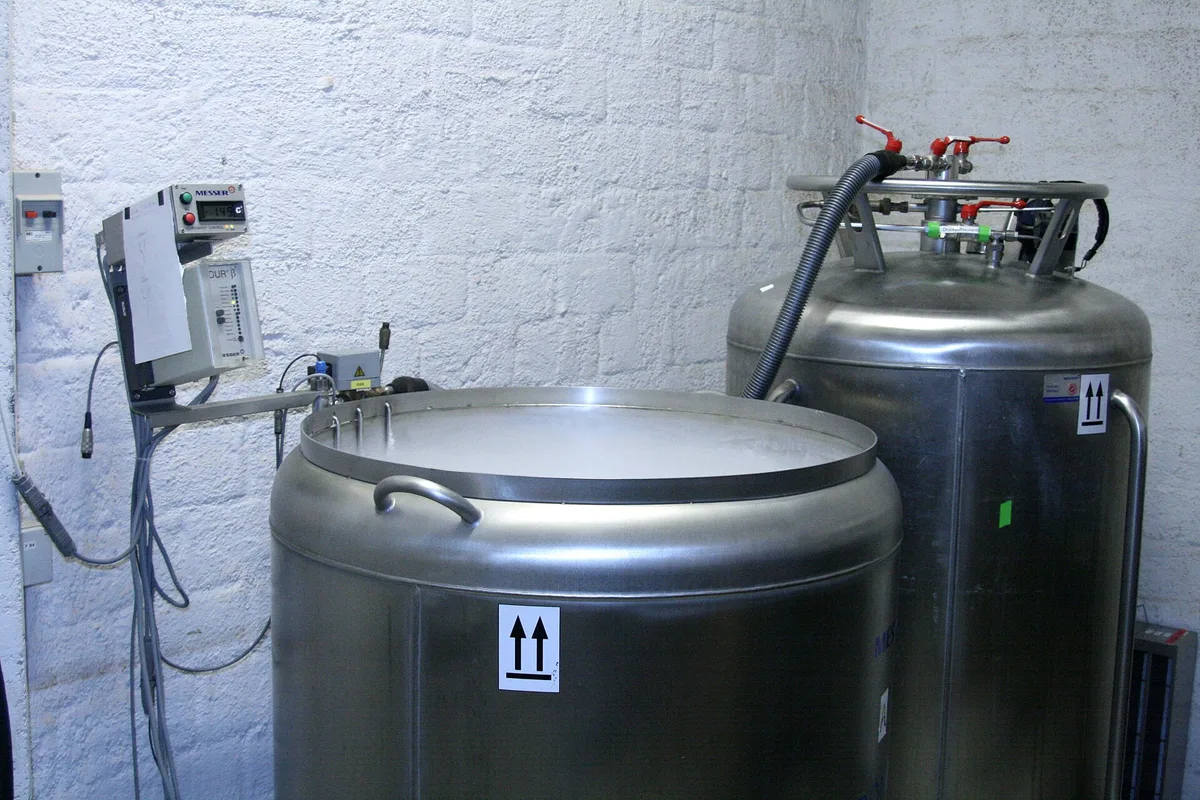
| −80 °C (ultra-low freezer) | 3–5+ years | Archival, multi-year storage; sensitive sequences |
| −20 °C (standard freezer) | 2–3 years | Routine long-term laboratory storage |
| 2–8 °C (refrigerator) | Several months | Material in active use; not for long-term storage |
| Room temperature (~20–25 °C) | Weeks | Short-term only — shipping, bench handling |
| Above ~30 °C | Days | Avoid — degradation accelerates markedly |
A few notes on reading this table honestly. First, these ranges describe the lyophilized powder in a sealed vial with desiccant, protected from light — not an opened vial on a bench. Second, “several years” at −20 °C is the commonly cited working figure across supplier and technical guidance; −80 °C extends it and is the gold standard for archival storage. Third, the refrigerator row surprises people: even freeze-dried, peptides at 2–8 °C are generally cited in months, not years. The lyophilized peptide shelf life advantage is a freezer advantage.
The Five Enemies of Lyophilized Peptide Shelf Life
Laboratory guidance consistently names the same five threats to shelf life. Each one maps to a specific degradation pathway:
1. Moisture. The primary enemy. Water restarts hydrolysis and enables microbial growth. Sealed vials with desiccant are the standard defense — and vials should be equilibrated to room temperature before opening, so condensation does not form on the cold powder.
2. Heat. Degradation chemistry accelerates with temperature — the reason the table above is a staircase. Short room-temperature exposures (shipping, handling) are acceptable; sustained warmth is not.
3. Light. Photodegradation affects light-sensitive residues. Opaque or amber storage, and keeping vials out of direct light, is standard practice.
4. Oxygen. Oxidation targets specific residues — cysteine, methionine, and tryptophan are the classic oxidation-prone amino acids. Peptides rich in these residues may be stored under inert gas (argon or nitrogen) in demanding applications.
5. Freeze–thaw cycling. Repeated freezing and thawing stresses peptides mechanically and osmotically. For solutions this is a major concern; for lyophilized powder the rule is simpler — keep it frozen and sealed until use.
Sequence Matters: Not All Peptides Age Equally
Lyophilized peptide shelf life is sequence-dependent, and the literature is specific about which residues cause trouble.
Oxidation-prone residues: cysteine (Cys), methionine (Met), and tryptophan (Trp) oxidize more readily. A peptide containing these residues has a shorter effective lyophilized peptide shelf life under ordinary storage, and benefits most from oxygen-free storage and minimal light exposure. DSIP, for example, contains a tryptophan residue — one reason general peptide-storage guidance (desiccated, cold, dark) applies to it with particular force.
Deamidation-prone residues: asparagine (Asn) and glutamine (Gln) deamidate over time, a pathway accelerated by moisture and warmth. Aspartic acid (Asp) and glutamic acid (Glu) residues, along with lysine, arginine, and histidine, also make peptides more hygroscopic — more eager to pull moisture from the air — which is why sealed, desiccated storage matters most for sequences rich in these residues.
The practical upshot: two lyophilized peptides stored identically can have different real-world stability outcomes because their sequences degrade through different pathways. General ranges are planning tools; the certificate of analysis and sequence-aware handling are the specifics.
Lyophilized vs. Reconstituted: The Shelf-Life Cliff
No discussion of shelf life is complete without the contrast that defines laboratory practice: once water is added, the clock resumes. General guidance describes reconstituted peptide solutions as stable for weeks — typically cited as a few weeks at 2–8 °C — versus years for the lyophilized powder. Some technical documents cite up to about a month refrigerated for solutions; frozen aliquots of solutions extend into months, but each freeze–thaw cycle of a solution risks degradation and aggregation.
This is why standard laboratory practice is to keep the bulk of material lyophilized and frozen, and to prepare solutions only for defined working windows. The stability advantage is not just about the powder lasting longer — it is about the workflow it enables: archive the stable form, work from the short-lived form, and never convert more material than the experimental window requires.
The Lab Checklist for Maximum Lyophilized Peptide Shelf Life
Distilling the literature into practice, here is the standard checklist laboratories use to protect shelf life:
☑ Store at −20 °C or colder, sealed with desiccant. The standard long-term condition. −80 °C for archival or sensitive sequences.
☑ Protect from light. Opaque containers or dark storage; no windowsills, no bench display.
☑ Equilibrate before opening. Let the sealed vial reach room temperature before breaking the seal — this prevents moisture condensing onto the cold powder, which would restart hydrolysis.
☑ Minimize air exposure. Reseal promptly. For oxidation-sensitive sequences, inert-gas (argon/nitrogen) storage is the demanding-application standard.
☑ Keep solutions short-lived. Prepare working solutions for defined windows; the reconstituted state is measured in weeks, not years.
☑ Aliquot solutions; do not repeatedly freeze–thaw. Divide prepared solutions into single-use volumes so each portion is thawed once.
☑ Follow the certificate of analysis. Lot-specific guidance overrides general ranges. If the COA specifies a condition, that condition governs.
Signs a Lyophilized Peptide May Have Degraded
Even with good practice, researchers should know the visual warning signs that shelf life may have been compromised. A lyophilized cake should look uniform — typically a white to off-white powder or cake. Discoloration (yellowing, browning, pinkish tints) can indicate oxidation or other chemical degradation. A cake that has collapsed into a sticky or gummy mass suggests moisture intrusion. And a solution that shows cloudiness, particulates, or unexpected color change after preparation suggests the material has come out of solution or degraded.
Visual inspection is a screening step, not an assay: the definitive check on peptide integrity is analytical (HPLC, mass spectrometry), which is what certificates of analysis provide at the batch level. But in day-to-day laboratory handling, the visual signs are the early-warning system — and the most common cause behind them is a storage lapse: a vial left unsealed, a freezer door left open, a shipment that sat in heat.
Shipping reality check: lyophilized peptides are routinely shipped at ambient temperature — general guidance describes the powder as stable for weeks at room temperature in a sealed vial with desiccant. That shipping window is well within the ranges above. The expectation is that the receiving laboratory transfers the material to frozen storage on arrival, not that it lives at room temperature indefinitely.
Lyophilized Peptide Shelf Life: Key Takeaways
The freeze-dried state is the stable state — protect it and it lasts years
Lyophilized peptide shelf life in general laboratory guidance runs about 2–3 years at −20 °C and 3–5+ years at −80 °C, falling to months at refrigerator temperatures and weeks at room temperature — always for sealed, desiccated, light-protected material, and always sequence-dependent (oxidation-prone Trp/Met/Cys and deamidation-prone Asn/Gln shorten the effective window). Once reconstituted, stability is measured in weeks. The checklist — freeze it, seal it, darken it, equilibrate before opening, aliquot solutions — is how laboratories convert those ranges into reality. (General lab-practice framing; the certificate of analysis governs any specific lot.)
For researchers working with solution-based formats, the stability contrast matters directly: our overviews of Semax nasal spray research and Selank nasal spray research discuss intranasal formats — solution-state preparations where the short-lived side of the stability picture applies.
Lyophilized Peptide Shelf Life: Frequently Asked Questions
Practical answers on how long freeze-dried peptides last and how to store them.
How long does lyophilized peptide shelf life typically last in a freezer?
General laboratory guidance cites roughly 2–3 years at −20 °C and 3–5+ years at −80 °C for lyophilized peptides stored sealed, desiccated, and protected from light. These are working ranges, not guarantees — stability is sequence-dependent, and the lot-specific certificate of analysis is the governing document.
Does lyophilized peptide shelf life change at refrigerator or room temperature?
Yes, markedly. The same guidance generally cites months (not years) at 2–8 °C and weeks at room temperature for the lyophilized powder. The freezer is what makes lyophilized peptide shelf life a multi-year proposition; without it, the stability advantage narrows fast.
What shortens lyophilized peptide shelf life most?
Moisture, heat, light, oxygen, and freeze–thaw cycling — in roughly that order of practical importance. Moisture restarts hydrolysis; heat accelerates all degradation chemistry; light drives photodegradation; oxygen attacks Trp/Met/Cys residues; repeated freeze–thaw stresses the material. Sealed, desiccated, dark, frozen storage addresses all five.
How long do peptides last once reconstituted?
Much less long: general guidance describes reconstituted peptide solutions as stable for weeks at 2–8 °C (often cited as a few weeks), extending to months only as frozen single-use aliquots — and each freeze–thaw cycle of a solution risks degradation. This is why laboratories archive the lyophilized form and prepare solutions for defined working windows.
Can you tell by looking whether a lyophilized peptide has degraded?
Sometimes. Discoloration (yellowing, browning, pinkish tints), a collapsed or gummy cake suggesting moisture intrusion, or cloudiness and particulates after preparation are warning signs. Visual inspection is a screening step, though — definitive integrity assessment is analytical (HPLC, mass spectrometry), as provided on certificates of analysis.
Where can researchers source characterized research peptides?
Research peptides are supplied as lyophilized, characterized laboratory material — for example, our Semax 10mg and Selank 10mg research listings. As with any research compound, sourcing should be limited to suppliers explicit about research-use-only status, and material should be transferred to frozen storage on arrival.
Lyophilized Peptide Shelf Life: Final Research Notes
Lyophilized peptide shelf life is one of the better-understood topics in peptide handling: the dry state arrests degradation, the freezer preserves the dry state, and the literature’s ranges — years frozen, months refrigerated, weeks at room temperature — have held up across supplier and technical guidance. The variables that move a specific peptide off the general range are its sequence (oxidation- and deamidation-prone residues) and its handling history (moisture, heat, light, air, freeze–thaw).
For the laboratory, the actionable version is short: store lyophilized peptides at −20 °C or colder, sealed with desiccant and protected from light; equilibrate sealed vials to room temperature before opening; keep solutions short-lived and aliquoted; and let the certificate of analysis override general guidance for any specific lot. That is the complete lyophilized peptide shelf life playbook — general, literature-grounded, and sequence-aware.



1 Comment