
Every peptide researcher eventually faces the same quiet anxiety: is this vial still good? Temperature is the single biggest variable you control, and the guidance is remarkably consistent across the literature and supplier certificates of analysis. This peptide storage temperature guide collects what those sources actually recommend — the standard temperature tiers for lyophilized and reconstituted peptides, why each tier exists, how to read the storage section of a COA, and the handling mistakes that quietly ruin samples. It is written as general lab practice, not as instructions for any specific product: your compound’s COA always has the final word.
Research-use-only disclaimer: All products sold on this site are strictly for laboratory research use. They are not medicines, not FDA-approved drugs, and not for human or veterinary use. This peptide storage temperature guide describes general laboratory storage practice. It contains no dosage information, no administration instructions, and no medical advice.
If you need the peptide storage temperature guide in one table, here it is. The rows below reflect the tiers most commonly described in the peptide literature and on supplier COAs:
| Peptide state | Recommended tier | Typical duration described | Key notes |
|---|---|---|---|
| Lyophilized (freeze-dried) | −20 °C or below | Months to years | The standard long-term tier; keep dark and dry |
| Lyophilized (freeze-dried) | 2–8 °C (refrigerator) | Weeks | Acceptable short-term; not for archival storage |
| Lyophilized, archival | −80 °C | Extended long-term | Used by some labs for multi-year reference stocks |
| Reconstituted (in solution) | 2–8 °C (refrigerator) | Days to a few weeks | Per the specific COA; never at room temperature long |
| Either state | Room temperature | Transit only | Brief shipping windows; move to cold storage on arrival |
That table is the working core of this peptide storage temperature guide. Everything below explains why those tiers exist, where the boundaries blur, and how to handle the edge cases — but if you remember nothing else, remember the pattern: colder and drier preserves longer, solution is more fragile than powder, and the COA for your specific lot overrides any general table.
Your COA is the authority. General guides like this peptide storage temperature guide describe industry-standard practice, but the certificate of analysis for your specific product and lot states the storage conditions the supplier validated. When the two differ, follow the COA — it is the document tied to your actual material.
Why Temperature Matters for Peptides
Peptides are short chains of amino acids, and in solution they are subject to the same slow chemistry as any biomolecule: hydrolysis of peptide bonds, oxidation of sensitive residues, deamidation, and aggregation. Every one of those reactions runs faster at higher temperatures — the standard rule of thumb in stability science is that reaction rates roughly double with each 10 °C rise. That is the entire scientific basis of this peptide storage temperature guide: cold storage does not change what the peptide is, it slows what the peptide does to itself over time.
Lyophilization — freeze-drying the peptide into a powder — removes the water that most degradation chemistry needs, which is why the dry form is dramatically more stable than the dissolved form. But “more stable” is not “indestructible”: moisture re-absorbed from humid air, repeated warming, and light exposure all still degrade lyophilized material. The temperature tiers exist to keep those slow processes as slow as possible for as long as possible.
The Three Temperature Tiers, Explained
This peptide storage temperature guide organizes storage into three tiers. Understanding what each tier is for — not just the number — is what keeps samples viable.
Tier 1: Freezer (−20 °C and below)
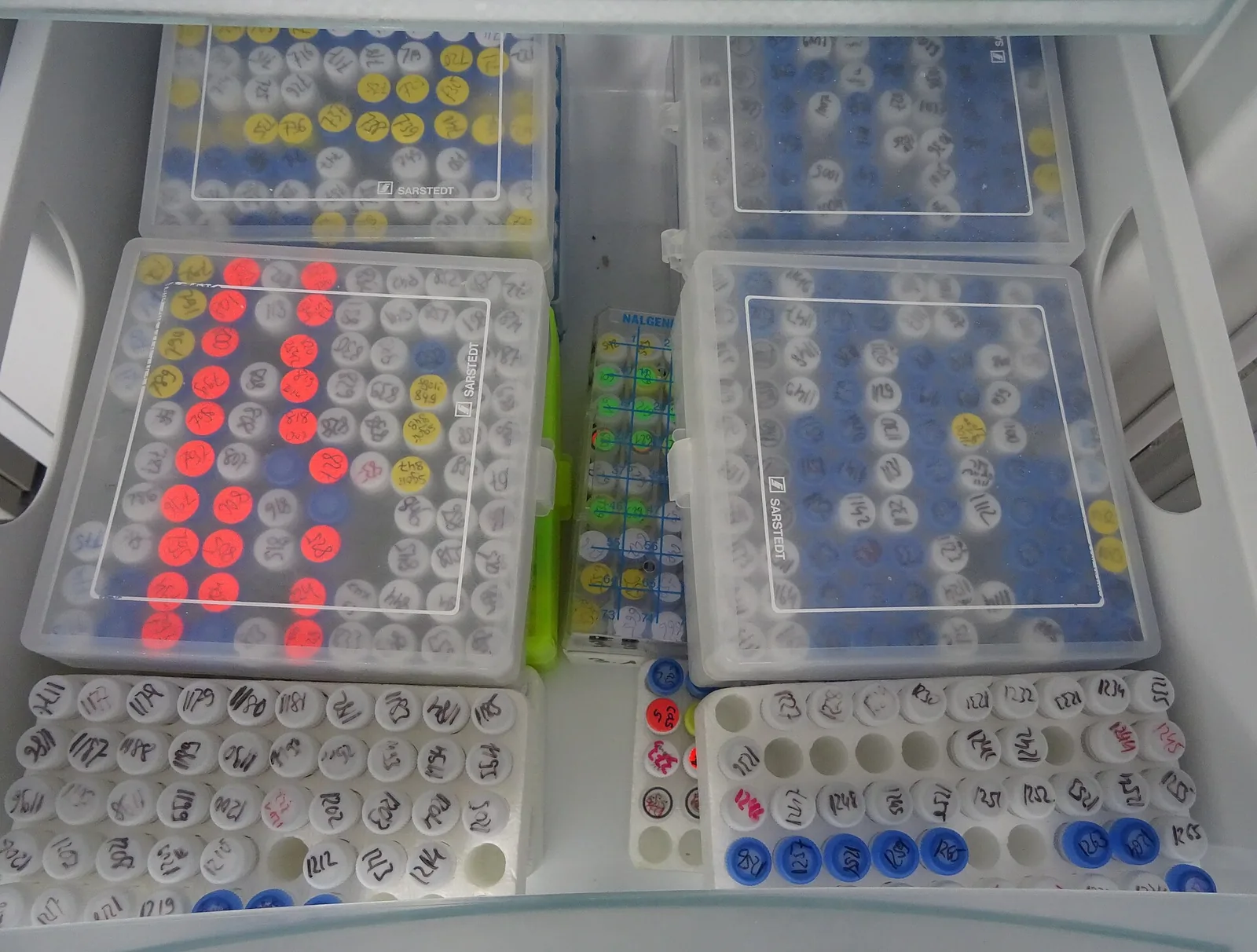
The −20 °C freezer is the default long-term home for lyophilized peptides in most research labs: the temperature most COAs name for storage measured in months to years. Ultra-low freezers (−80 °C) appear in the literature for archival reference stocks kept over multi-year horizons. At these temperatures, molecular motion is slow enough that the degradation pathways described above are effectively paused for practical purposes — provided the vial stays dry and sealed.
Tier 2: Refrigerator (2–8 °C)
The refrigerator tier serves two roles in any peptide storage temperature guide. For lyophilized peptides, 2–8 °C is the accepted short-term tier — weeks of benchtop-adjacent storage, or the condition during active experimental use. For reconstituted peptides, it is the only tier: once a peptide is in solution, the literature consistently places it at 2–8 °C and describes usable windows in days to a few weeks, with the exact window set by the COA. Never store reconstituted material at room temperature beyond the working day, and never assume a solution lasts as long as the powder did.
Tier 3: Room temperature (transit only)
Peptides routinely survive shipping at ambient temperature — lyophilized material is stable enough for days in transit, which is why suppliers ship it that way. But transit survival is not storage. The peptide storage temperature guide rule is simple: on arrival, confirm the material, log it, and move it to its cold tier the same day.
Log the arrival. The most overlooked step in this peptide storage temperature guide is documentation: note the receipt date, the lot number, and the storage tier you placed the vial in. Months later, when you question a result, that log entry is what tells you whether the sample or the storage is the suspect.
Lyophilized vs. Reconstituted: Different Rules
The single most important distinction in this peptide storage temperature guide is the state of the material. Dry and dissolved peptides follow different rules because they face different chemistry:
- Lyophilized: stable for months to years at −20 °C; weeks at 2–8 °C; survives brief room-temperature transit. Main enemies: moisture, light, repeated warming.
- Reconstituted: days to weeks at 2–8 °C per the COA; far more vulnerable to every degradation pathway. Main enemies: warmth, time, contamination, and freeze–thaw cycles.
That asymmetry is why experienced labs reconstitute only what the experimental plan needs, when it needs it — keeping the bulk of a stock in the stable dry form for as long as possible. Our research overviews of studied formulation formats, including the Semax nasal spray and Selank nasal spray research pages, discuss formulation science in the same research-use framing as this peptide storage temperature guide.
The Freeze–Thaw Problem
Repeated freezing and thawing damages peptides: each cycle concentrates solutes as ice forms, stresses the molecules at ice–water interfaces, and — for solutions — can drive aggregation. The standard lab answer, repeated across the literature this peptide storage temperature guide draws on, is aliquoting: dividing a reconstituted stock into single-use portions so each portion is thawed exactly once. A freezer full of one-use aliquots is the visible sign of a lab that takes stability seriously.
For lyophilized material the equivalent discipline is simpler: minimize warming cycles. Do not pull the whole stock from the −20 °C freezer every time you need a small amount — plan withdrawals, work quickly, and return the vial promptly. Every unnecessary trip through room temperature is a small withdrawal from the sample’s stability budget.
Light, Moisture, and Handling
Temperature gets the headline in any peptide storage temperature guide, but three companions matter nearly as much. Light: store vials in the dark — in closed boxes or amber secondary containers — since photodegradation is a documented pathway for sensitive residues. Moisture: keep lyophilized vials sealed with desiccant where the COA suggests it, and never open a cold vial immediately: let it equilibrate to room temperature first so humid lab air does not condense inside. Handling: clean technique, labeled aliquots, and a freezer map beat a heroic memory every time.
The condensation trap. Opening a −20 °C vial in a humid lab coats the cold powder with condensed water — the one thing lyophilization removed. This peptide storage temperature guide treats the equilibrate-before-opening habit as mandatory: sealed vial, room temperature, then open. It costs ten minutes and saves the sample.
How to Read the Storage Section of a COA
Supplier certificates of analysis vary in format, but the storage information answers the same questions. Run this checklist against any COA you receive — it is the practical companion to this peptide storage temperature guide:
- ☐ Stated storage temperature for the lyophilized product (commonly −20 °C).
- ☐ Stated storage temperature and usable window for the reconstituted product (commonly 2–8 °C, days to weeks).
- ☐ Expiry or retest date for the lot, and the conditions it assumes.
- ☐ Light and moisture instructions (dark storage, desiccant, sealed container).
- ☐ Whether the COA distinguishes long-term vs. in-use storage — follow both.
- ☐ Lot number match: confirm the COA in your hand is for the lot in your freezer.
Approved drug labels carry the same kind of storage statements for finished products — the FDA’s drug information pages explain how labeling works — and the principle transfers directly: the storage statement is part of the product’s validated identity. For research-use materials like our Semax 10mg and Selank 10mg research listings, the accompanying documentation serves the same role: read it before you store, not after something goes wrong.
Key Takeaways: Peptide Storage Temperature Guide
Lyophilized peptides: −20 °C or below for months to years (−80 °C for archival stocks), 2–8 °C for weeks. Reconstituted peptides: 2–8 °C for days to a few weeks per the COA. Room temperature is for transit only. Protect from light and moisture, equilibrate cold vials before opening, aliquot solutions to avoid freeze–thaw cycles, and let the lot’s COA override any general guide. (Research framing only — general lab practice, not product-specific instruction.)
Peptide Storage Temperature Guide: Final Research Notes
Good peptide storage is unglamorous and decisive: the right tier, the dry and dark companions, the aliquot discipline, and the arrival log. This peptide storage temperature guide gives you the standard tiers the literature and COAs converge on — but the habit that matters most is checking the specific COA for every lot, every time. Samples are expensive; freezers are cheap; there is no reason to gamble.
For researchers building organized reference stocks, our Selank vs Semax research comparison applies the same documentation discipline to comparing two well-studied compounds side by side. Keep this guide taped inside the freezer door — metaphorically or literally — and your samples will outlast your doubts about them.
Peptide Storage Temperature Guide: Frequently Asked Questions
Quick answers to the storage questions researchers ask most.
What is the best temperature for storing lyophilized peptides?
−20 °C or below for long-term storage (months to years), which is the tier most COAs specify. This peptide storage temperature guide notes 2–8 °C as acceptable for short-term (weeks) and −80 °C for multi-year archival stocks. Always confirm against your lot’s COA.
How long do reconstituted peptides last in the refrigerator?
Typically days to a few weeks at 2–8 °C, with the exact window set by the product’s COA. Reconstituted material degrades far faster than lyophilized powder — a central point of this peptide storage temperature guide — so only reconstitute what your experimental plan needs.
Can peptides be stored at room temperature?
Only briefly, as in shipping transit. Lyophilized peptides survive days at ambient temperature in transit, but room temperature is not a storage tier. Per this peptide storage temperature guide, move vials to their cold tier on the day they arrive.
Why should I avoid freeze–thaw cycles?
Each cycle concentrates solutes during ice formation and stresses molecules at ice–water interfaces, which can drive aggregation and degradation in solution. The peptide storage temperature guide standard fix is aliquoting reconstituted stock into single-use portions, each thawed exactly once.
Should I let a cold vial warm up before opening it?
Yes. Opening a −20 °C vial in humid lab air causes condensation on the cold powder, reintroducing the moisture lyophilization removed. Let the sealed vial equilibrate to room temperature first — a small habit this guide treats as mandatory.
Does the COA override general storage guides?
Always. This peptide storage temperature guide describes industry-standard practice, but the certificate of analysis for your specific lot states the storage conditions validated for your actual material. When they differ, follow the COA.



1 Comment