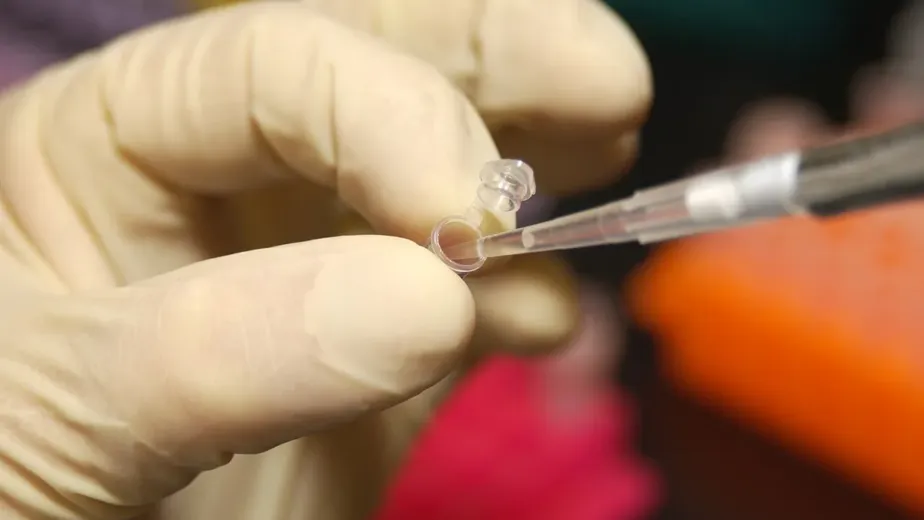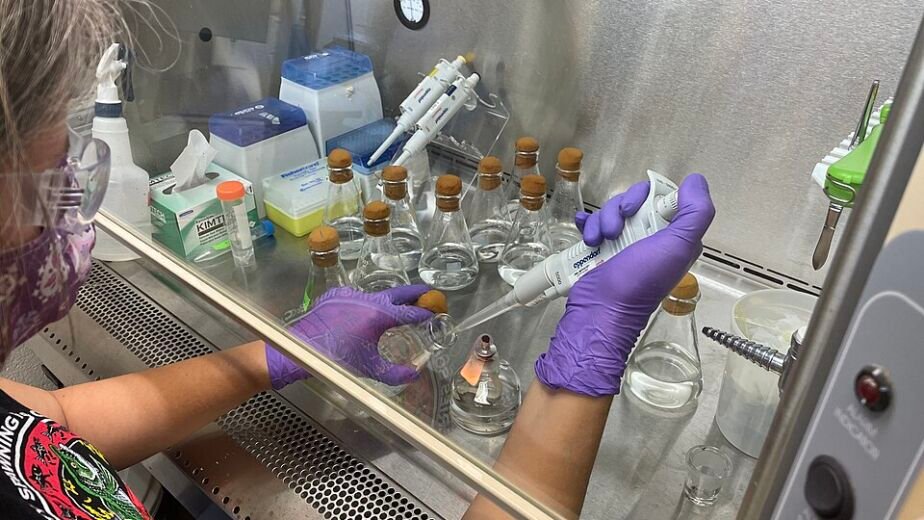

Knowing how to verify peptide identity is one of the most practical skills in peptide research. A vial arrives with a label, but the label is a claim — and in a field where a single amino acid substitution can change everything about a molecule’s behavior, claims deserve checking. Fortunately, analytical chemistry gives researchers a well-established toolkit for answering the question of how to verify peptide identity: mass spectrometry confirms the molecular mass, chromatography reveals the purity profile, and amino acid analysis cross-checks the composition. This guide explains how to verify peptide identity using each of these methods — what the technique measures, what it can and cannot prove, and how labs combine them into a convincing identity case. Everything here is descriptive laboratory science for research use only.
Research-use-only disclaimer: All peptides discussed on yourfitnesspeptides.com, including Semax and Selank, are sold strictly for laboratory research use only. They are not medicines, not dietary supplements, and are not approved by the FDA. This article is educational. It contains no dosage information, no administration instructions, and no medical advice — and nothing about how to verify peptide identity constitutes guidance for human use.
Why Identity Verification Matters in Peptide Research
Peptides are defined by their exact amino acid sequence. Change one residue — swap a leucine for an isoleucine, deamidate an asparagine — and you have a different molecule that may behave differently in every assay downstream. That is the fundamental reason researchers learn how to verify peptide identity before trusting a new lot: the cost of a wrong-identity compound is not just a wasted experiment, but weeks of data built on a false premise.
Identity errors reach the bench through ordinary channels. Synthesis produces closely related impurities (deletion sequences missing one residue, truncated fragments, racemized products). Labels get swapped during aliquoting. Suppliers make mistakes. None of this is exotic — it is the normal background noise of chemical supply chains, and it is why reputable suppliers provide certificates of analysis with every lot. Learning how to verify peptide identity means learning to read those certificates critically and, when the stakes justify it, to confirm the key results independently. Our Semax 10mg and Selank 10mg research listings, for example, are handled under the same research-use framing that makes analytical verification a standard expectation rather than an insult to the supplier.
Identity vs. purity — different questions. A core idea in how to verify peptide identity: identity asks “is this the right molecule?” while purity asks “how much of the sample is that molecule versus something else?” A sample can be the right peptide at low purity, or a wrong peptide at high purity. Serious verification answers both questions, which is why labs pair an identity technique (mass spectrometry) with a purity technique (HPLC).
Mass Spectrometry: The Core of How to Verify Peptide Identity
If how to verify peptide identity had a single definitive answer, it would be mass spectrometry (MS). A mass spectrometer measures the mass-to-charge ratio of ionized molecules with extraordinary precision, and because each peptide sequence has a characteristic theoretical mass, a matching measured mass is strong evidence of identity. Modern instruments routinely achieve mass accuracy that distinguishes compounds differing by a single Dalton — easily enough to catch a missing or substituted residue in most research peptides.
The workflow runs in four stages:
Step 1 — Sample preparation
A tiny amount of the peptide is dissolved in a suitable solvent, often with an acid additive that promotes ionization. Preparation quality matters: salts and contaminants suppress the signal, so clean technique here determines everything downstream.
Step 2 — Ionization
The solution is converted into gas-phase ions, most commonly by electrospray ionization (ESI) or matrix-assisted laser desorption/ionization (MALDI). Peptides ionize readily, which is one reason MS became the dominant identity tool for peptide work.
Step 3 — Mass analysis
The ions are separated by their mass-to-charge ratios inside the analyzer — time-of-flight, Orbitrap, and quadrupole instruments each do this differently, with different trade-offs in speed, resolution, and cost.
Step 4 — Interpretation
The measured mass is compared against the theoretical mass calculated from the expected sequence. A match within the instrument’s accuracy window confirms the expected composition; tandem MS (MS/MS) goes further, fragmenting the peptide to read back sequence information directly.
What MS proves — and what it does not — deserves precision. MS confirms molecular mass, which rules out most wrong-identity scenarios: a different peptide, a truncated fragment, or a major adduct will not match. But MS alone cannot distinguish isomers with identical mass — leucine and isoleucine, for instance, weigh exactly the same. That limitation is why how to verify peptide identity is a multi-technique answer rather than a single-instrument one. For background on the technique family, the PubMed database indexes thousands of studies using MS for peptide characterization.

HPLC and UPLC: Purity Profiling as Part of Identity
High-performance liquid chromatography (HPLC) — and its higher-pressure successor UPLC — separates the components of a sample as they travel through a column at different speeds. The result, a chromatogram, shows the main peptide peak alongside any impurity peaks: deletion sequences, oxidized variants, and aggregates each appear as distinct signals. While chromatography is primarily a purity technique, it contributes to how to verify peptide identity in two important ways.
First, the retention time — when the peptide exits the column under defined conditions — is a characteristic property. A sample whose main peak elutes at a markedly different time than the reference standard is waving a red flag, even if its mass looks right. Second, the impurity profile itself is identifying: a reputable supplier’s lot should show a clean main peak with minor, characterized impurities, matching the certificate of analysis. A chromatogram crowded with unexpected peaks suggests degradation, contamination, or a synthesis that went sideways.
In practice, HPLC and MS are run together as LC-MS: the chromatograph separates, the mass spectrometer identifies each peak. That hyphenated setup is the workhorse configuration for how to verify peptide identity in modern peptide labs, because it answers identity and purity in a single run — which peak is the peptide, how much of the sample it represents, and what the other peaks are.
Always compare against a reference. A chromatogram or mass spectrum is most convincing beside a reference standard run under identical conditions. When learning how to verify peptide identity, the habit to build is comparative: same column, same gradient, same instrument settings — then judge whether the sample matches the standard or merely resembles it.
How to Verify Peptide Identity With Amino Acid Analysis
Amino acid analysis (AAA) takes a different route: the peptide is fully hydrolyzed — broken down into its individual amino acids, typically with strong acid at elevated temperature — and the resulting mixture is quantified. The measured ratios of amino acids are then compared to the ratios expected from the sequence. A peptide expected to contain two alanines and one glycine should yield roughly a 2:1 measured ratio; a large deviation points to a composition problem.
AAA is older than routine peptide MS and less fashionable, but it earns its place in how to verify peptide identity for specific reasons. It is quantitative where MS is qualitative: AAA can determine the actual peptide content of a vial, correcting for the salts, moisture, and counter-ions that make “net peptide content” differ from the weighed powder mass. It also catches composition errors that mass alone might miss in edge cases. Its weaknesses are real — hydrolysis destroys some residues (tryptophan is notoriously fragile under standard conditions), and it reveals composition rather than sequence order — but as an orthogonal check, it remains valuable, especially when a certificate of analysis needs independent confirmation.

Comparing the Identity-Verification Methods
No single technique tells the whole story. The table below summarizes how each method contributes to how to verify peptide identity, so a lab can choose the right combination for its question and budget.
| Method | What it confirms | Key strength | Key limitation |
|---|---|---|---|
| Mass spectrometry (MS) | Molecular mass; sequence via MS/MS | Definitive mass match; tiny sample needed | Cannot distinguish same-mass isomers |
| HPLC / UPLC | Purity profile; characteristic retention time | Reveals impurities and degradation products | Retention alone does not prove structure |
| LC-MS (combined) | Identity + purity in one run | Each peak identified by mass | Requires skilled operation |
| Amino acid analysis | Amino acid composition; net peptide content | Quantitative; orthogonal to MS | Destroys sample; no sequence order |
| Edman degradation | N-terminal sequence, residue by residue | True sequence readout | Slow; blocked N-termini stop it |
| NMR spectroscopy | Full structural detail | Definitive structure including conformation | Expensive; large sample; slow |
For most research purposes, the practical answer to how to verify peptide identity is LC-MS against a reference standard, with AAA added when quantitative content matters. Edman degradation and NMR enter the picture for novel or disputed structures, where the question is not “is this the expected peptide?” but “what is this, exactly?”
Orthogonality is the point. Two methods that fail in different ways beat one perfect method. MS and AAA, or LC-MS plus a reference-standard comparison, give an identity case that survives scrutiny — which is the entire goal when learning how to verify peptide identity for publishable research.
Reading a Certificate of Analysis Like a Skeptic
Most researchers first meet how to verify peptide identity through a supplier’s certificate of analysis (CoA) rather than their own instrument. A good CoA is a genuine analytical record; a thin one is marketing. Here is what to check:
- Identity method stated: the CoA should name the technique — typically MS with the measured mass reported — not just assert identity.
- Measured vs. theoretical mass: both numbers should appear, with the difference within the instrument’s stated accuracy.
- Purity method and result: an HPLC purity percentage with the chromatographic conditions (column, gradient, wavelength) identified.
- Chromatogram attached: a reported “98% pure” without the underlying trace is a claim without evidence.
- Lot and date: the CoA must match the physical lot number on your vial, with a test date — not a generic template.
- Net peptide content: distinguishes the actual peptide mass from salts and moisture; its absence is a yellow flag.
The FDA’s drug information resources illustrate how seriously regulated industries take analytical verification — research labs borrow the same mindset at an appropriate scale. And when a CoA looks thin, the methods above let a lab verify independently rather than argue with a supplier.
When to Re-Verify Identity in the Lab
Verification is not a one-time event. Sensible points to re-check how to verify peptide identity in practice include:
- New supplier or new lot — every new source earns its trust analytically before it enters experiments.
- After long storage — degradation products accumulate; a lot that was 98% pure two years ago may not be today.
- Unexpected results — when an established assay suddenly misbehaves, the compound is a suspect, not just the protocol.
- Shared or transferred stocks — vials that changed hands or freezers deserve a fresh check before use.
Researchers comparing compounds — for instance in our Selank vs Semax research comparison — implicitly rely on every vial being what it claims to be. Identity verification is the unglamorous foundation that makes the interesting comparisons trustworthy. Our overviews of Semax nasal spray and Selank nasal spray research stay in the same lane: describe the research, verify the materials, claim nothing beyond the data.

Key Takeaways: How to Verify Peptide Identity
Mass spectrometry confirms what the molecule is, HPLC shows how pure it is, and amino acid analysis cross-checks the composition quantitatively — together, they form the standard answer to how to verify peptide identity. Read every certificate of analysis skeptically, compare against reference standards run under identical conditions, and re-verify new lots, aged stocks, and transferred vials before they enter experiments. Identity verification is not paranoia; it is the cheapest insurance a peptide research program can buy. (Research framing only — analytical methods described for laboratory research, not human-use guidance.)
How to Verify Peptide Identity: Frequently Asked Questions
Direct answers to the questions researchers ask about confirming what is in the vial.
What is the best method for how to verify peptide identity?
Mass spectrometry, usually as LC-MS. MS confirms the molecular mass against the theoretical mass of the expected sequence, while the chromatography half reveals purity and flags impurities. For the complete answer to how to verify peptide identity, pair it with a reference standard run under identical conditions.
Can HPLC alone verify peptide identity?
Not definitively. HPLC shows purity and a characteristic retention time, which strongly suggests identity when matched to a reference — but retention time alone does not prove structure. That is why how to verify peptide identity properly means combining chromatography with mass spectrometry rather than relying on either alone.
What does amino acid analysis add beyond mass spectrometry?
Quantitation and orthogonality. Amino acid analysis measures the actual amino acid composition and the net peptide content of the vial — information MS does not provide directly. It is an independent check with different failure modes, which makes the overall identity case stronger.
How do I know if a certificate of analysis is trustworthy?
Look for the named identity method with measured vs. theoretical mass, HPLC conditions with an attached chromatogram, a matching lot number and test date, and a reported net peptide content. A CoA missing most of these is a claim, not evidence — and knowing how to verify peptide identity independently is the fallback.
How often should stored peptides be re-verified?
There is no universal schedule; it depends on the compound, storage conditions, and how critical the data is. Sensible triggers are new lots, long storage intervals, unexpected assay results, and any transfer between hands or freezers. When in doubt, a quick LC-MS check costs far less than a compromised experiment.
Where can researchers obtain peptides for laboratory verification work?
Research-use peptides are supplied as laboratory vials — see our Semax 10mg and Selank 10mg research listings. Source only from suppliers explicit about research-use-only status, and apply the verification habits in this guide to every new arrival.
How to Verify Peptide Identity: Final Research Notes
The honest answer to how to verify peptide identity is a short list executed well: confirm the mass with MS, profile the purity with HPLC, cross-check composition with amino acid analysis when it matters, and read every certificate of analysis like a skeptic. None of these techniques is exotic — they are the standard analytical furniture of peptide science — but the discipline of actually using them, on every new lot and every suspicious result, is what separates careful research from hopeful research.
Kept in that research frame, identity verification is simple to state and worth the effort every time: know what is in the vial before the vial enters the experiment.