

Every peptide with a long research history accumulates relatives: shortened fragments, single-residue swaps, elongated versions, and fusion constructs built to solve a specific problem. DSIP is no exception. The literature on DSIP analogs and variants stretches from the discovery year — when the Basel team was already testing synthetic nonapeptide analogues — through Russian work on elongated and truncated forms, to a 2024 fusion construct designed to carry DSIP across the blood-brain barrier. This article maps the known family as described in the published literature: what was made, why, and what the studies reported. As always, this is a research summary, not a catalog of usable compounds.
Research-use-only disclaimer: DSIP and its analogs are not FDA-approved drugs and are not medicines. They are handled as research compounds for laboratory and scientific investigation only. This article summarizes published research for educational purposes. It contains no dosage information, no usage instructions, and no medical advice, and nothing here recommends human use of any compound.
The Parent Molecule: What the DSIP Analogs and Variants Are Based On
All DSIP analogs and variants start from the same nine-amino-acid sequence: Trp-Ala-Gly-Gly-Asp-Ala-Ser-Gly-Glu, the nonapeptide isolated by Monnier and Schoenenberger’s team and published in 1977. The sequence is short, linear, and unprotected — no disulfide bridges, no cyclic backbone, no terminal modifications in the natural form. That simplicity is a double-edged sword for analog design: almost any position can be modified, but the parent molecule’s liabilities are severe. Published work reports that DSIP is inactivated within minutes by aminopeptidase activity, that only a small fraction of a peripheral dose reaches brain tissue, and that no dedicated receptor has been conclusively identified. Every entry in the DSIP analogs and variants family tree is, in one way or another, a response to those three problems.
What “analog” means here: In this article, DSIP analogs and variants means any peptide described in the literature as derived from, related to, or containing DSIP — including truncated fragments, residue-substituted nonapeptides, elongated forms, DSIP-containing preparations, and fusion constructs. It does not mean approved drugs or available products.
The First Generation: Synthetic Nonapeptide Analogues (1977)
Analog research began the same year as the discovery. In the landmark 1977 Experientia paper, Monnier’s team did not only compare the original isolated material with the synthetic nonapeptide — they also synthesized and tested nonapeptide analogues with targeted substitutions, including one with tyrosine in place of aspartic acid and another with an arginine/glycine positional swap. These first DSIP analogs and variants were tools for a specific question: which parts of the sequence matter for the delta-EEG effect?
The approach — change one residue, test the biology — became the template for all later analog work. It also established an early lesson that recurs through the literature: small changes to the nine-residue chain can substantially alter the peptide’s reported activity profile, which is both why analogs are interesting and why none of them simplified the DSIP story.
Truncated and Elongated Forms: The “Short” and “Long” DSIP Analogs and Variants
One of the clearest-documented branches of DSIP analogs and variants comes from work on peptide specificity: researchers synthesized both shortened and lengthened versions of DSIP to ask how much of the chain the biology actually needs.
DSIP1–4: the “short” tetrapeptide
The N-terminal tetrapeptide fragment of DSIP — four of the nine residues — was synthesized and tested as a minimal analog. In a published rat study of metaphit-induced audiogenic seizures, DSIP1–4 was evaluated alongside full-length DSIP for effects on seizure incidence and severity, with EEG recording. The study’s framing is notable: the fragment was explicitly made to evaluate peptide specificity — whether the full nine-residue chain is required for the reported effects, or whether a short fragment carries the activity.
Hepta- and octapeptides: the “long” analogs
The same research program synthesized seven- and eight-residue DSIP-related peptides, described as “long” analogs in contrast to the tetrapeptide “short” form. Together, the short and long series represent a systematic length scan of the DSIP scaffold — one of the few genuinely systematic analog series in the DSIP literature. Among DSIP analogs and variants, these are the closest thing to a structure-activity study of chain length.

The Isoaspartyl Variant: (β-Asp⁵)-DSIP
A chemically distinctive entry among DSIP analogs and variants is the (β-Asp⁵) form, in which the aspartic acid at position 5 is present as an isoaspartyl residue — a structural rearrangement that occurs naturally as proteins age. This variant is described in the biochemical literature as a substrate for protein L-isoaspartyl methyltransferase, a brain enzyme involved in repairing age-damaged proteins that contain atypical isoaspartyl peptide bonds.
Why does this matter for DSIP research? The isoaspartyl modification is a known marker of protein aging and damage, and the enzyme that recognizes it is part of the brain’s protein-repair machinery. A DSIP variant that interfaces with that system connects the peptide to an entirely different literature — protein aging and repair — than the sleep research it is named for. It is a reminder that DSIP analogs and variants are not only tools for improving the parent molecule; some are probes for adjacent biology.
Reading catalog listings carefully: Biochemical suppliers list (β-Asp⁵)-DSIP as a research reagent with lab-use-only labeling. A catalog listing is not a research finding — it tells you the variant can be synthesized and purchased for laboratory work, not what it does biologically. In this article, only published-study findings count as evidence about DSIP analogs and variants.
Deltaran: The DSIP-Containing Preparation
No survey of this structural family is complete without Deltaran — though it requires a careful definition. Deltaran is described in the Russian literature as a DSIP-containing preparation, not as a single defined analog. It represents a formulation tradition rather than a molecule, and the published studies using it form a distinct branch of the literature:
- Popovich et al. (2003), in Mechanisms of Ageing and Development, tested Deltaran’s effects on biomarkers of aging, lifespan, and spontaneous tumor incidence in female SHR mice — the most-cited Deltaran study in the Western literature.
- Koplik et al. (2008), in Neuroscience and Behavioral Physiology, examined DSIP and Deltaran as potential approaches to antistress protection.
- Sinyukhin et al. (2009) reported on a DSIP analogue correcting the CNS functional state of children treated with antiblastomic (chemotherapy) drugs — a conference report, not a full trial, but part of the published record.
Deltaran matters for two reasons. First, it kept DSIP-related research alive through the 2000s, when Western pharmaceutical development had stopped. Second, it illustrates a persistent ambiguity in the DSIP analogs and variants literature: when a “DSIP-containing preparation” produces a reported effect, the literature does not always resolve how much belongs to DSIP itself versus the preparation’s other components.
The KND Oligopeptide: A Proposed Endogenous Prototype
One of the most conceptually interesting branches of the family is not a synthetic modification at all, but a hypothesis about what DSIP is. Russian researchers proposed the KND oligopeptide as a putative endogenous prototype of DSIP — the idea being that the nine-residue peptide studied in laboratories might be a fragment or derivative of a larger natural molecule.
This hypothesis was developed across several papers in the Russian Journal of Bioorganic Chemistry, including a 2013 comparative study of the KND oligopeptide’s biological properties and a 2019 paper on the synthesis and biological properties of analogs of both DSIP and its proposed KND prototype. If the hypothesis were correct, it would reframe the entire DSIP analogs and variants family: the “analogs” would include candidates for the actual endogenous molecule, and the synthetic nonapeptide would be the derivative rather than the original.
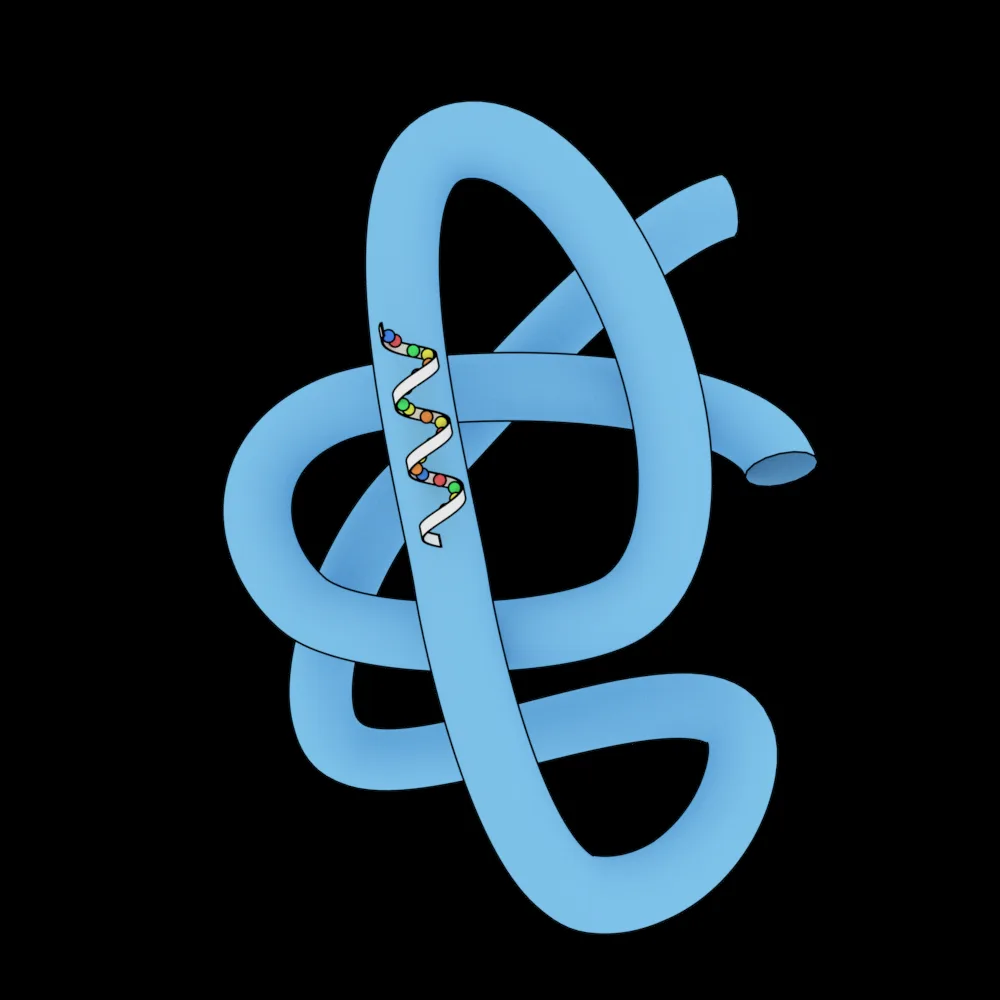
Why the KND hypothesis matters: It connects directly to the “unresolved riddle” at the heart of DSIP research — no gene, no precursor, no confirmed receptor. A larger endogenous prototype would explain why the free nonapeptide behaves oddly: rapid degradation, poor brain penetration, antibody signals that may not match the active form. Among DSIP analogs and variants, the KND work is the branch most concerned with what DSIP fundamentally is.
The 2024 Fusion Construct: CBBBP-DSIP
The most recent addition to this literature takes a modern drug-delivery approach to the peptide’s oldest problem: getting it into the brain. A 2024 paper in Frontiers in Pharmacology described a fusion peptide combining DSIP with a blood-brain-barrier-crossing peptide (CBBBP), expressed via secretion from the yeast Pichia pastoris, and tested in mouse models of PCPA-induced insomnia.
The logic is straightforward and well precedented in peptide science: attach the short, rapidly degraded peptide to a carrier sequence known to cross the blood-brain barrier, and test whether the fusion retains DSIP’s reported activity while reaching its target. The study reported sedative and hypnotic effects of interest in the insomnia model. As with all DSIP analogs and variants, the finding is a preclinical data point — a mouse-model result, not a clinical one — but it represents the first application of modern peptide-engineering strategy to the DSIP scaffold in the published literature.
Comparing the DSIP Analogs and Variants
The table below summarizes the known family — every branch described in the literature sections above:
| Variant / branch | Type of modification | Era | What the literature reports |
|---|---|---|---|
| Synthetic nonapeptide analogues | Single-residue substitutions (e.g., Tyr for Asp) | 1977 | Tested alongside the discovery; established that sequence changes alter activity |
| DSIP1–4 (“short”) | N-terminal truncation to tetrapeptide | 2000s | Evaluated for peptide specificity in a rat seizure model with EEG |
| Hepta- and octapeptides (“long”) | Elongated forms | 2000s | Part of the systematic length-scan series with the short fragment |
| (β-Asp⁵)-DSIP | Isoaspartyl rearrangement at position 5 | Ongoing (reagent) | Substrate for a brain protein-repair enzyme; a probe for protein-aging biology |
| Deltaran | DSIP-containing preparation | 2000s | Tested on aging biomarkers, stress protection; formulation, not a single molecule |
| KND oligopeptide | Proposed endogenous prototype | 2013–2019 | Hypothesis that DSIP derives from a larger natural molecule; analogs synthesized and tested |
| CBBBP-DSIP fusion | BBB-crossing peptide fused to DSIP | 2024 | Yeast-expressed fusion tested in a mouse insomnia model; delivery-focused design |
Analog Design Strategies: What Works in Principle
Stepping back from specific molecules, this literature illustrates the standard toolkit of peptide engineering — and its limits when applied to a molecule this poorly understood.
Strategies represented in the DSIP literature
- Residue substitution — changing individual amino acids to probe which positions matter (the 1977 analogues). Pro: direct structure-activity information. Con: without a known receptor, the results are hard to interpret mechanistically.
- Truncation and elongation — testing shorter and longer forms to find the minimal active sequence (the short/long series). Pro: defines how much of the chain the biology needs. Con: a minimal fragment may lose properties of the full molecule.
- Carrier and fusion approaches — attaching DSIP to a BBB-crossing sequence (CBBBP-DSIP, 2024). Pro: addresses the delivery problem directly. Con: the fusion is a new molecule whose properties must be re-established from scratch.
- Preparation-based approaches — formulating DSIP within a broader preparation (Deltaran). Pro: kept research going; may capture carrier-protein effects. Con: ambiguous attribution — which component caused the reported effect?
The fundamental limit
All of these strategies run into the same wall: DSIP has no conclusively identified receptor and no known gene. Analog design is normally guided by receptor structure — you optimize the key that fits the lock. For DSIP analogs and variants, the lock has never been found, so every modification is empirical: make the change, test the biology, and interpret the result without a mechanistic anchor. That is why the family tree is wide but shallow — many branches, none developed into a drug.
Key Takeaways: DSIP Analogs and Variants
1. The family is wider than most researchers realize. DSIP analogs and variants include 1977 substitution analogues, truncated and elongated forms, an isoaspartyl variant, the Deltaran preparation, the proposed KND endogenous prototype, and a 2024 BBB-crossing fusion construct.
2. Each branch was built to solve a specific problem. Length scans probe the minimal active sequence; the isoaspartyl variant probes protein-repair biology; the KND hypothesis addresses the missing-gene riddle; the fusion construct addresses brain delivery.
3. Deltaran is a preparation, not a molecule. Studies reporting Deltaran’s effects cannot be read as studies of a defined DSIP analog — attribution to DSIP itself remains ambiguous in that branch.
4. No analog escaped the fundamental limit. Without a confirmed receptor, all of them remain empirical probes. The family tree documents fifty years of creative chemistry around a molecule whose biology is still unresolved.
Research framing only — a summary of the published literature, not a recommendation regarding any compound.
DSIP Analogs and Variants: Final Research Notes
This literature is, in miniature, the story of peptide science applied to a mystery. The tools are the standard ones — substitute, truncate, elongate, fuse, formulate — and they were applied with genuine creativity across five decades. What they produced is a family tree with real branches: the short tetrapeptide and long oligopeptides that mapped the importance of chain length, the isoaspartyl variant that linked DSIP to protein-repair enzymology, the KND hypothesis that may yet explain what DSIP is, and the fusion construct that brought modern delivery science to the scaffold.
What the family tree did not produce is a developed drug or a resolved mechanism — and that, too, is data. For researchers, this record is most useful as a map of what has been tried and what each attempt revealed about the parent molecule’s constraints. The next chapter, if there is one, likely belongs to whoever finally identifies the receptor — or the true endogenous form — that the analogs have been circling for fifty years.
Researchers exploring related peptide literature can browse our research overviews — the DSIP Explained for Beginners hub and our guides to DSIP Half-Life and DSIP Key Research Findings — and our DSIP 5mg research listing and the COA Library. Primary literature is indexed on PubMed, and peptide background is available via Wikipedia’s peptide entry.
DSIP Analogs and Variants: Frequently Asked Questions
Quick answers to the questions researchers ask most about DSIP’s structural family — all in research framing.
What are the main known DSIP analogs and variants?
The literature describes several branches: single-residue substitution analogues from 1977, the truncated DSIP1–4 tetrapeptide and elongated hepta- and octapeptide forms, the (β-Asp⁵) isoaspartyl variant, the DSIP-containing preparation Deltaran, the proposed KND endogenous prototype oligopeptide, and the 2024 CBBBP-DSIP blood-brain-barrier fusion construct. Together these form the known family of DSIP analogs and variants.
What is DSIP1–4?
DSIP1–4 is the N-terminal tetrapeptide fragment of DSIP — the first four residues of the nine-residue chain — synthesized as a “short” analog to test peptide specificity. In published rat research it was evaluated alongside full-length DSIP in a seizure model with EEG recording, to determine whether the full chain is required for the reported effects.
What is Deltaran, and is it a DSIP analog?
Deltaran is described in the Russian literature as a DSIP-containing preparation, not a single defined molecule — so it is a formulation tradition rather than a strict analog. Studies using Deltaran (aging biomarkers in mice, antistress research) are part of the DSIP analogs and variants literature, but effects reported for the preparation cannot be cleanly attributed to DSIP itself.
What is the KND oligopeptide hypothesis?
Russian researchers proposed the KND oligopeptide as a putative endogenous prototype of DSIP — the idea that the studied nonapeptide may be a fragment of a larger natural molecule. Developed in papers from 2013 to 2019, the hypothesis would explain several puzzles (no known gene, rapid degradation) if confirmed. It remains a hypothesis within the DSIP analogs and variants literature.
What is the CBBBP-DSIP fusion construct?
Described in a 2024 Frontiers in Pharmacology paper, it fuses DSIP to a blood-brain-barrier-crossing peptide (CBBBP), expressed via the yeast Pichia pastoris, and was tested in mouse models of PCPA-induced insomnia. It is the most recent of the DSIP analogs and variants — a delivery-focused, preclinical construct, not a clinical candidate.
Has any DSIP analog become an approved drug?
No. None of the DSIP analogs and variants has been approved anywhere for any indication, and no DSIP analog has entered modern registered clinical development. The family tree documents research probes and hypotheses, not medicines. Research compounds are supplied for laboratory use only, as with our DSIP 5mg research listing and the COA Library.