DSIP explained for beginners starts with a simple definition: DSIP — delta sleep-inducing peptide — is a small chain of nine amino acids that researchers have studied since the 1970s, mostly in connection with sleep research. If you are new to the research-peptide space, DSIP explained for beginners is the right entry point: what the molecule is, how it was discovered, what the research has actually looked at, and how compounds like this are handled in laboratories today. This is DSIP explained for beginners in plain language, with no assumed background — but with the same research-use-only framing every article on this site carries. DSIP is not a medicine, not a supplement, and not FDA-approved; it is a research compound, and this primer treats it as one.
Research-use-only disclaimer: DSIP is not an FDA-approved drug and is not a medicine. It is handled as a research compound for laboratory and scientific investigation only. All products are sold strictly for laboratory research use. This beginner primer is educational only. It contains no dosage information, no usage instructions, and no medical advice.
DSIP Explained for Beginners: The 60-Second Version
Before the detail, here is DSIP explained for beginners in one paragraph. DSIP is a nonapeptide — “nona” means nine, so a chain of nine amino acids — first isolated in 1974 from rabbit blood by researchers Schoenenberger and Monnier. It was named “delta sleep-inducing peptide” because early experiments linked it to delta-wave patterns, the slow brain waves associated with deep sleep. Over the following decades it became a subject of sleep research, neuroendocrine studies, and animal-model work, including small human sleep studies in the 1980s. Today it circulates as a research chemical: a characterized laboratory material sold with a certificate of analysis, for research use only. That is DSIP explained for beginners at its simplest — a small molecule with a long research history and no approved medical use.
Beginner checkpoint: a peptide is a short chain of amino acids — the same building blocks that make up proteins, just in much shorter chains. DSIP’s nine amino acids make it a nonapeptide. If you can hold that one definition, the rest of this primer follows naturally. The general concept is covered in the Wikipedia article on peptides.
Anatomy of the Molecule: What DSIP Is Made Of
Any DSIP explained for beginners guide should start with the molecule itself, because everything researchers study about DSIP flows from its structure. Here is the compound in five facts:
1. Nine amino acids. DSIP’s sequence is Trp-Ala-Gly-Gly-Asp-Ala-Ser-Gly-Glu — tryptophan, alanine, glycine, glycine, aspartic acid, alanine, serine, glycine, glutamic acid, in that order. That fixed order is the molecule’s identity; change the order and it is a different compound.
2. Small. Its molecular weight is roughly 850 daltons — tiny compared to a protein, which can run to tens of thousands of daltons. Small size is part of what makes peptides interesting research subjects: they are simple enough to synthesize and characterize precisely.
3. Synthetic versions exist. After its 1974 isolation, DSIP was synthesized in the laboratory — and the human research of the 1980s used synthetic DSIP. “Synthetic” here means made by chemical synthesis to a defined sequence, then verified analytically; it is how research peptides are produced as reference material.
4. Peptide chemistry applies. Like all peptides, DSIP is subject to the standard degradation pathways: enzymes break peptide bonds, and oxidation and deamidation attack susceptible residues over time (DSIP contains a tryptophan, an oxidation-prone residue). This is why research material is supplied freeze-dried and stored frozen — the same stability logic covered in general peptide-storage guidance.
5. It is a defined, characterized entity. Research-grade DSIP comes with a certificate of analysis confirming identity, purity, and molecular weight — typically by HPLC and mass spectrometry. For a beginner, this is an important concept: a “research compound” is not a mystery powder; it is a specified material with documented characteristics.
The Discovery Story: A Timeline
DSIP explained for beginners is also a story — one of the more colorful ones in peptide research. Here is how the compound entered science — a story at the heart of DSIP explained for beginners:
| Year | Milestone | Why it mattered |
|---|---|---|
| 1974 | Schoenenberger and Monnier isolate DSIP from rabbit cerebral venous blood | The compound is identified and named for its association with delta-wave sleep patterns |
| 1977 | Characterization published in the Proceedings of the National Academy of Sciences | DSIP enters the formal scientific record as a defined peptide |
| 1981 | Schneider-Helmert and Schoenenberger publish human sleep research | Controlled studies test synthetic DSIP in people with disturbed sleep (PMID 7028502) |
| 1984–1992 | Further human studies: narcolepsy, insomnia, neuroendocrine effects | The clinical literature grows — small studies, modest published conclusions |
| 2000s | Pharmaceutical development winds down | No drug product emerges; DSIP remains a research compound |
| 2021–2024 | New research angles: intranasal formats, engineered fusion peptides | Modern studies revisit DSIP with new formulation questions |
Two things stand out in this timeline for the beginner. First, the human research is old and small — a handful of 1980s studies, each with few participants, whose own authors described the effects as weak. Second, the story did not end: researchers are still publishing on DSIP, just with different questions (formulation, animal models, molecular mechanisms) rather than the sleep-therapy questions of the 1980s. DSIP explained for beginners means understanding both halves: the history and the present.
How to read old studies: when you see a 1980s DSIP paper cited, remember what it was — small, early-stage clinical research conducted under the protocols of its era. It is genuine science, and it is also not the kind of evidence that establishes a medicine. Both things are true, and beginners should hold both.
What Researchers Have Actually Studied
With the history in place, here is DSIP explained for beginners at the level of research topics — the areas the literature has actually covered, stated without hype:
Sleep research
The founding topic. Early animal work linked DSIP to delta-wave sleep, and the 1980s human studies investigated sleep duration, sleep quality, and awakenings in people with disturbed sleep. Published results were mixed and modest — longer sleep with fewer interruptions in some studies, no significant differences in others. Sleep is where the DSIP literature began, and it remains the compound’s best-known research association — the reason DSIP explained for beginners starts here.
Neuroendocrine research
Later studies investigated DSIP’s relationship with hormone systems — including work on ACTH, cortisol, vasopressin, and growth-hormone-related signaling. These were mechanistic studies asking how the peptide interacts with regulatory systems, not therapy studies — a pattern DSIP explained for beginners readers will recognize across peptide research.
Animal-model research
Much of the modern DSIP literature is animal work: rodent models of stroke, seizure models, and insomnia models, using laboratory delivery techniques. A 2021 study, for example, investigated intranasal DSIP in a rat stroke model. Animal research is where new questions get tested before — and usually instead of — human research, and it is the active frontier of the DSIP literature today.
Formulation research
The newest thread: how DSIP is prepared and delivered as a research material. Recent publications have explored engineered DSIP fusion peptides and intranasal compositions — formulation science rather than biology, and a thread no DSIP explained for beginners overview should skip.
What “Research Compound” Means: How DSIP Is Handled
A practical part of DSIP explained for beginners is understanding what it means for something to be a research compound — because that status shapes everything about how DSIP exists in the world:
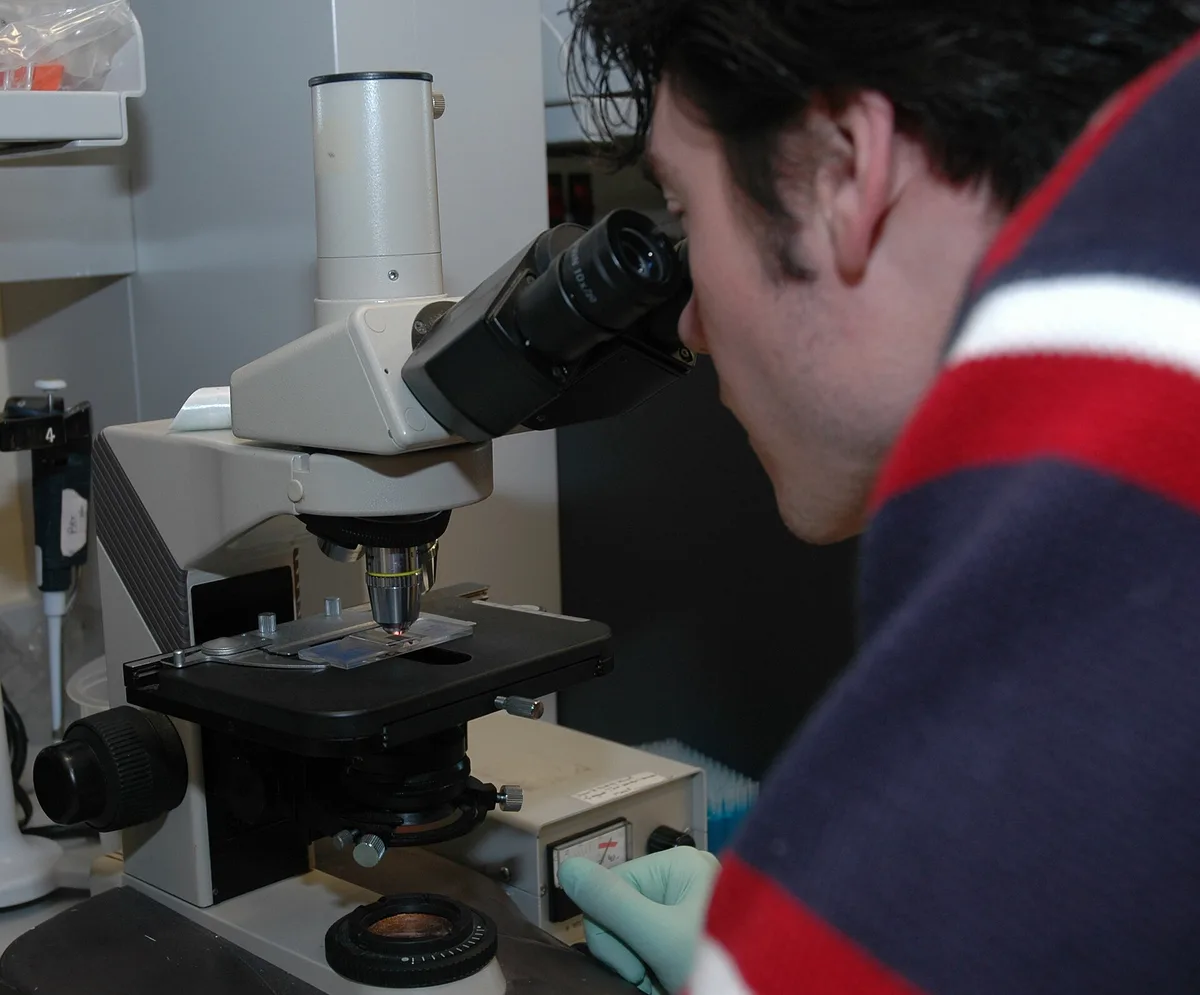
It is supplied as laboratory material. Research-grade DSIP is sold as a lyophilized (freeze-dried) powder in sealed vials, with a certificate of analysis. The standard handling is laboratory handling: frozen storage, documented protocols, analytical verification.
It is not FDA-approved. No regulatory authority has approved DSIP as a medicine, for any indication, anywhere. This is the single most important regulatory fact, and it is why the compound’s entire commercial existence is framed as research-use-only. The FDA’s drug pages explain what approval entails.
It is not a controlled substance. DSIP is not scheduled under controlled-substance law. The restrictions that apply to it come from drug-marketing law (unapproved substances cannot be marketed for human use), not from drug-control law.
The research-use-only label is the boundary. Suppliers sell DSIP explicitly for laboratory research, and that framing is not marketing language — it is the legal and practical context in which the compound is legitimately handled. That boundary is the single most practical thing DSIP explained for beginners can teach.
Beginner rule of thumb: whenever you encounter a peptide sold “for research use only,” read that as a complete description of its legitimate context — laboratory research, characterized material, documented protocols. DSIP explained for beginners in one rule: if it is not a laboratory, it is not the context.
Glossary: Terms You Will Meet
Every field has vocabulary. Here is DSIP explained for beginners as a glossary — the terms this primer and the wider literature use:
Peptide: a short chain of amino acids. Proteins are long chains; peptides are short ones.
Nonapeptide: a peptide of exactly nine amino acids. DSIP is one.
Amino acid: the building block. Twenty standard types exist; DSIP uses five of them across its nine positions.
Lyophilized: freeze-dried — water removed under vacuum to produce a stable dry powder. The standard supply format for research peptides.
Certificate of analysis (COA): the document accompanying research material, reporting identity, purity, and analytical results for that batch.
In vitro: “in glass” — experiments conducted outside a living organism, e.g., in test tubes or cell cultures.
In vivo: “in the living” — experiments in living organisms, typically animal models in this literature.
Delta wave: slow brain waves associated with deep sleep — the pattern DSIP was named after.
Research-use-only: the framing under which unapproved compounds are legitimately sold and handled — laboratory research, not human use.
DSIP Explained for Beginners: Key Takeaways
A nine-amino-acid molecule with a 50-year research history — and no approved medical use
DSIP explained for beginners in one box: DSIP is a nonapeptide (Trp-Ala-Gly-Gly-Asp-Ala-Ser-Gly-Glu, ~850 daltons) isolated in 1974 and named for its association with delta-wave sleep. The research record covers 1980s human sleep studies (small, with modest published conclusions), neuroendocrine investigations, modern animal-model work, and recent formulation research. It was never developed into a drug, is not FDA-approved, is not a controlled substance, and is handled as a research chemical — lyophilized, characterized, and sold strictly for laboratory research use. (Beginner primer in research framing — not medical advice, not usage guidance.)
Once the basics are in place, the natural next steps are the compound’s context in the wider peptide space: our selank vs semax research comparison shows how two other research peptides are compared in the same research-use-only framing, and our overviews of Semax nasal spray and Selank nasal spray research cover delivery-format questions that apply across the field.
DSIP Explained for Beginners: Frequently Asked Questions
The questions new researchers ask most — answered plainly.
What does DSIP stand for?
Delta sleep-inducing peptide. The name comes from early research linking the compound to delta-wave (slow-wave) sleep patterns. It is a descriptive research name, not a medical claim — and DSIP explained for beginners starts with treating it as exactly that: a name from 1970s sleep research.
Is DSIP a drug or a supplement?
Neither. DSIP is not an FDA-approved drug and is not a dietary supplement. It is a research compound — a characterized laboratory material sold strictly for research use. That three-way distinction (drug / supplement / research compound) is one of the most important things for a beginner to get right.
What is DSIP made of?
Nine amino acids in a fixed order: Trp-Ala-Gly-Gly-Asp-Ala-Ser-Gly-Glu, with a molecular weight of roughly 850 daltons. That sequence is the molecule’s identity — it is what “DSIP” refers to, and what certificates of analysis verify.
Was DSIP ever tested in humans?
Yes — small human sleep studies were published in the 1980s, including work by Schneider-Helmert and Schoenenberger on disturbed sleep. These were early-stage clinical research studies with few participants, and their published conclusions described weak or modest effects. They are research history, not a basis for any current use.
Why is DSIP sold “for research use only”?
Because it is an unapproved compound: no regulatory authority has approved it as a medicine, so it cannot be marketed for human use. The research-use-only framing is the legitimate context — laboratories buying characterized material for scientific investigation — and reputable suppliers make that framing explicit.
Where can I learn about other research peptides?
This site’s research library is a good next step: the selank vs semax comparison walks through two other research peptides side by side, and characterized research materials are listed as research-use-only products — for example, our Semax 10mg and Selank 10mg research listings.
DSIP Explained for Beginners: Final Research Notes
DSIP explained for beginners comes down to a compact story: a nine-amino-acid peptide isolated in 1974, named for a sleep-wave association, studied across five decades of sleep, hormone, animal-model, and formulation research — and never developed into a medicine. The compound’s present tense is the research chemical: freeze-dried, characterized, documented, and handled in laboratories under research-use-only terms.
For the new researcher, that is the durable understanding. Molecules like DSIP are how the research-peptide space works: defined chemistry, published history, legitimate laboratory context, and a firm boundary at human use. Hold those four, and DSIP explained for beginners has done its job.