
DSIP half-life is one of the most misunderstood numbers in peptide research. Depending on which source you read, you will see figures that seem to contradict each other: roughly fifteen minutes in one context, a handful of minutes in another, and reported biological effects that last hours — far longer than any published clearance figure would seem to allow. If you are trying to make sense of this molecule’s pharmacokinetic literature as a researcher, the confusion is understandable, because the number genuinely changes with how, where, and in what system it was measured. This guide walks through the published clearance data method by method: what was measured in test-tube studies, what was measured in living systems, and why the molecule’s reported effects can outlast its physical presence. Everything here is framed for laboratory research — no dosing, no administration instructions, and no medical claims, just the pharmacokinetic picture as published.
Research-use-only disclaimer: DSIP (delta sleep-inducing peptide) is not an FDA-approved drug and is not a medicine. It is handled as a research compound for laboratory and scientific investigation only. This article is an educational overview of published pharmacokinetic data. It contains no dosage information, no administration instructions, and no medical advice, and nothing here recommends handling or using DSIP outside a research setting.
DSIP Half-Life at a Glance
Before the detail, here is the short version of this story — the four figures and facts that anchor the rest of this guide.
~15 minutes — in-vitro half-life. In test-tube studies, DSIP exposed to a specific aminopeptidase-like enzyme degraded with a half-life of only about fifteen minutes. This is the most-cited DSIP half-life figure in the literature.
~7–8 minutes — reported plasma clearance. Some secondary sources report a plasma DSIP half-life of roughly seven to eight minutes following intravenous administration in animal studies, attributed to rapid enzymatic degradation by aminopeptidases.
Hours — duration of reported effects. Despite the short DSIP half-life in circulation, published studies describe effects on sleep architecture and neuroendocrine markers persisting for many hours after administration.
Carrier proteins — the proposed explanation. Researchers have hypothesized that DSIP complexes with carrier proteins in living systems, extending its functional duration beyond the raw clearance numbers.
Each of these four points needs context before it means anything — which is what the sections below provide, in the order a researcher would naturally encounter them.
What “Half-Life” Means for a Research Peptide
In pharmacokinetics, a half-life is simply the time it takes for half of a compound to be cleared or degraded in a given system. For small-molecule drugs with stable chemistry, the number is usually tidy and transferable. For peptides, it is not. Peptides are chains of amino acids, and living systems are full of enzymes — peptidases and proteases — whose entire job is to cut such chains apart. So its half-life is not one property of the molecule; it is a property of the molecule in a particular environment, and changing the environment changes the number.
DSIP itself is a nonapeptide — nine amino acids with the sequence Trp-Ala-Gly-Gly-Asp-Ala-Ser-Gly-Glu and a molecular weight of roughly 849 daltons. It was first isolated in the 1970s from the cerebral venous blood of sleeping rabbits, and its name comes from its reported ability to enhance delta-wave (deep sleep) EEG activity in those early experiments. That history matters for DSIP half-life research: the molecule was discovered through a biological effect, not through drug-development screening — so its clearance was characterized after the fact, piecemeal, by different groups. For background on how peptide pharmacokinetics are characterized generally, see our Selank vs Semax research comparison, which covers two peptides with their own distinct clearance profiles.
The In-Vitro DSIP Half-Life: Fifteen Minutes
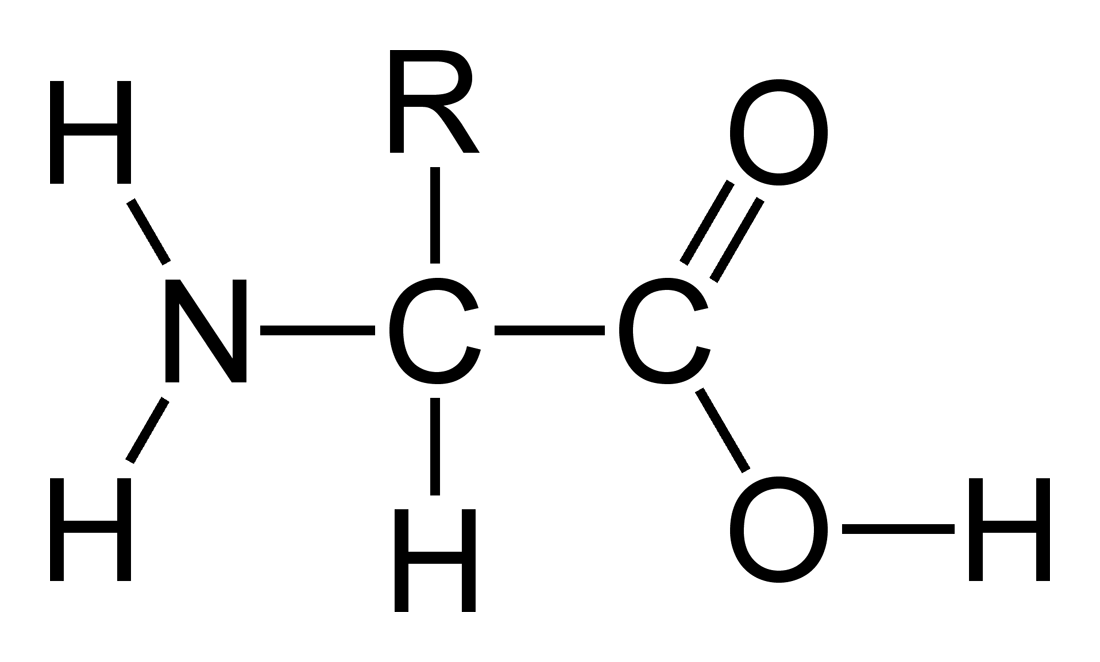
The most frequently cited DSIP half-life figure comes from in-vitro work: when DSIP was exposed in a test tube to a specific aminopeptidase-like enzyme, its measured half-life was only about fifteen minutes. Aminopeptidases are enzymes that clip amino acids off the N-terminal (front) end of a peptide chain, and DSIP — with its exposed N-terminal tryptophan — is a plausible target. This finding established the molecule’s low molecular stability under controlled enzymatic conditions and has been repeated in reviews ever since.
The degradation was attributed to a specific enzyme, not general chemical instability — DSIP is being actively dismantled, not falling apart on its own. That distinction led directly to the carrier-protein hypothesis discussed below.
The 2006 review by Kovalzon and Strekalova in the Journal of Neurochemistry called DSIP a “still unresolved riddle” — and the short half-life sits at the center of it: a molecule this fragile should not, by simple logic, produce effects that persist for hours.
Research note: In-vitro stability figures describe the molecule in isolation with a purified enzyme. They are the floor of the stability story — what happens in the simplest possible system — not a prediction of behavior in blood, tissue, or a whole organism, where binding proteins, compartmentalization, and tissue distribution all intervene.
Plasma Clearance: The Single-Digit DSIP Half-Life
Moving from test tubes to living systems, several secondary sources report a plasma DSIP half-life of approximately seven to eight minutes following intravenous administration, driven by rapid enzymatic degradation by circulating aminopeptidases. This figure should be read with the caveats it deserves: it comes from secondary summaries rather than a single definitive human pharmacokinetic trial, and the primary animal studies behind it used varying methods. But the direction is consistent — in blood, DSIP clears fast, on a timescale of minutes rather than hours.
The Paradox: A Minutes-Long DSIP Half-Life, Hours-Long Effects
Published studies describe DSIP’s influence on sleep architecture persisting for six to twelve hours or more after administration — in some protocols, up to around twenty hours. Yet the plasma half-life is measured in minutes. By the clearance numbers, the molecule should be long gone before the reported effects even peak.
The published literature offers a coherent resolution: DSIP acts as a trigger rather than a sustained signal. The peptide initiates a downstream cascade — receptor modulation, neuroendocrine shifts — that keeps unfolding after the molecule is degraded. Half-life measures the trigger; effect duration measures the cascade. Different quantities, no contradiction.

The Carrier-Protein Hypothesis
The most-cited explanation for the gap between the short clearance times and the long reported effects is that DSIP does not circulate entirely free. Researchers have proposed that the peptide complexes with carrier proteins in the body, which would shield it from aminopeptidase degradation and extend its functional duration. This is a hypothesis, not an established fact — the literature describes it as a suggestion offered to reconcile the pharmacokinetic puzzle — but it is biologically plausible, because protein binding is a well-known mechanism by which small peptides gain extra circulating lifetime.
Published summaries also describe DSIP as crossing the blood-brain barrier via a saturable transport system — notable for a peptide of its size. The tissue half-life relevant to reported central effects may therefore differ substantially from the plasma half-life. Researchers reviewing the transport literature can browse indexed studies via PubMed.
What remains unresolved: No gene or precursor structure for DSIP has been identified — it is, as one review put it, the only known neuropeptide whose gene remains unknown. Until the molecule’s natural synthesis and regulation are understood, every clearance figure describes the synthetic peptide introduced experimentally, not necessarily the dynamics of any endogenous counterpart.
Factors That Change the Measured DSIP Half-Life
The table below summarizes why different studies report different values. For a researcher comparing papers, these are the variables to check first.
| Factor | How it shifts the DSIP half-life | What to check in a paper |
|---|---|---|
| System studied | In-vitro enzyme assays give ~15 minutes; plasma measurements give single-digit minutes; tissue figures may be longer | Whether the study used purified enzymes, blood, or tissue |
| Enzyme exposure | Specific aminopeptidase-like enzymes degrade DSIP rapidly; without them, the peptide is chemically stable | Which enzymes were present and at what activity |
| Protein binding | Complexing with carrier proteins is hypothesized to protect DSIP and extend functional duration | Whether free vs. bound fractions were distinguished |
| Species | Peptidase expression and activity differ across rabbits, rats, and humans | Which species the pharmacokinetic data came from |
| Route studied | Intravenous data reflects direct plasma exposure; other routes add absorption phases | The administration route in the methods section |
| Assay method | Immunoreactivity assays may detect fragments, not intact peptide, inflating apparent persistence | Whether the assay measured intact DSIP or DSIP-like material |
The last row deserves emphasis. Many early DSIP studies measured “DSIP-like immunoreactivity” — what an antibody binds to — rather than the intact nine-amino-acid molecule. Antibodies can cross-react with fragments or related sequences, so an immunoreactivity-based measurement may overstate how long the intact peptide survives. Modern analytical work, such as chromatography coupled to mass spectrometry, distinguishes the intact molecule from its breakdown products — which is one reason pharmacokinetic techniques matter as much as the numbers they produce.
Common Misconceptions About DSIP Half-Life
Because the DSIP half-life numbers circulate widely in secondary sources, a few misconceptions keep resurfacing. Correcting them is part of reading this literature honestly.
Misconception 1: “The half-life is fifteen minutes, full stop.” The fifteen-minute figure is an in-vitro finding with a specific enzyme. Treating it as the universal number ignores the plasma data and the carrier-protein discussion — context is the entire story here.
Misconception 2: “Short half-life means short effects.” For trigger-type signaling molecules, effect duration is governed by the downstream cascade, not by how long the trigger molecule survives. The half-life data and the effect-duration data describe different steps in the same chain of events.
Misconception 3: “A longer half-life would make DSIP work better.” Nothing in the published literature supports this inference. The molecule’s reported effects were observed with its short clearance, not in spite of a hypothetical longer one. Pharmacokinetic optimization is a drug-development question; DSIP is not a drug in development, and the literature does not frame it that way.
DSIP Half-Life and Related Peptide Research
The DSIP half-life story is a useful lens for peptide pharmacokinetics generally: small signaling peptides routinely show minutes in circulation and hours of downstream effect. For readers following the theme, our Selank vs Semax research comparison covers two peptides with distinct pharmacokinetic profiles, and the Semax nasal spray research overview discusses a peptide studied via a different delivery route — a useful contrast for how route shapes clearance.
Key Takeaways: DSIP Half-Life
- The most-cited figure is ~15 minutes — an in-vitro finding with a specific aminopeptidase-like enzyme, not a universal constant.
- Plasma clearance figures cluster around 7–8 minutes in animal studies, driven by rapid enzymatic degradation.
- Reported effects persist for hours, best explained by a trigger-and-cascade model: half-life measures the trigger, not the cascade.
- Carrier-protein complexing is the leading hypothesis for the gap — still a hypothesis, not established fact.
- Every published measurement used experimentally introduced synthetic peptide; no endogenous synthesis pathway has been identified.
(Research framing only — a summary of published pharmacokinetic data, not a usage recommendation.)
DSIP Half-Life: Final Research Notes
The published DSIP half-life literature is a case study in why pharmacokinetic numbers need their methods attached. Fifteen minutes in a test tube, roughly seven to eight minutes in plasma, hours of reported downstream effects — each figure is defensible in its own context, and the contradictions dissolve once the trigger-and-cascade model and the carrier-protein hypothesis enter the picture. What remains unresolved, as the 2006 Kovalzon review emphasized, is the deeper biology: the unknown gene and the still-hypothetical carrier system. For the molecule’s broader story, see our Selank vs Semax research comparison; The Wikipedia overview of delta sleep-inducing peptide provides a useful reference summary with primary citations.
DSIP Half-Life: Frequently Asked Questions
Direct answers to the questions researchers ask most about this molecule’s pharmacokinetics.
What is the half-life of DSIP?
Published figures depend on the system measured. In-vitro studies with a specific aminopeptidase-like enzyme found a DSIP half-life of about 15 minutes. Secondary sources report plasma clearance of roughly 7–8 minutes in animal studies. There is no single universal DSIP half-life — the number changes with the experimental system.
Why do DSIP’s effects last longer than its half-life?
The published explanation is a trigger-and-cascade model: DSIP initiates downstream signaling — receptor modulation and neuroendocrine changes — that continue unfolding long after the peptide itself is cleared. The DSIP half-life measures the trigger molecule’s persistence; the effect duration measures the cascade.
What degrades DSIP so quickly?
Aminopeptidases — enzymes that clip amino acids from a peptide’s N-terminal end. The in-vitro DSIP half-life finding specifically implicated an aminopeptidase-like enzyme, and rapid aminopeptidase degradation is also cited for the short plasma clearance figures.
Do carrier proteins extend DSIP half-life?
That is the leading hypothesis, not an established fact. Researchers have proposed that DSIP complexes with carrier proteins in living systems, shielding it from enzymatic degradation and extending its functional duration beyond the raw DSIP half-life numbers. The literature presents this as a suggestion to reconcile the pharmacokinetic puzzle.
Does DSIP cross the blood-brain barrier?
Published summaries describe DSIP as crossing the blood-brain barrier via a saturable transport system — unusual for a peptide of its size. This matters for the discussion because the brain-tissue half-life relevant to central effects may differ substantially from the plasma half-life.
Is DSIP FDA-approved?
No. DSIP is not an FDA-approved drug and is handled strictly as a research compound for laboratory investigation. The FDA’s drug information pages explain what approval status entails. Nothing about the clearance data changes its regulatory status.


