Ask about KPV half-life and you will find plenty of confident numbers floating around online. Here is the honest answer first, because it shapes everything else in this article: no published study reports a measured KPV half-life value. There is no published human pharmacokinetic dataset for KPV, no formal bioavailability study, and no approved product label from which to derive distribution, metabolism, or elimination parameters. What the literature does offer is a set of related findings — rapid enzymatic degradation of the free peptide, a gap between in vitro potency and in vivo requirements, and a whole sub-literature of delivery research motivated by exactly that gap. This KPV half-life guide covers what is known, what is inferred, and what remains genuinely unknown, strictly for laboratory research use.
Research-use-only disclaimer: KPV (Lys-Pro-Val) is not an FDA-approved drug and is not a medicine. It is handled as a research compound for laboratory and scientific investigation only. This article discusses pharmacokinetic concepts from the published literature. It contains no dosage information, no usage instructions, and no medical advice.
KPV Half-Life: The Short Answer
If you need the KPV half-life question answered in one paragraph, this is it: the value has not been published. Peptide researchers generally expect a free tripeptide like KPV — three amino acids, molecular weight around 342 — to be cleared rapidly in a living organism, because small peptides are substrates for peptidases (protein-cutting enzymes) found throughout plasma and tissues, and because molecules this small are also subject to rapid renal clearance. That expectation is consistent with observations scattered through the KPV literature, but an expectation is not a measurement, and no one should quote a KPV half-life number as if a study established it. The sections below document exactly what the literature does and doesn’t say.
Stat: 0 — the number of published human pharmacokinetic studies of KPV. FDA review materials prepared for the 2026 compounding review state that the agency identified no human exposure data for KPV-containing drug products by any route. Any KPV half-life figure presented as a human value is, at best, an extrapolation — and at worst, invented.
Stat: nanomolar in vitro, higher in vivo. Published summaries of the KPV literature note a consistent pattern: the peptide shows activity in the nanomolar concentration range in cell-culture studies, yet in vivo work has required higher exposures to produce reported effects. That gap is exactly what researchers expect from a compound undergoing rapid clearance — and it is one of the strongest indirect signals about KPV half-life behavior, even though it is not a half-life measurement.
Stat: several days. In Songok et al. (PLoS One, 2018), glycoalkylated KPV analogs — chemically modified versions of the tripeptide — showed internal peptide bonds stable over several days against pronase, a broad-spectrum enzyme mixture used to test proteolytic resistance. That is a stability finding about modified analogs in an enzyme assay, not a KPV half-life in blood — but it shows the direction researchers took to address the clearance problem.
Why KPV Half-Life Data Is So Thin
The thinness of KPV half-life data is not an accident; it reflects how the compound has actually been researched. Nearly the entire KPV literature is efficacy-oriented: researchers were asking “does it reduce inflammatory signaling in this model?” rather than “what is its plasma concentration-time curve?” Pharmacokinetic profiling — the absorption, distribution, metabolism, and excretion (ADME) work that yields half-life values — is expensive, specialized, and typically happens when a compound moves toward drug development. KPV never made that move. It went from academic inflammation research to delivery-formulation research to the research-chemical market, skipping the development stage where formal PK characterization usually occurs.
There is a second reason. Much of the most-cited KPV work used local or model-specific exposures — cell lines bathed in peptide-containing media, colitis models with intestinal delivery — where systemic half-life is not the operative variable. When a study’s question is “does PepT1-mediated uptake lead to NF-κB suppression in enterocytes,” plasma half-life is simply not what the experiment measures. The KPV half-life gap is therefore structural: the experiments that made KPV interesting were never designed to produce pharmacokinetic parameters.
What the Literature Does Report About KPV Pharmacokinetics
Say KPV half-life has never been measured, and the conversation could stop there — but the literature contains several findings that pharmacokinetically literate researchers use as proxies and context. Each is worth stating precisely.
Rapid peptidase degradation of the free peptide
The most direct statement in the literature is qualitative: free KPV in plasma is subject to rapid peptidase degradation. Small linear peptides are cleaved quickly by the peptidases present in blood and tissues — this is general peptide biochemistry, and it is the reason the KPV delivery literature exists at all. The 2010 nanoparticle/hydrogel work (Laroui et al., Gastroenterology, PMID 19909746) and the 2017 hyaluronic-acid-functionalized nanoparticle work (Xiao et al., Molecular Therapy, PMID 28143741) were both motivated, in part, by this pharmacokinetic limitation: protecting the peptide from enzymatic breakdown long enough for it to reach its target.
The in vitro–in vivo potency gap
As noted above, KPV shows activity at nanomolar concentrations in vitro but requires higher exposures in vivo — a pattern published summaries explicitly connect to the small peptide’s rapid clearance. This is circumstantial evidence about KPV half-life behavior, not a measurement of it, but it is the kind of pattern pharmacologists take seriously: when a compound needs much more of itself in a living animal than in a dish, clearance is usually part of the explanation.
PepT1 uptake as a distribution detail
The 2008 Dalmasso findings (Gastroenterology, PMID 18061177) contribute a distribution-side detail: KPV enters intestinal cells via the PepT1 transporter, which is upregulated in inflamed tissue. In pharmacokinetic terms, this is about where the peptide goes rather than how long it lasts — but “where it goes” is half of what makes half-life meaningful. A short KPV half-life in plasma matters less if the relevant action is local uptake into inflamed enterocytes, which is presumably why the intestinal models produced reported effects despite the clearance problem.
Stability engineering: the Songok analogs
Songok et al. (2018) approached the clearance problem chemically rather than formulationally, using reductive glycoalkylation of KPV’s lysine residue to produce analogs whose internal peptide bonds resisted pronase degradation over several days while retaining biological activity. For KPV half-life purposes, the takeaway is comparative: the native tripeptide needed stabilizing, and stabilization was achievable — which tells you something about the native molecule’s vulnerability without putting a number on it.
KPV Pharmacokinetics: Known vs. Unknown
The table below separates established findings from open questions — the most useful format for a topic where the gaps matter as much as the data.
| Pharmacokinetic parameter | Status for KPV | Basis |
|---|---|---|
| Plasma half-life (human) | Unknown — never published | No human PK dataset exists; FDA review found no human exposure data |
| Plasma half-life (animal) | Unknown — never published | Animal studies measured effects, not concentration-time profiles |
| Oral bioavailability | Unknown; expected to be low | Free peptide faces gastrointestinal degradation and permeability barriers |
| Peptidase susceptibility | High (qualitative) | General peptide biochemistry; motivates delivery research |
| Cellular uptake route | PepT1-mediated (intestinal models) | Dalmasso et al., 2008 (PMID 18061177) |
| Modified-analog stability | Days (pronase assay) | Songok et al., 2018 (glycoalkylated analogs) |
| Formulation approaches | Nanoparticles, hydrogels, transdermal | Laroui 2010; Xiao 2017; Pawar/Juluri 2017 |
Reading the table honestly: Five of seven rows are some flavor of “unknown” — and that is the point. A KPV half-life article that pretends the data exists would be easier to write and less truthful. Researchers planning experiments need the gaps labeled, because a gap labeled “unknown” prompts a pilot study, while a gap filled with an invented number prompts a failed experiment.
How Researchers Work Around the Half-Life Gap
Given that KPV half-life is unmeasured and presumably short, the literature’s workaround strategies are instructive in themselves. The formulation thread — colon-targeted nanoparticles and hydrogels (2010), hyaluronic-acid-functionalized nanoparticles (2017), transdermal iontophoresis across microporated skin (2017), mucoadhesive hydrogels (2021) — is essentially a sustained engineering answer to the clearance problem: if the molecule doesn’t last, protect it, target it, or change the route. The chemistry thread — glycoalkylation of the lysine residue (2018) — modifies the molecule to resist the enzymes that would otherwise clear it. And the biology thread — PepT1-mediated uptake into inflamed tissue — exploits a transporter that concentrates the peptide where the models need it, making systemic persistence less critical.
Each workaround implicitly confirms the premise: the field behaves as if KPV half-life is short, even though no one has published the number. For a researcher new to the compound, that behavioral evidence — what the field spends its effort fixing — is often more informative than a single pharmacokinetic parameter would be.
Key Takeaways: KPV Half-Life in Brief
No published half-life value exists — for humans or animals
The defining fact about KPV half-life is the absence of data: no human PK study, no animal concentration-time profile, no label to consult. General peptide biochemistry predicts rapid clearance, and the literature’s in vitro–in vivo gap and delivery research are consistent with that prediction — but prediction is not measurement. (Research framing only.)
The field works around the gap with formulation and chemistry
Nanoparticles, hydrogels, transdermal systems, and glycoalkylated analogs are the literature’s collective answer to an unmeasured but presumed-short KPV half-life. Researchers should treat those strategies as the practical PK literature on KPV — and design any new work with the clearance assumption built in. (Research framing only.)
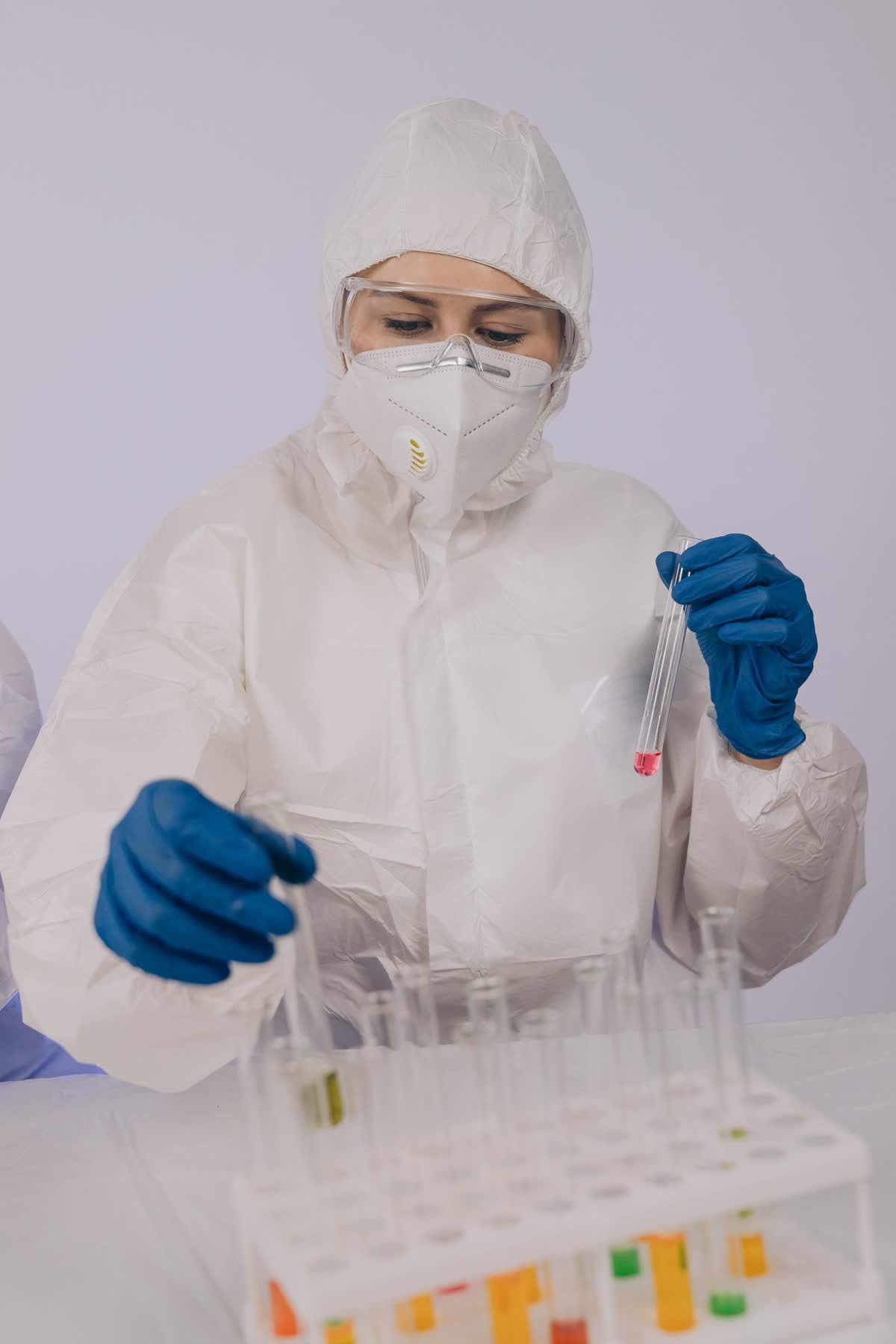
For broader peptide-research context, see our selank vs semax research comparison and our research guides to Semax nasal spray and Selank nasal spray. We supply research compounds including Semax 10mg and Selank 10mg, strictly for laboratory research use.
KPV Half-Life: Frequently Asked Questions
Quick answers to the questions researchers ask most about KPV pharmacokinetics.
What is the half-life of KPV?
No published KPV half-life value exists — not for humans, not for animals. General peptide biochemistry predicts rapid clearance for a small linear tripeptide, and the literature is consistent with that prediction, but no study has measured and reported a half-life. Indexed literature can be reviewed via PubMed.
Has KPV pharmacokinetics been studied in humans?
No. There is no published human pharmacokinetic dataset for KPV, no formal bioavailability study, and no approved product label. FDA review materials for the 2026 compounding review state that no human exposure data for KPV-containing drug products was identified.
Why do KPV studies use higher exposures in vivo than in vitro?
KPV shows activity at nanomolar concentrations in cell culture but requires higher exposures in living animals — a pattern the literature connects to the peptide’s rapid clearance. This in vitro–in vivo gap is indirect evidence about KPV half-life behavior, not a measurement of it.
Does the delivery research tell us anything about KPV half-life?
Indirectly, yes. The sustained research into nanoparticles, hydrogels, transdermal systems, and chemically stabilized analogs is motivated by the peptide’s vulnerability to enzymatic degradation — the field behaves as if KPV half-life is short. Songok et al. (2018) showed glycoalkylated analogs resisting pronase for days, confirming the native molecule’s vulnerability by contrast.
Is KPV orally bioavailable?
Unknown. The literature notes that oral delivery of the free peptide faces predictable gastrointestinal degradation and permeability barriers, which is why delivery research has focused on protection and targeting strategies. No bioavailability figure has been published. The FDA’s drug information pages explain how bioavailability is established for approved drugs.
Where can researchers source KPV for laboratory studies?
KPV is available from research-compound suppliers strictly for laboratory research use; sourcing should be limited to suppliers explicit about research-use-only status. Our listings such as Semax 10mg and Selank 10mg follow the same research-use framing. Nothing here recommends any human use.
KPV Half-Life: Final Research Notes
The KPV half-life story is unusual: it is an article about a number that doesn’t exist. But the absence is informative. It tells you the compound skipped the development stage where PK gets characterized; it tells you the interesting experiments were efficacy experiments, not kinetic ones; and it tells you the field’s collective behavior — a decade of delivery engineering — is the real pharmacokinetic literature on KPV.
For the working researcher, the practical conclusion is simple: assume rapid clearance, design around it, and don’t quote a KPV half-life you can’t cite. The literature rewards that honesty — the best KPV papers are the ones that treated the molecule’s fragility as a problem to solve rather than a parameter to assume.