When researchers ask about the DSIP dosage forms studied in the literature, they are usually asking a formulation question, not a usage question: in what physical formats has delta sleep-inducing peptide been prepared and investigated across published research? The DSIP dosage forms studied span the standard research-supply format — lyophilized powder — plus parenteral solutions used in the classic human sleep studies, intranasal formats explored in more recent animal work, and oral and other experimental formats discussed in formulation literature. This guide maps the DSIP dosage forms studied strictly as research topics: which formats the literature covers, what each format was used to investigate, and where the evidence thins out. It contains no dosing information and no administration instructions — formats only, in research framing.
Research-use-only disclaimer: DSIP is not an FDA-approved drug and is not a medicine. It is handled as a research compound for laboratory and scientific investigation only. All products are sold strictly for laboratory research use. This article describes dosage forms as they appear in published research. It contains no dosage information, no administration instructions, no reconstitution guidance, and no medical advice.
What “Dosage Form” Means in This Guide
In pharmaceutical science, a dosage form is the physical format of a preparation — a lyophilized powder, a solution, a spray, a capsule. The DSIP dosage forms studied question is therefore a question about which physical formats researchers have actually worked with. That is distinct from how much of the compound was used (dosing, which this guide does not cover) and from how a preparation was administered in any non-research setting (which this guide does not describe). The Wikipedia overview of dosage forms gives the general terminology this field uses.
One more framing note before the formats: DSIP is a nonapeptide (Trp-Ala-Gly-Gly-Asp-Ala-Ser-Gly-Glu, roughly 850 daltons), first isolated in 1974 and named for its association with delta-wave sleep patterns in early research. Like most small peptides, it is susceptible to enzymatic breakdown, which is part of why the DSIP dosage forms studied across the literature look the way they do — the format chosen for a study is always a response to the molecule’s properties. Background on the compound is on its Wikipedia entry.
Scope of this guide: every format below is described as a research topic — what the published literature covers. Quantities, preparation methods, and administration procedures are deliberately excluded. If a section below reads as “researchers investigated this format,” that is the entire claim being made.
DSIP Dosage Forms Studied: At a Glance
The table below summarizes the DSIP dosage forms studied across published research, the context in which each format appears, and how well each is documented. The sections that follow expand each row.
| Dosage form | Research context | Documentation level |
|---|---|---|
| Lyophilized powder | Standard research-supply format; starting material for laboratory preparations | Extensive — the default format in the research supply chain |
| Parenteral solutions (intravenous) | Human sleep studies of the 1980s | Well documented — the format of the classic clinical research |
| Parenteral solutions (intraperitoneal, intracerebroventricular) | Animal-model research (rodents) | Well documented in animal literature |
| Intranasal formats | Animal studies; formulation-composition research | Moderate — studied, but a smaller literature |
| Oral formats | Formulation literature; exploratory | Limited — discussed more than demonstrated |
Format 1: Lyophilized Powder — The Standard Research Format
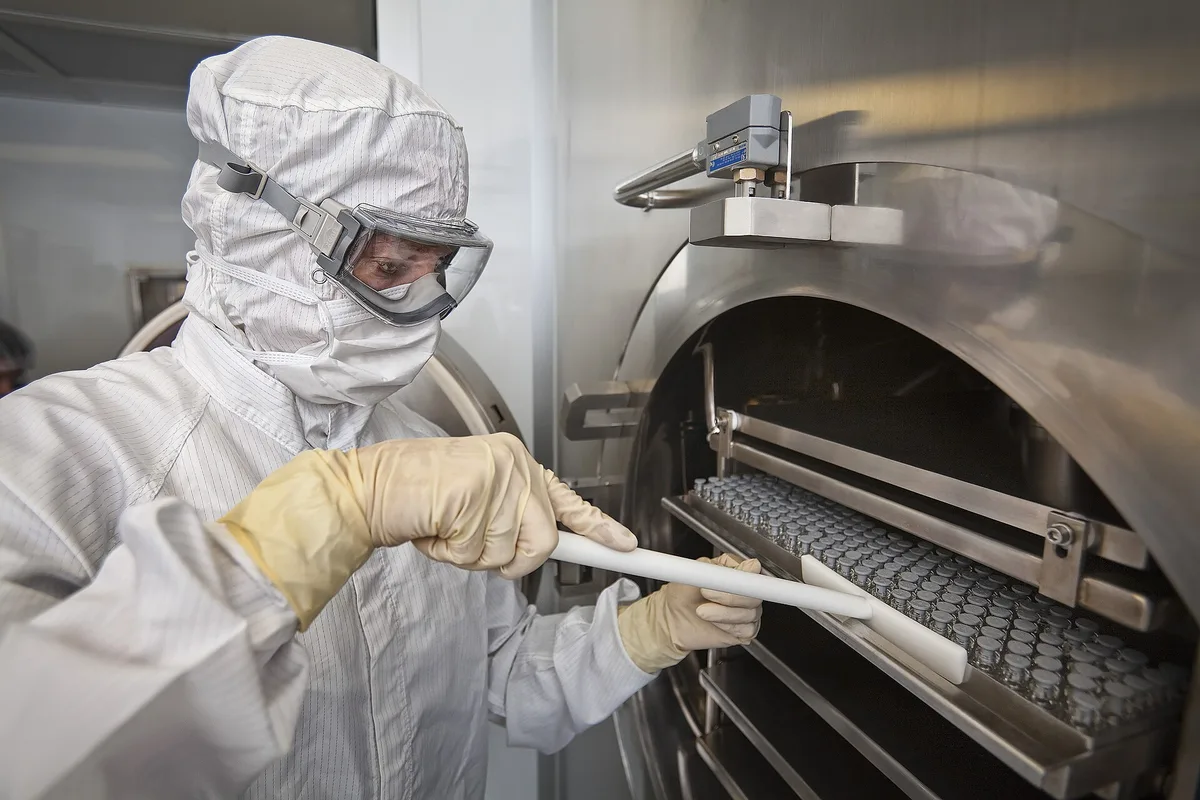
Among the DSIP dosage forms studied, lyophilized (freeze-dried) powder is the foundation: it is the format in which DSIP is supplied as a research chemical, and the starting point for essentially every laboratory preparation described in the literature. Freeze-drying removes water from the peptide, arresting the hydrolytic and enzymatic degradation pathways that would otherwise break the molecule down in solution. The result is the stable, shippable white powder that accompanies a certificate of analysis. The general science is covered in the Wikipedia article on lyophilization.

Why this matters for the DSIP dosage forms studied picture: every other format below is, in research practice, something prepared from lyophilized starting material. The powder is not itself a studied delivery format so much as the universal precursor — but it is the most-encountered format by far, and the one around which storage and handling literature is written. Studies on peptide stability consistently treat the lyophilized state as the long-term-stable form and solutions as the short-lived working form.
What the literature covers about this format
Lyophilized DSIP appears throughout the research record as characterized reference material: identity confirmed, purity assayed (research-grade material is typically characterized at high purity by HPLC and mass spectrometry), molecular weight verified. Stability literature for lyophilized peptides generally describes multi-year stability under frozen, desiccated, light-protected storage — a finding that applies to the format broadly rather than to DSIP specifically, and one that underpins why the research supply chain standardized on it.
Format 2: Parenteral Solutions — The Classic Human-Study Format
The best-documented of the DSIP dosage forms studied in human research is the parenteral solution — specifically, intravenous delivery. The human sleep studies of the 1980s that form the core of DSIP’s clinical literature, including the widely cited Schneider-Helmert and Schoenenberger work on disturbed sleep in chronic insomniacs (PMID 7028502), used intravenous administration of synthetic DSIP, typically as a slow infusion in controlled clinical-research settings.
The reason is pharmacokinetic, and it is worth stating because it explains the format choice: peptides like DSIP are rapidly broken down by enzymes, and putting the compound directly into circulation was the studied way to define a clean experimental exposure. The human trials that tested DSIP most carefully used this format — and their published conclusions were notably modest, with authors describing weak effects and questioning major therapeutic benefit. The format is therefore well documented and, simultaneously, not a format the literature endorses beyond the research setting.
Research note: when a study describes a parenteral format, it is describing an experimental design choice for that study — not a general recommendation. The DSIP dosage forms studied in 1980s clinical research were products of their era’s methods and questions. Modern research interest has largely moved to other formats and other questions.
Animal-model parenteral formats
In animal research, the DSIP dosage forms studied extend to additional parenteral routes used as experimental tools. Rodent studies have used intraperitoneal delivery — for example, in stroke-model research — and intracerebroventricular delivery, as in the 1985 Obál et al. study of DSIP and a DSIP analogue on sleep and brain temperature in rats. These are laboratory techniques for delivering a compound in a controlled model, and they belong to the animal-research literature specifically; they are not formats with human-research documentation behind them.
Format 3: Intranasal Formats — Studied in Animal and Formulation Research
Intranasal formats are among the more interesting DSIP dosage forms studied, because the nasal route has drawn research interest for peptides generally: it is a non-parenteral path that formulation researchers consider worth investigating. For DSIP specifically, intranasal delivery has been studied in animal models — a 2021 study in rats, for example, investigated intranasal DSIP in a focal-stroke model and reported effects on motor-function recovery measures (indexed at PubMed alongside related DSIP formulation research).
Intranasal DSIP also appears in formulation-composition literature: published compositions have combined DSIP with other research peptides in intranasal preparations described for research purposes. This is a smaller literature than the parenteral work, and it is worth being precise about what it is: studied formats in animal models and formulation research — not a body of human clinical work comparable to the 1980s intravenous studies.
For readers following the intranasal angle across the peptide space, the same research-use framing applies in the Intranasal Peptide Delivery guide, and related DSIP reading is in the DSIP for Sleep Research review — both use the same research-use-only framing.
Format 4: Oral and Other Experimental Formats
Oral formats round out the DSIP dosage forms studied — or more precisely, they round out the formats discussed. Peptides as a class face well-known barriers to oral delivery: digestive enzymes break peptide bonds, and intact absorption of a nine-amino-acid chain is poor. Consequently, the oral-format literature for DSIP is exploratory and formulation-oriented rather than a record of demonstrated research outcomes. It is discussed in formulation contexts; it is not a documented research workhorse the way parenteral solutions are.
The honest summary of the DSIP dosage forms studied is therefore a steep gradient: lyophilized powder and parenteral solutions are extensively documented; intranasal formats are genuinely studied but in a smaller literature; oral and other experimental formats are mostly formulation discussion. A format’s presence in the literature is not a ranking of its merit — it is a record of where research attention has actually gone.
Why the Format Matters in Research Design
Understanding the DSIP dosage forms studied is useful beyond cataloguing, because format choice shapes what a study can actually show. Three research-design points recur across the literature:
Exposure profile. A format determines how much intact peptide reaches the experimental system and how quickly. The 1980s human studies chose intravenous delivery precisely to define exposure cleanly; an oral or intranasal format in the same era would have introduced absorption variables the researchers were not trying to study. Format and research question are linked — the format is part of the experimental design.
Stability in format. Peptides degrade in solution far faster than in lyophilized form. Any solution-based format in the DSIP dosage forms studied carries a stability clock that the lyophilized powder does not — which is why solution formats in the literature are prepared for defined study windows rather than stored indefinitely. Storage-format literature consistently treats lyophilized material as the stable archival form.
Comparability. Results obtained with one format do not automatically transfer to another. Findings from intravenous-format human studies say nothing about intranasal formats, and animal-model parenteral findings say nothing about human formats. Each row in the formats table is its own evidence base — a point the literature itself respects, and readers should too.
What the literature does not cover: the DSIP dosage forms studied have notable absences. There is no substantial human clinical literature for intranasal DSIP, no documented oral-format human research program, and no modern pharmaceutical development program advancing any DSIP format — development wound down in the early 2000s. Absences are data too: they mark where research attention stopped.
DSIP Dosage Forms Studied: Key Takeaways
The studied formats run from lyophilized powder to experimental intranasal preparations
The DSIP dosage forms studied in published research are: lyophilized powder (the standard research-supply and precursor format), parenteral solutions — intravenous in the classic 1980s human sleep studies, intraperitoneal and intracerebroventricular in animal models — intranasal formats studied in animal and formulation research, and oral formats discussed mainly in exploratory formulation literature. Documentation is strongest for the parenteral formats and thinnest for oral. (Formats-as-research-topics only — no dosing, no administration guidance, no human-use claims.)
For researchers comparing how delivery formats are discussed across research peptides, the DSIP Explained for Beginners hub sets out the same research-use-only framing for the parent compound.
DSIP Dosage Forms Studied: Frequently Asked Questions
Straight answers about the formats in the DSIP research record — formats only, no dosing.
What is the most common dosage form of DSIP in research?
Lyophilized (freeze-dried) powder. It is the standard research-supply format — the characterized material with a certificate of analysis — and the precursor from which laboratory preparations are made. Among the DSIP dosage forms studied, it is the most encountered by far, though it is a supply and storage format rather than a delivery format.
What dosage form did the classic human DSIP studies use?
Parenteral solutions delivered intravenously, typically as slow infusions in controlled clinical-research settings in the 1980s. Those studies — including the Schneider-Helmert sleep research — form the best-documented human-format record for DSIP, and their published conclusions about effects were modest.
Has intranasal DSIP been studied?
Yes, in animal models and in formulation-composition research. Intranasal DSIP has been investigated in rat models (including stroke-model research) and appears in published intranasal compositions alongside other research peptides. The human clinical literature for intranasal DSIP is not comparable to the 1980s intravenous work — it is a smaller, more recent evidence base.
Has oral DSIP been studied?
Oral formats appear in exploratory formulation literature rather than as a documented research program. Peptides face well-known enzymatic and absorption barriers to oral delivery, and the DSIP dosage forms studied reflect that: oral is discussed, parenteral is demonstrated.
Why do studies use different dosage forms for the same compound?
Because the format is part of the experimental design. Format choice determines the exposure profile, the stability window, and which variables a study controls. Results from one format do not transfer to another — each format in the DSIP literature is its own evidence base.
Where can researchers find characterized research peptides?
Research peptides are supplied as characterized laboratory material — see our DSIP 5mg research listing and the COA Library for examples of research-use-only framing. Sourcing should be limited to suppliers explicit about research-use-only status. Nothing here is guidance for human use.
DSIP Dosage Forms Studied: Final Research Notes
The DSIP dosage forms studied across the literature form a clear hierarchy of documentation: lyophilized powder as the universal research-supply format; parenteral solutions — intravenous in humans, intraperitoneal and intracerebroventricular in animals — as the best-documented delivery formats; intranasal formats as a genuinely studied but smaller literature; and oral formats as exploratory discussion. That hierarchy is the useful answer: it tells a researcher not just which formats exist in the record, but how much weight each part of the record can carry.
Kept in that framing — formats as research topics, evidence graded by documentation, no dosing and no administration guidance — the DSIP dosage forms studied question has a stable, honest answer. The formats are the map of where DSIP research has actually been.