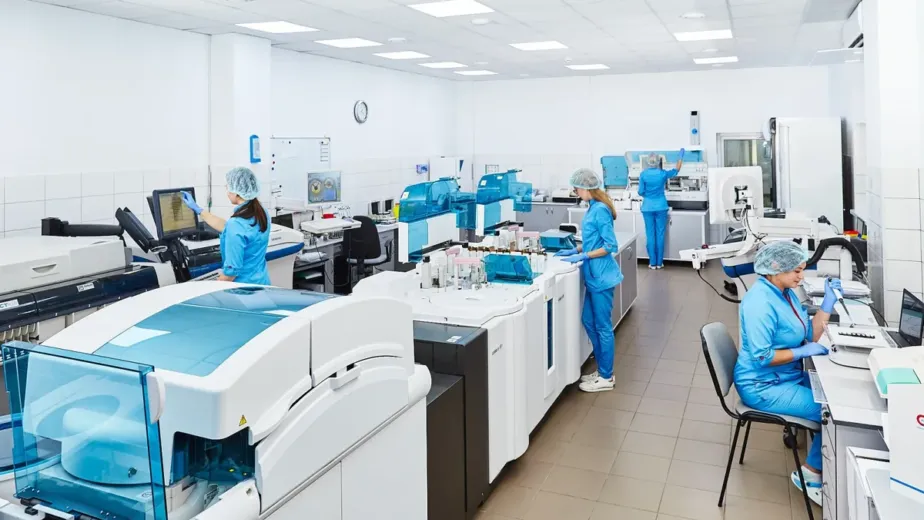

Sermorelin analogs and variants are a family of related research compounds built on the same starting template: growth hormone-releasing hormone (GHRH). Sermorelin itself is a 29-amino-acid synthetic analog of human GHRH — specifically the GHRH(1-29) fragment — and the compounds usually grouped with it under that umbrella share that GHRH lineage while differing in structure, stability, and research history. This guide maps the known sermorelin analogs and variants described in the literature: sermorelin, CJC-1295 (with and without DAC), tesamorelin, and the shorter modified GRF(1-29) scaffold. Everything here is framed strictly as research information about laboratory compounds; it is not medical advice, and it contains no usage or administration guidance.
Research-use-only disclaimer: The compounds discussed here are not medicines and several have never been FDA-approved drugs. They are handled as research compounds for laboratory and scientific investigation only. This article is an educational literature overview. It contains no dosage information, no administration instructions, no efficacy claims for humans, and no medical advice.
What “Sermorelin Analogs and Variants” Means in the Literature
The phrase is not a single formal chemical class — it is a literature shorthand. In published summaries and peptide references, it is used to group together GHRH-derived peptides that resemble sermorelin: same 29-amino-acid core region of human GHRH, but with structural changes that alter how long they persist or how they behave in research settings. Sermorelin itself — once marketed as Geref — is the reference point: a synthetic analog of the GHRH(1-29) fragment, described in the literature as the shortest fully functional fragment of endogenous human GHRH.
Why does this grouping matter? Because the story of sermorelin analogs and variants is really the story of one engineering problem repeated across several molecules. Native GHRH clears from circulation in minutes. Researchers who wanted to study sustained GHRH signaling therefore kept coming back to the same scaffold — the GHRH(1-29) core — and kept inventing new ways to keep it around longer. Sermorelin was the first well-known solution. CJC-1295, tesamorelin, and modified GRF(1-29) are later answers to the same question, each using a different chemical strategy. That is the thread that ties the whole sermorelin analogs and variants family together.
Regulatory snapshot: Of the compounds covered here, only tesamorelin holds FDA approval — granted in 2010 for HIV-associated lipodystrophy (Egrifta). Sermorelin’s former branded product (Geref) was approved in 1997 for pediatric growth hormone deficiency diagnosis and treatment, then discontinued in 2008 for commercial reasons. CJC-1295 has never been FDA-approved. The FDA’s drug information pages explain what approval status does and does not mean.
Sermorelin Analogs and Variants at a Glance
The table below summarizes each of the principal GHRH-derived compounds — structure, key modification, reported half-life range in published summaries, and regulatory status. Each compound gets a fuller explanation in the sections that follow.
| Compound | Structure | Key modification | Reported half-life (published summaries) | FDA status |
|---|---|---|---|---|
| Sermorelin | GHRH(1-29) fragment, unmodified | None — the reference scaffold | Minutes | Formerly approved 1997 (Geref); discontinued 2008 |
| CJC-1295 with DAC | Tetra-substituted GHRH(1-29) | Drug Affinity Complex — albumin-binding linker | ~6–8 days (human studies) | Never approved |
| CJC-1295 without DAC (mod GRF 1-29) | Tetra-substituted GHRH(1-29) | Four protective substitutions, no albumin linker | ~30 minutes | Never approved |
| Tesamorelin | GHRH(1-44) plus fatty-acid group | N-terminal trans-3-hexenoic acid | Tens of minutes | Approved 2010 (Egrifta) |
The pattern in the table is the whole point: as the chemical modifications get more ambitious, the persistence changes dramatically — but the regulatory and evidence picture changes in the other direction. That tension is the recurring theme of this literature.
Sermorelin: The Reference Compound
No account of this compound family can start anywhere else. Sermorelin (INN), trade name Geref, is described in the literature as a synthetic 29-amino-acid analog of human GHRH — the 1–29 fragment — and is considered the shortest fully functional fragment of endogenous GHRH. It binds GHRH receptors on the anterior pituitary and stimulates the synthesis and release of endogenous growth hormone in a pulsatile pattern, leaving the body’s own feedback loops intact. That mechanism — working through the pituitary rather than bypassing it — is what distinguishes the entire family from direct growth hormone itself.
Sermorelin’s regulatory history is unusually well documented for a research peptide, and it is worth summarizing because it frames every later compound. The FDA approved sermorelin acetate (Geref) in 1997 for a narrow pediatric indication — diagnosis of growth hormone deficiency and treatment of idiopathic GH deficiency in prepubertal children. In July 2008, manufacturer EMD Serono announced it would discontinue Geref Diagnostic effective October 2008, stating that the active ingredient was no longer being manufactured — a business decision, not a safety withdrawal. The FDA subsequently listed the approval as withdrawn for reasons other than safety or effectiveness. Compounding pharmacies have continued to prepare sermorelin under FDA compounding frameworks, but no finished sermorelin product currently holds FDA approval for any indication.
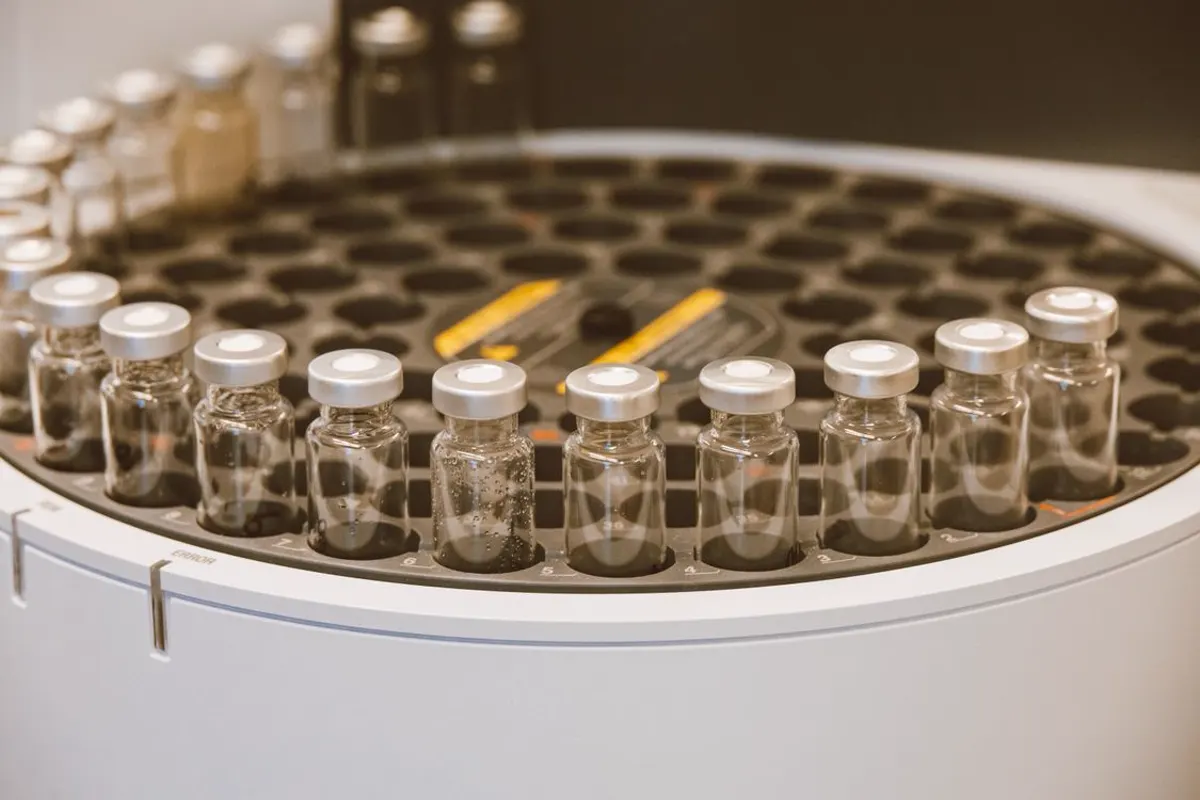
CJC-1295: The Long-Acting Branch of the Family
Among these GHRH-derived compounds, CJC-1295 is the most technically distinctive — and the one whose structural design has been described in the greatest detail. Developed by ConjuChem in the early 2000s according to published summaries, CJC-1295 is a modified GHRH(1-29) analog carrying four amino acid substitutions that make it resistant to enzymatic breakdown. That tetra-substituted scaffold is the shared base for two very different research compounds: one with the DAC modification, one without.
CJC-1295 with DAC: albumin binding as a duration strategy
The defining feature of this variant is the Drug Affinity Complex — a maleimidopropionic acid linker attached to a lysine residue, which reacts with the free thiol group of circulating serum albumin (primarily cysteine-34). Published descriptions report that the large majority of the administered compound becomes albumin-bound, creating a circulating depot that releases biologically active peptide over an extended period. The practical consequence, reported across published summaries and the Phase I literature, is a plasma half-life of roughly 6–8 days in humans — three orders of magnitude longer than native GHRH.
What researchers found interesting about the DAC variant was not just duration but pattern. Published human studies reported that sustained GHRH-receptor stimulation elevated baseline growth hormone exposure while the underlying pulsatile secretion pattern persisted — the pituitary’s natural rhythm continued underneath the sustained signal. Whether that pattern is an advantage or a complication is a research question, not a settled conclusion; but it is one of the most discussed findings attached to the DAC compound.
CJC-1295 without DAC: modified GRF(1-29)
The same tetra-substituted GHRH(1-29) scaffold, minus the albumin-binding linker, is a different compound entirely in research terms. Without DAC, there is no albumin depot — published summaries report a plasma half-life of roughly 30 minutes, and the compound produces a brief, discrete growth hormone pulse that more closely mirrors the body’s natural pulsatile pattern. In the research literature this form is commonly called modified GRF(1-29) or mod GRF(1-29). It has substantially less formal clinical data than the DAC form but is frequently used in research settings precisely because of its short-acting, pulse-like profile.
Important distinction: CJC-1295 with DAC and CJC-1295 without DAC are frequently confused because they share a name, but published sources treat them as distinct compounds with different pharmacokinetics. When reading the literature on sermorelin analogs and variants, always check which form a study used — half-life, administration frequency, and GH release pattern all depend on it.
Tesamorelin: The Full-Length, FDA-Approved Relative
Tesamorelin belongs to the sermorelin analogs and variants family by a different route: instead of starting from the 29-amino-acid fragment, it starts from the full 44-amino-acid sequence of human GHRH and adds a trans-3-hexenoic acid group at the N-terminus. That single modification makes the molecule more potent, more stable, and more resistant to cleavage by dipeptidyl aminopeptidase than the native peptide. Like the rest of the family, it stimulates the synthesis and release of endogenous growth hormone via GHRH receptors on the anterior pituitary, with downstream increases in insulin-like growth factor-1 (IGF-1).
Tesamorelin’s regulatory story is the exception in this family. Developed by Theratechnologies (original research code TH9507), it was approved by the FDA on November 10, 2010 as Egrifta for the reduction of excess abdominal fat in HIV-infected patients with lipodystrophy, following Phase III trials. The approval is narrow: it covers that indication only, and later formulations (Egrifta SV, Egrifta WR) followed. For researchers, tesamorelin’s approved status makes it a useful reference compound — its mechanism, safety profile, and pharmacokinetics are documented in the public regulatory record — but that documentation applies to its approved indication and cannot be transferred to other research questions or compounds.
How the Structural Strategies Compare
Step back and the sermorelin analogs and variants landscape resolves into three engineering strategies, each solving the short-half-life problem differently:
- No modification (sermorelin): the bare GHRH(1-29) fragment. Simple, closest to the native signal, but shortest-lived — persistence measured in minutes.
- Enzyme resistance (CJC-1295 scaffold): four amino acid substitutions protect against proteolytic breakdown. Alone, this extends persistence modestly — the no-DAC form still lasts roughly half an hour.
- Albumin anchoring (CJC-1295 with DAC): a reactive linker hijacks circulating albumin as a carrier. This is the step that stretches persistence from minutes to days.
- N-terminal fatty-acid modification (tesamorelin): a trans-3-hexenoic acid group improves stability and potency while keeping the full 44-amino-acid backbone.
Researchers comparing sermorelin analogs and variants generally weigh these strategies against the research question: short-acting pulses for studying natural physiology, sustained signals for studying prolonged GHRH-receptor activation, or an approved reference compound for methodological grounding.

Key Research Questions the Literature Associates with Sermorelin Analogs and Variants
The published literature on this family tends to cluster around a small set of recurring questions. None of these are answered definitively — they are the open questions researchers keep returning to:
- Duration vs. pulsatility: How do short pulses (sermorelin, mod GRF 1-29) versus sustained signals (CJC-1295 with DAC) differ in their effects on the GH/IGF-1 axis? Published human data suggest pulsatility can persist under continuous stimulation, but the physiological significance remains debated.
- Metabolic endpoints: Tesamorelin’s approved indication (HIV-associated lipodystrophy) generated substantial published data on body-composition endpoints — a body of evidence no other member of the family has.
- Receptor specificity: All sermorelin analogs and variants act through the GHRH receptor rather than the ghrelin/GHS-R1a receptor used by a different peptide family (the GHRPs, such as ipamorelin and GHRP-6) — a distinction the literature treats as fundamental.
- Stability in research settings: Published summaries discuss differing storage and reconstitution behavior across the family, with the DAC modification introducing its own degradation chemistry.
A note on naming: In research-product contexts you may also see “modified GRF(1-29)” or “mod GRF 1-29” — this is the no-DAC scaffold, not a separate discovery. And “GHRH(1-29)” is simply the chemical name of the sermorelin fragment. Keeping these synonyms straight is half the battle when surveying this literature.
Related Research Reading on This Site
If you are mapping the research-peptide landscape more broadly, our other literature guides use the same research-use framing. The Selank vs Semax research comparison covers two neurotropic research peptides side by side, and our nasal spray format overviews — Selank nasal spray research and Semax nasal spray research — describe delivery formats studied in research settings. The compounds those guides cover are supplied as research materials — see our Semax 10mg and Selank 10mg research listings. For background study indexing, researchers can browse PubMed for the GHRH-analog literature.
Sermorelin Analogs and Variants: Key Takeaways
Sermorelin is the reference scaffold; the variants are engineering answers to its short half-life
Every major member of the sermorelin analogs and variants family starts from the GHRH(1-29) core or the full GHRH(1-44) sequence and adds a stability strategy: nothing (sermorelin), enzyme-resistant substitutions (mod GRF 1-29), albumin anchoring (CJC-1295 with DAC), or a fatty-acid modification (tesamorelin). The structural differences drive the pharmacokinetic differences. (Research framing only — not a human-use recommendation.)
Regulatory status and evidence depth run opposite to duration
The longest-acting of the sermorelin analogs and variants (CJC-1295 with DAC) has no FDA approval; the only approved member (tesamorelin, 2010) is approved for a single narrow indication. Published human data are thinnest where the pharmacokinetics are most dramatic — a gap researchers should weigh before drawing conclusions. (Research framing only.)
Sermorelin Analogs and Variants: Final Research Notes
The literature picture of sermorelin analogs and variants is, in the end, a clean engineering story with an uneven evidence story. Sermorelin established the template — a 29-amino-acid GHRH fragment that stimulates endogenous growth hormone through the pituitary — and every variant since has been an attempt to keep that signal alive longer: substitutions, albumin binding, fatty-acid caps. The chemistry advanced faster than the clinical evidence, which is why the family today reads as one approved compound, one formerly approved compound, and two research compounds with interesting but incomplete human data.
For a researcher surveying sermorelin analogs and variants, the honest starting point is the table at the top of this guide: four compounds, four structures, four half-life ranges, four regulatory stories. The sections above simply fill in the reasoning behind each row — without drifting into claims no literature overview should make.

Sermorelin Analogs and Variants: Frequently Asked Questions
Quick answers to the questions that come up most around this compound family — all in research framing.
What are the main sermorelin analogs and variants described in the literature?
The principal sermorelin analogs and variants in published sources are sermorelin itself (the GHRH 1–29 reference scaffold), CJC-1295 with DAC (albumin-binding long-acting form), CJC-1295 without DAC (also called modified GRF 1-29), and tesamorelin (a full-length GHRH 1-44 analog with an N-terminal fatty-acid modification). All share GHRH-receptor signaling as their mechanism.
What is the structural difference between CJC-1295 with DAC and without DAC?
Both forms share a tetra-substituted GHRH(1-29) scaffold — four amino acid substitutions for enzyme resistance. The DAC form adds a maleimidopropionic acid linker that covalently binds serum albumin, extending reported half-life to roughly 6–8 days; the no-DAC form (mod GRF 1-29) lacks that linker and has a reported half-life of roughly 30 minutes. They are distinct compounds despite sharing a name.
Is sermorelin the same as tesamorelin?
No. Sermorelin is the 29-amino-acid GHRH(1-29) fragment with no modifications; tesamorelin is based on the full 44-amino-acid GHRH sequence with a trans-3-hexenoic acid group at the N-terminus. Both are GHRH analogs and therefore both belong to the sermorelin analogs and variants family, but they differ in length, modification, and regulatory history — tesamorelin holds FDA approval for HIV-associated lipodystrophy, while sermorelin’s former approval was discontinued in 2008.
Are any sermorelin analogs and variants FDA-approved?
Only tesamorelin: the FDA approved it (Egrifta) in 2010 for HIV-associated lipodystrophy. Sermorelin’s branded product Geref was approved in 1997 and discontinued in 2008 for commercial reasons, and CJC-1295 in either form has never been FDA-approved. Approval of tesamorelin for its specific indication says nothing about the other compounds.
Why do sermorelin analogs and variants differ so much in half-life?
Because each variant uses a different strategy against the same problem: native GHRH clears in minutes. Enzyme-resistant substitutions alone extend persistence modestly (the no-DAC form), albumin anchoring via the DAC linker stretches it to days, and N-terminal fatty-acid modification improves stability within a full-length backbone. The sermorelin analogs and variants story is fundamentally a story about half-life engineering.
Do sermorelin analogs and variants work through the same receptor as GHRP peptides?
No. The sermorelin analogs and variants covered here act through the GHRH receptor on anterior pituitary somatotrophs. GHRP-family peptides (such as ipamorelin, GHRP-2, and GHRP-6) act through the ghrelin receptor (GHS-R1a) — a distinct signaling pathway. The literature treats this as a fundamental mechanistic divide, and combining compounds across the two pathways is a separate research topic.