Semax Peptide shows up constantly in nootropic forums and biohacking circles, usually next to bold claims about focus, memory, and brain recovery. Some of that interest is grounded in real science — Semax has one of the longer clinical track records of any peptide discussed online. But most people asking about it are getting a mix of accurate mechanism-level research and vendor marketing dressed up as fact.
This guide sets the two apart. If you’re looking at it, it goes over what Semax Peptide is, what the actual published studies (mainly animal models, some Russian clinical data) say, where it sits with the FDA as of mid-2026, and what the true risk profile looks like.
Quick answer:Semax, a synthetic heptapeptide manufactured in Russia and approved there since the 1990s for stroke and cognitive impairment, is being explored primarily for its neuroprotective and BDNF-related characteristics. It is not approved by the FDA in the United States. It has yet to be endorsed by an FDA advisory panel, which was supposed to do so for lawful compounding as of July 2026.
What Is Semax Peptide, Exactly?
Semax Peptide is a short synthetic peptide — seven amino acids — built from a fragment of adrenocorticotropic hormone (ACTH) with an added tripeptide tail (Pro-Gly-Pro) that extends how long it stays active in the body. Researchers often write its structure as ACTH(4-7)-PGP.
Because it’s derived from ACTH, people sometimes assume it acts like a stress hormone. It doesn’t.Semax Peptide retains the fragment of ACTH linked to nervous-system activity but leaves out the portion of the molecule responsible for triggering adrenal hormone release, according to peptide research summaries. That distinction is the basis for why researchers call it “nootropic” rather than hormonal.
Semax Peptide isn’t new, either. It was developed at the Institute of Molecular Genetics of the Russian Academy of Sciences back in the 1980s and has been an approved pharmaceutical in Russia since the early 1990s. That’s a genuinely unusual amount of real-world clinical history for a compound most Americans have only heard of through supplement forums.
How Does Semax Peptide Work in the Body?
Quick answer: Semax Peptide is considered to work primarily by boosting brain-derived neurotrophic factor (BDNF) and altering neurotransmitter systems, with anti-inflammatory and gene-expression effects reported in ischemia studies.
The clearest mechanistic thread across the research is BDNF. According to multiple sources, Semax Peptide increases levels of brain-derived neurotrophic factor, a protein that plays a central role in neuronal growth, survival, and plasticity, as well as modulating dopaminergic and serotonergic signaling. So it’s consistent with its reputation for focus and mood, but the evidence from human trials for those specific outcomes is thin.
The stroke research goes deeper into cellular mechanisms. Semax Peptide is already used in Russia to treat acute ischemic stroke as a neuroprotective drug, reportedly producing a fast therapeutic effect without triggering drug dependence or withdrawal. Genome-wide studies examining what Semax actually changes at the transcriptional level found that the peptide mainly boosted expression of immune-system-related genes in the brains of rats after induced stroke, with that immune-related effect growing stronger over the 24 hours following the injury. Separate research using a different ischemia model found that Semax suppressed inflammation-related gene expression while activating neurotransmission-related genes after stroke — essentially the opposite pattern seen with ischemia alone, which tends to do the reverse.
There’s also newer work involving an Alzheimer’s disease mouse model. In transgenic mice bred to develop Alzheimer’s-like pathology, Semax Peptide and a related derivative improved performance on memory and cognitive tests and reduced the number of amyloid plaques in the cortex and hippocampus. That’s animal data, not a human trial, but it’s one of the more direct links between Semax and the amyloid pathology central to Alzheimer’s research.
What Does the Clinical Evidence in Humans Actually Show?
This is where the honest caveats matter most. A widely cited 2010 study by Myasoedov and colleagues found that Semax Peptide improved outcomes for patients recovering from ischemic stroke, supporting its use as a therapeutic in stroke recovery settings. But researchers reviewing the broader body of Semax literature note that most of the available research has been conducted in animals or in vitro, and that more work is needed before its full effects and applications in humans are well understood.
Other sources are more blunt about the evidence gap. Most of the research supporting Semax’s cognitive effects comes from Russian-language literature, which makes independent verification of study methodology difficult for Western researchers and clinicians. The cognitive-enhancement and focus benefits most commonly discussed online remain largely anecdotal and haven’t been validated in controlled Western clinical trials.
That’s the real picture: legitimate stroke-recovery clinical data exists and is decades old. Still, it comes out of a different regulatory and publication system than the FDA trials Americans typically rely on — and the cognitive-enhancement claims circulating in nootropic communities have far less direct human evidence behind them than the stroke research does.
Is Semax Peptide Legal in the United States in 2026?
Quick answer: No FDA-approved Semax Peptide product exists in the US. As of mid-2026, an FDA advisory committee recommended adding it to the list of substances legal 503A pharmacies can compound, but that’s a recommendation, not a final rule — so nothing about legal access has actually changed yet.
The regulatory story moved fast this year. Semax Peptide has never been submitted for FDA review and isn’t available over the counter. In the US, it exists — when it’s even eligible — only as a compounded preparation dispensed through a licensed 503A pharmacy against a patient-specific prescription. For most of 2026, it wasn’t eligible at all.
Semax Peptide was previously nominated for the FDA’s 503A Category 2 bulk substances list, then listed as withdrawn from that category as of late April 2026, meaning standard pharmacy regulation applied and it remained unapproved for therapeutic use. That changed again in July: across July 23 and 24, 2026, the FDA’s Pharmacy Compounding Advisory Committee recommended six peptides for legal compounding — Semax, BPC-157, TB-500, KPV, MOTS-c, and epitalon — while rejecting a seventh, DSIP (emideltide).
It’s important not to overstate what that vote means. Clinicians tracking the process have been clear that the July vote is a recommendation, not an approval:Semax Peptidestill can’t be legally compounded by any pharmacy today, and the FDA still has to formally accept the recommendation and complete rulemaking, a process that typically takes twelve to twenty-four months. Retailer and industry summaries confirm the same practical bottom line — the committee’s vote was advisory, not a drug approval, the FDA hasn’t made a final decision, and current access rules remain unchanged.
So in practice, as of late August 2026: Semax Peptide sold in the US is almost always sold as a “research chemical,” not a prescribed or compounded medical product, and that’s unlikely to change until the FDA finishes its rulemaking process — if it does at all.
What About Quality and Sourcing Risk?
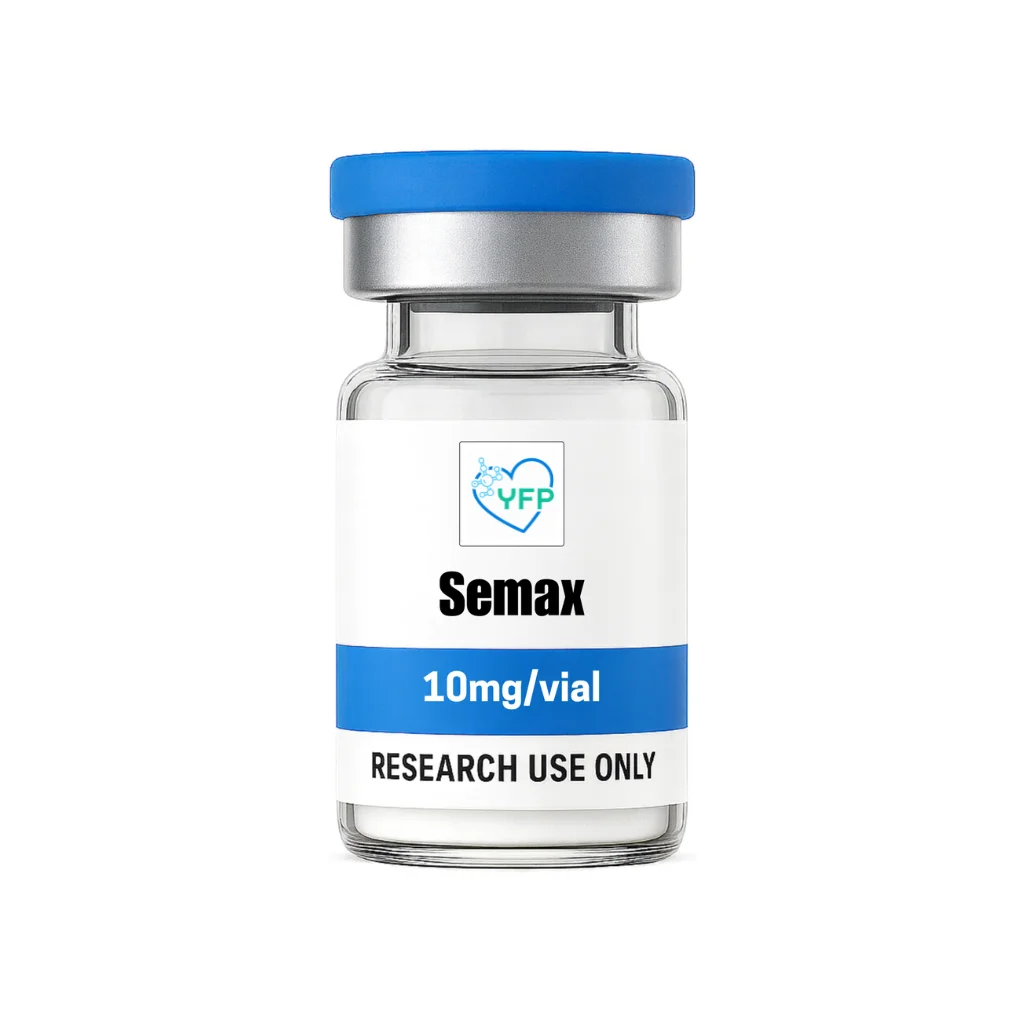
This is the part vendor pages tend to underplay. Semax Peptidecurrently cannot legally be marketed or sold as a drug or dietary supplement for human use, and compounding pharmacies cannot legally prepare it for human patients under current FDA guidance. In practice, that means it’s sold in the US primarily as a research chemical — a label that carries real quality-control implications, since these products aren’t manufactured to pharmaceutical standards.
That gap matters because research-chemical suppliers aren’t required to verify identity or purity the way an FDA-regulated manufacturer is. Buying a product marketed as a research chemical means there’s no approval-backed assurance of what’s actually in the vial, at what concentration, or how sterile it is. A peptide that’s mislabeled, underdosed, or contaminated looks identical to a correctly made one until it’s independently tested — and most buyers have no way to test it themselves.
What Side Effects Are Reported?
Quick answer: Reported side effects are generally mild and centered on nasal irritation when Semax Peptide is used intranasally, along with occasional headache — but the safety data comes largely from a research-chemical market with no standardized quality control, so those reports shouldn’t be treated as clinical-grade safety data.
Semax Peptide has been studied mostly in Russian-language clinical and preclinical literature for possible effects on attention, memory, executive function, and stroke recovery. Still, much of that research hasn’t been replicated in large, peer-reviewed Western randomized trials. Vendor and clinic materials commonly describe headache and mild nasal irritation — dryness, tingling, or a light burning sensation, especially early in use — as the most frequently mentioned issues, based on the compound’s long history of reported use in Russia. That’s a description of anecdotal and vendor-reported experience, though, not data from a controlled safety trial.
Semax Peptide vs. Other Compounded Peptides (BPC-157, Selank, TB-500)
People frequently lump Semax in with BPC-157 and TB-500 because all three show up in the same “research peptide” marketplaces. Mechanistically, they’re unrelated. BPC-157 and TB-500 are studied mainly for tissue and soft-tissue repair, while Semax’s research base centers on neuroprotection, stroke recovery, and BDNF signaling — an entirely different system in the body. If a product page or seller implies they’re interchangeable or equally well studied, that’s a marketing simplification, not a scientific one.
Semax and a comparable Russian-developed peptide, Selank, are discussed together mostly because of overlapping producers and marketing channels, not because of a shared mechanism supported by good comparative evidence.
Frequently Asked Questions
Is Semax FDA-approved?
No. No Semax product has been FDA-approved for any usage as of August 2026. An advisory group in July 2026 said it should be allowed for legal compounding, but it still needs to go through the formal FDA regulatory process before it changes anything.
Is Semax legal to buy in the US?
It operates in a regulatory gray area. It’s not a scheduled substance, but it’s also not licensed as a medication or supplement; therefore, it’s offered almost entirely as a “research chemical” with no guarantee of purity or appropriate labeling.
What is Semax used for in Russia?
It is approved here for cerebrovascular diseases, including support for recovery after ischemic stroke, and some use for cognitive-impairment and optic nerve purposes.
Does Semax boost BDNF?
The main molecular explanation for its claimed cognitive effects is an increase in brain-derived neurotrophic factor and modulation of dopamine and serotonin transmission.
Is Semax the same as N-Acetyl Semax?
No. N-Acetyl Semax has an added acetyl group that slows its breakdown, intended to make its effects last longer than plain Semax, but it’s the same base peptide structure.
Are there human clinical trials on Semax for cognition?
There is human clinical evidence regarding stroke recovery. There is no evidence of general cognitive enhancement in healthy adults, and the few reports have not been verified in controlled Western trials.
What were the six peptides recommended for compounding in July 2026?
BPC-157, TB-500, KPV, MOTS-c, epitalon, and Semax were recommended. DSIP (emideltide) was reviewed and rejected.
Is Semax safe?
It has a lengthy history of recorded use in Russia with largely moderate side effects noted (nasal irritation, occasional headache). But there’s no FDA safety review, and sourcing research chemicals means significant uncertainty about what’s actually in any given product.
The Bottom Line
Semax has more real science behind it than most peptides being sold on the same websites: real mechanistic studies, real Russian clinical use, and a real (albeit incomplete) regulatory process progressing through the FDA in 2026. But “more research than most” is not the same as “FDA-approved” or “proven to enhance cognition in healthy adults.” If you are thinking about Semax, begin by talking to a licensed provider about your unique circumstances instead of a product page promising results that science has not yet proven.
Sources referenced:
- Genome-wide transcriptional analysis of Semax in rat brain ischemia — NCBI PMC3987924
- Semax neuroprotective mechanisms — ChemicalBook
- Brain protein expression in Semax-treated ischemia-reperfusion rats — NCBI PMC8226508
- Semax and Alzheimer’s model in transgenic mice — NCBI PMC12755871
- Semax and BDNF/trkB expression — ScienceDirect
- Semax overview — ProSpec Bio
- Transcriptome-level protective effects of Semax — NCBI PMC7350263
- Synthetic ACTH peptides and immune gene expression post-stroke — NCBI PMC10379992
- Semax FDA/legal status coverage (2026) — Rite Aid, Superpower, Doctronic, Empire Medical Training, Paragon Sports Medicine, Meto, The BH, Newtropin, Peptide Mind, BSCG