
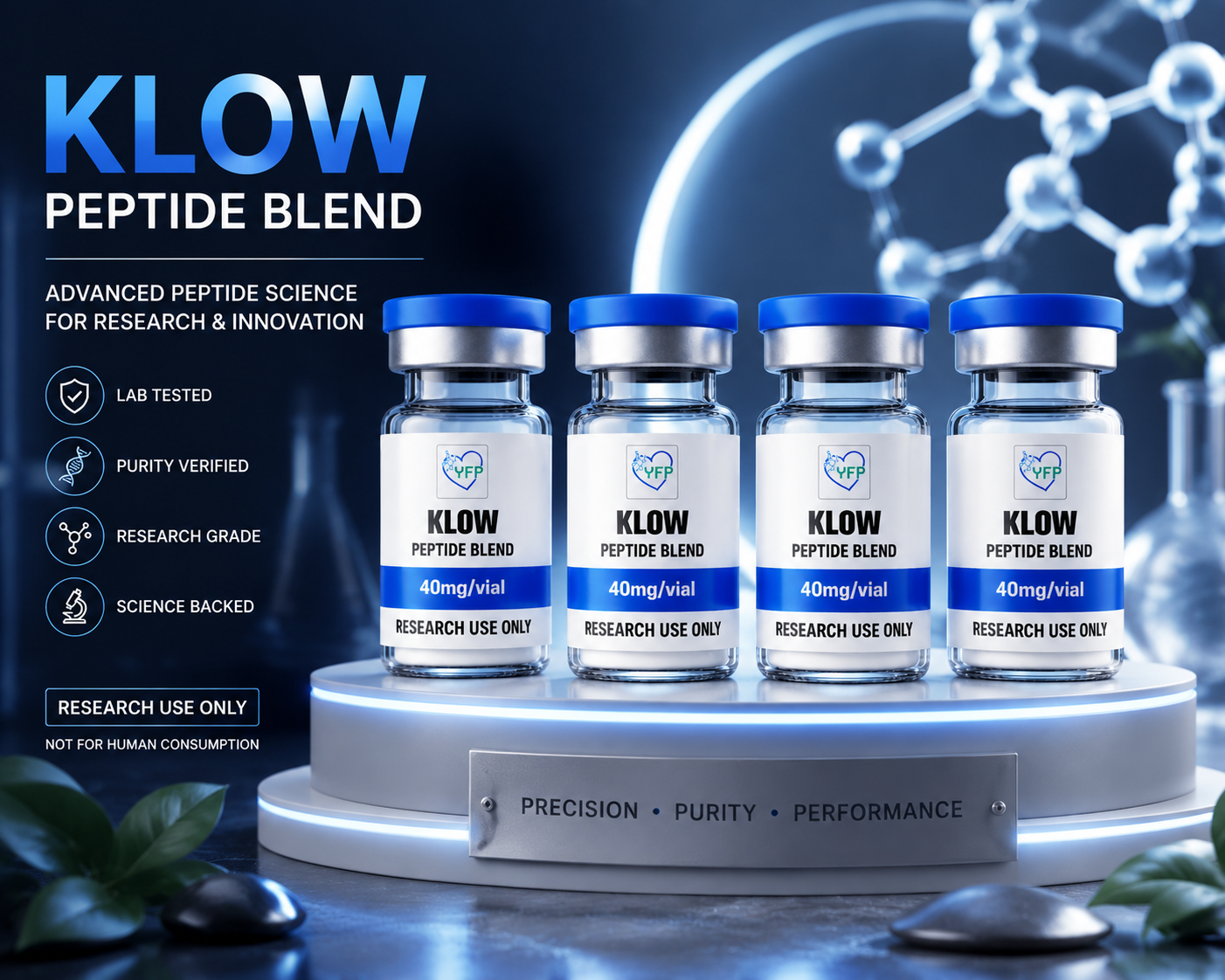
If you’ve spent any time in a peptide forum, a biohacking Discord, or the waiting room of a med spa in the last year, you’ve probably run into the name KLOW. It shows up as a four-letter acronym attached to some pretty big promises: better skin, faster healing, calmer inflammation, quicker recovery from workouts or injuries. It also shows up on supplier websites with a very different label underneath it — “for laboratory research use only, not for human consumption.”
That gap between how KLOW is marketed in wellness spaces and how it’s labeled by the companies selling it is the first thing worth understanding, and it’s where I want to start.
What Is KLOW Peptide, Exactly?
KLOW Peptide is not a single peptide. It’s a blend of four separate peptides, each with its own history in research literature, combined into one formulation. The name itself is basically a mnemonic for the four ingredients:
- K — KPV
- L — (a reference used loosely across different vendor naming conventions, sometimes standing in for the “regenerative” theme of the blend)
- O/W — often paired with GHK-Cu (“copper peptide”)
- Rounded out in most commercial versions by BPC-157 and TB-500
In practice, when you buy a vial labeled KLOW Peptide from a peptide vendor, you’re almost always getting some combination of:
- GHK-Cu (copper peptide) — a naturally occurring copper-binding peptide studied for its role in collagen production and skin remodeling
- KPV — a tripeptide studied mainly for anti-inflammatory and immune-modulating effects, including in gut-related research
- BPC-157 — a synthetic peptide derived from a protein found in gastric juice, widely discussed in tissue-repair research
- TB-500 — a synthetic fragment related to thymosin beta-4, studied for its role in cell migration and wound healing
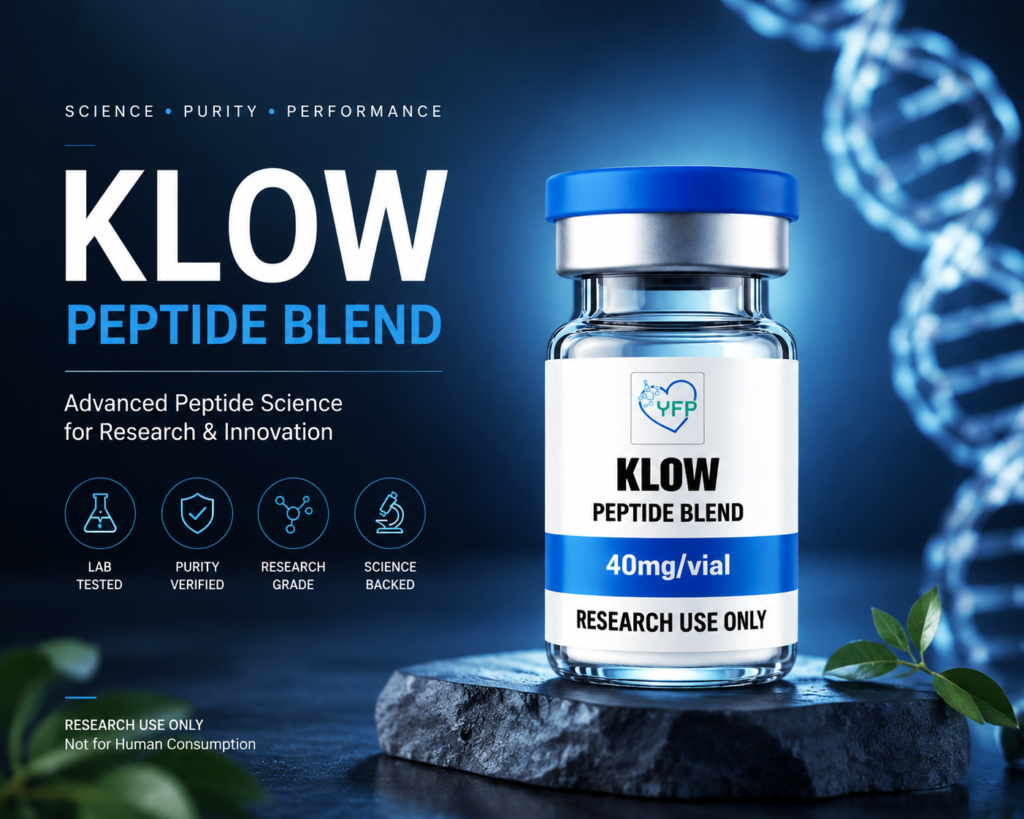
Typical commercial vials list something like 50mg GHK-Cu, 10mg KPV, 10mg BPC-157, and 10mg TB-500, sold as a lyophilized (freeze-dried) powder.
Why Do People Combine These Four Peptides?
The logic behind blends like KLOW Peptide is that biological repair isn’t a single-step process. When tissue is damaged — skin, gut lining, muscle, tendon — the body runs several repair processes at once: it manages inflammation, rebuilds structural tissue, recruits cells to the injury site, and remodels the surrounding matrix. The idea behind KLOW Peptide is to pair a peptide associated with each of those stages rather than relying on one mechanism alone.
That’s a reasonable hypothesis, and it’s the same logic clinics and suppliers use to justify the combination. What it isn’t, yet, is a well-established clinical finding. Almost all of the supporting research on these individual peptides comes from cell studies or animal models, not large human trials, and there’s very little published research on the KLOW Peptide blend as a combined formulation specifically — most of what exists is extrapolated from the individual components.
Where You’ll Actually Encounter KLOW Peptide
There are two very different worlds where this compound shows up, and it’s worth being clear-eyed about both.
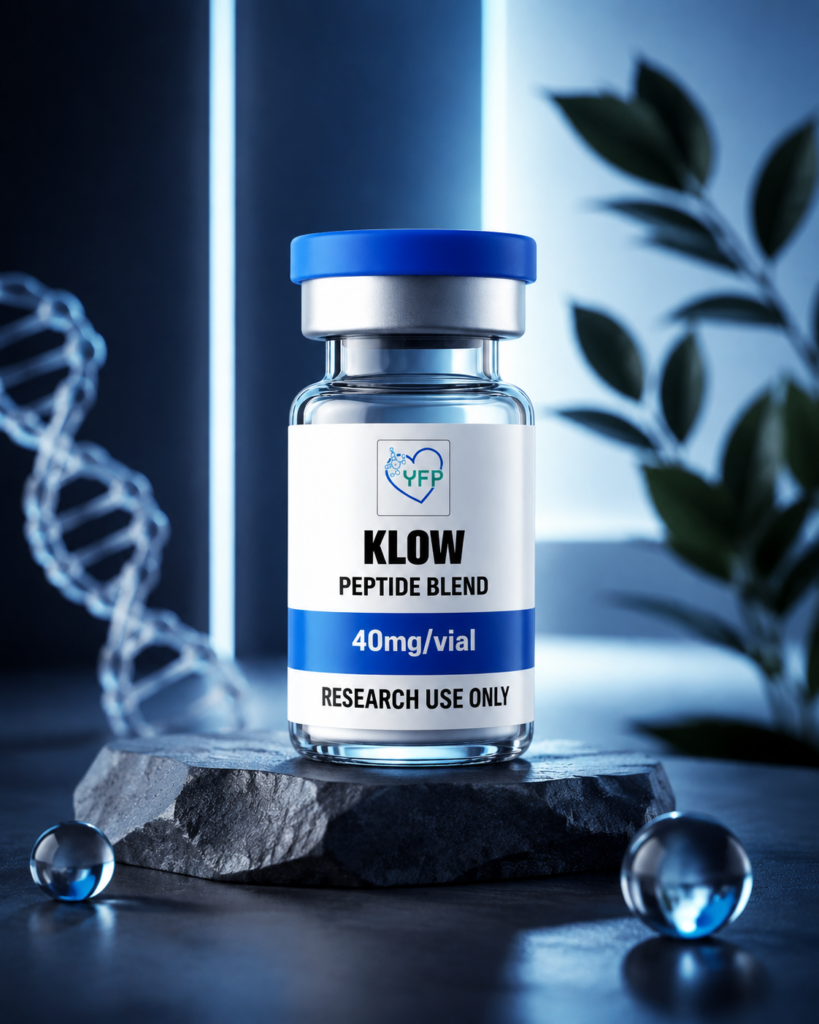
Research chemical suppliers. A large number of companies sell KLOW Peptide explicitly labeled “for research use only” or “not intended for human consumption.” These are the same suppliers who sell individual peptides like BPC-157 and TB-500 to researchers, and legally, that’s the framing they operate under — even though it’s an open secret that a large share of buyers are individuals, not labs.
Medical spas and wellness clinics. A smaller number of providers offer KLOW Peptide as part of a supervised peptide therapy program, usually after an intake consultation, sourced through a compounding pharmacy rather than a direct-to-consumer vendor. These clinics are typically upfront that the compound isn’t FDA-approved and that the supporting research is still developing — the honest ones will say so in writing.
That split matters. Buying a vial online and reconstituting it yourself is a fundamentally different risk profile than getting it through a provider who is screening you, sourcing from a regulated pharmacy, and monitoring you afterward.
What the Research Actually Supports (and Doesn’t)
I want to be direct about this because it’s the part most blog posts on this topic gloss over.
GHK-Cu has the most human-relevant research behind it, mostly in topical cosmetic formulations for skin, where it’s been studied for effects on collagen and skin firmness. That’s a meaningfully different context than injecting it as part of a systemic blend.
KPV has a body of preclinical research, largely in animal models of inflammatory bowel disease, looking at its anti-inflammatory signaling.
BPC-157 is one of the most talked-about peptides in the recovery and biohacking space, but the vast majority of its research is in rodent models. Human clinical trial data is sparse.
TB-500 research is similarly concentrated in cell and animal studies related to wound healing and cell migration.
None of that means these compounds are useless — early-stage research on all four is genuinely interesting, and it’s part of why they’ve generated so much attention. But “studied in mice” and “safe and effective for you as an unsupervised subcutaneous injection” are two very different claims, and a lot of the marketing around KLOW Peptide blurs the line between them.
Is KLOW Peptide Legal?
This is one of the most common questions, and the honest answer is that it’s more complicated than a yes or no.
Individually, peptides like BPC-157 and TB-500 exist in a gray zone in many places — not classified as controlled substances, but also not FDA-approved for human use, and increasingly restricted from being compounded by pharmacies in some jurisdictions. Selling them “for research use only” is the legal framing suppliers use to stay outside of drug-marketing regulations, since the moment a product is marketed for human treatment of a condition, it falls under different rules.
If you are going via a clinic that offers supervised peptide therapy, the legal and safety scenario is different because a licensed provider is taking responsibility for sourcing, dose decisions, and monitoring. If you’re browsing a research-chemical site and looking at a vial, then you’re in a far less controlled realm, and that “not for human consumption” sign isn’t simply a conventional disclaimer – it’s a statement of real deficits in safety data, sterility requirements, and quality control that vary greatly from supplier to supplier.
What to Actually Weigh Before Considering It
Rather than a dosing protocol, here’s the more useful list — the questions worth answering before you decide anything:
- Is there a licensed provider involved? A consultation and medical history review changes the risk calculus significantly compared to self-sourcing.
- What’s the sourcing? Third-party HPLC purity testing and a batch-matched Certificate of Analysis are the minimum bar if you’re evaluating a supplier at all — but even with those, purity testing doesn’t establish safety or efficacy for human use.
- What are you actually trying to address? Skin appearance, joint or tendon recovery, and gut inflammation are three very different goals, and the evidence base is stronger for some components than others depending on which one you care about.
- What’s your alternative? For most of the outcomes people chase KLOW Peptide for — skin texture, injury recovery, inflammation — there are established, better-studied options (topical retinoids and peptide serums for skin; physical therapy and standard sports medicine protocols for soft-tissue injuries) worth comparing against.
- Are you comfortable with the uncertainty? This is genuinely early-stage research territory. If you need strong human clinical evidence before trying something, KLOW Peptide isn’t there yet.
Is KLOW the same as the “Glow” peptide blend?
No, but it’s an easy mistake to make. “Glow” blends are usually a mix of three peptides that are more skin- and hair-focused. KLOW Peptide is a broader composition with KPV included for its anti-inflammatory profile, so it’s more recovery-oriented.
How is KLOW Peptide typically administered?
Where it’s used at all, it’s generally described as a subcutaneous injection after reconstitution with bacteriostatic water, which is why suppliers sell it alongside reconstitution kits and syringes. Administration decisions, including whether to use it at all, are exactly the kind of thing that should go through a licensed provider rather than a product page.
Is KLOW Peptide FDA-approved?
No. None of the four component peptides are FDA-approved for the uses they’re commonly discussed for, and the blend itself has not gone through clinical trials as a combined product.
Why do some vendors say “not for human consumption”?
It’s a legal and regulatory loophole that enables suppliers to peddle research-grade substances without making medical claims that would trigger drug-approval requirements. It also highlights very substantial gaps in the sterility and safety testing of products supplied this way.
What’s the difference between buying online versus through a clinic?
Acquisition Standards of Sterility. Dosage instructions and medical supervision. A clinic version will likely come from a licensed compounding pharmacy and include a consultation. In contrast, a direct-to-consumer research chemical buy probably will not.
Does GHK-Cu actually work for skin?
Of the four components, GHK-Cu has the strongest human-relevant research, largely from topical cosmetic studies looking at collagen and skin texture — though that’s a different delivery method and context than an injected blend.
Is BPC-157 the most important part of KLOW Peptide for injury recovery?
It’s the component most associated with tissue-repair claims, but the human evidence is limited, and most of what’s published comes from animal studies.
Are there interactions to worry about with other medications or supplements?
This is a question for a physician or pharmacist familiar with your specific health history — it’s not something a supplier’s product page can meaningfully answer for you.
How much does KLOW Peptide typically cost?
Pricing varies widely by supplier and by whether it’s sourced through a research-chemical vendor versus a clinic, and it changes often enough that any specific figure here would be out of date quickly — check current listings directly if cost is a factor in your decision.
Is there ongoing research that might change this picture?
Peptide research is a busy field in total, and it would be normal to expect more human data on components like BPC-157 and GHK-Cu within the next couple of years. The honest frame for now is “promising early research,” not “established treatment.”
Where This Leaves You
KLOW Peptide sits in an interesting spot: four peptides with genuinely interesting preclinical stories, combined into a blend that’s more talked about in online communities than it is studied as a unit. If you’re drawn to it, the single most important decision isn’t which vendor to buy from — it’s whether a licensed provider is part of the process at all. That one factor does more to change your actual risk than any purity certificate or dosing chart ever will.
This article is educational, not medical advice. If you’re considering KLOW Peptide or any peptide therapy, talk to a licensed healthcare provider who can review your history and goals directly.