The bpc-157 nitric oxide pathway is one of the most discussed mechanisms in peptide research — and one of the easiest to misunderstand. BPC-157 (Body Protection Compound-157) is a stable gastric pentadecapeptide: a chain of just 15 amino acids originally isolated in gastric research. Across dozens of published animal and tissue studies, researchers have reported that BPC-157 interacts with the body’s nitric oxide (NO) signaling system — but the details are narrower, more technical, and more hedged than most summaries admit. This explainer walks through what the peer-reviewed literature actually reports about the bpc-157 nitric oxide pathway: the Src–Caveolin-1–eNOS signaling cascade, the L-NAME and L-arginine experiments that built the case, and the hard limits of what those findings establish. Research framing only; BPC-157 is not an FDA-approved drug and is handled as a research compound.
Research-use-only disclaimer: BPC-157 is not an FDA-approved drug and is not a medicine. It is handled as a research compound for laboratory and scientific investigation only. This article summarizes published preclinical findings about the bpc-157 nitric oxide pathway — it contains no dosing information, no administration guidance, no efficacy claims for humans, and no medical advice.
BPC-157 in Brief
Before the pathway, the compound. BPC-157 is described in the literature as a stable gastric pentadecapeptide — a 15-amino-acid fragment with reported cytoprotective and pro-angiogenic properties in preclinical models. The “stable” in that description matters to researchers: unlike many peptides, it is reported to remain intact in gastric fluid, which is why early research centered on gut and tissue-injury models.
The bpc-157 nitric oxide pathway story began when researchers noticed that many of BPC-157’s reported effects in animal models — vascular responses, tissue repair, counteraction of certain drug toxicities — kept intersecting with nitric oxide signaling. Nitric oxide is a gaseous signaling molecule produced by enzymes called nitric oxide synthases (NOS), including endothelial NOS (eNOS). It regulates blood-vessel tone, among other roles. When a research compound’s effects repeatedly track with NO biology, the next scientific step is to test the connection directly — which is what the studies below did.
Nitric Oxide Signaling: The 60-Second Primer
To follow the bpc-157 nitric oxide pathway literature, you need three pieces of background:
- eNOS makes NO in blood vessels. Endothelial nitric oxide synthase, sitting in the cells lining blood vessels, converts the amino acid L-arginine into nitric oxide. NO then diffuses into neighboring smooth-muscle cells and signals them to relax — widening the vessel. This is the core of NO-mediated vasodilation.
- L-NAME blocks the system. L-NAME (Nω-nitro-L-arginine methyl ester) is a standard laboratory NOS inhibitor. When researchers apply L-NAME, they shut down NO production and watch what changes — a classic way to test whether an effect depends on nitric oxide.
- L-arginine pushes the system the other way. As the substrate NOS enzymes use to make NO, extra L-arginine is used in research as a model of NOS overstimulation — the mirror image of L-NAME blockade.
With those tools, researchers can ask a precise question: does BPC-157’s effect survive NOS blockade, mimic NOS stimulation, or do something in between? The bpc-157 nitric oxide pathway findings below are the published answers.
The Src–Caveolin-1–eNOS Cascade, Step by Step
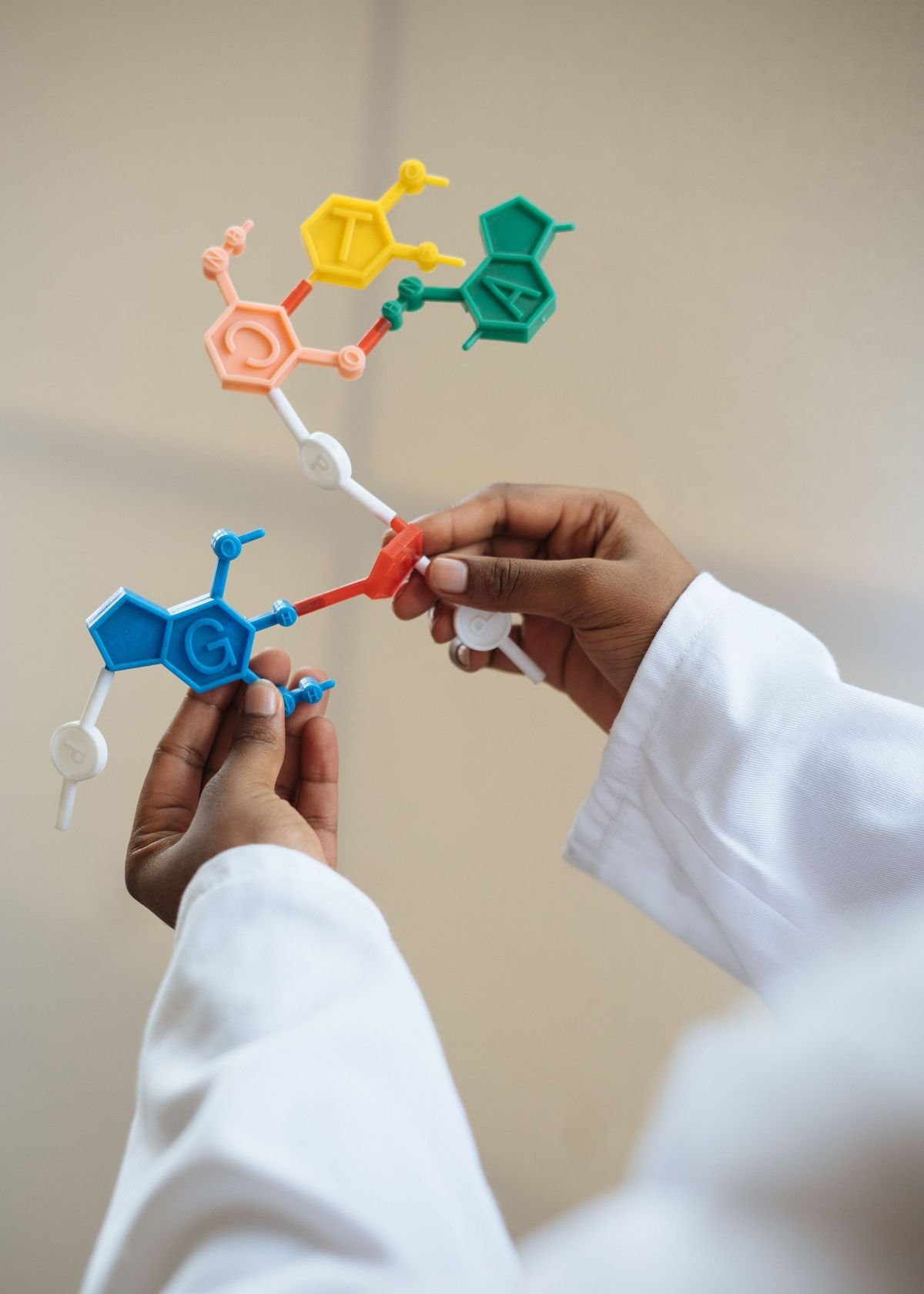
The most detailed mechanistic report on the bpc-157 nitric oxide pathway comes from Hsieh and colleagues, published in Scientific Reports in 2020 (PMID 33051481). Working with isolated rat aorta, the team mapped a signaling cascade. Here it is, one step at a time, exactly as the study reports it:
Step 1
BPC-157 exposure increases Src phosphorylation
The study found that BPC-157 enhanced phosphorylation of Src, an upstream signaling kinase. When the researchers pretreated the tissue with a Src inhibitor, the downstream steps were abolished — placing Src at the top of the reported cascade.
Step 2
Caveolin-1 releases its hold on eNOS
In resting endothelium, Caveolin-1 (Cav-1) binds eNOS and keeps it inactive. BPC-157 was found to reduce the binding between Cav-1 and eNOS — effectively releasing the brake. Cav-1 phosphorylation also increased, and this step required the Src activity from Step 1.
Step 3
eNOS is activated and generates nitric oxide
Freed from Cav-1, eNOS becomes active. Using intracellular fluorescent labeling, the researchers detected nitric oxide generation induced by BPC-157, along with increased eNOS phosphorylation — the biochemical signature of an activated enzyme.
Step 4
NO signals vasodilation and endothelial migration
The generated NO produced concentration-dependent relaxation of the aortic tissue — an effect that disappeared when the endothelium was removed or when L-NAME or hemoglobin (an NO scavenger) was added, confirming the effect was NO-mediated. The NO generation also promoted migration of vascular endothelial cells, linking the pathway to the angiogenesis themes seen elsewhere in BPC-157 research.
What “concentration-dependent” means here: the vasodilation grew stronger as the BPC-157 concentration rose — a dose-response relationship that strengthens the case for a genuine signaling effect rather than a tissue artifact. It does not translate into any human dosing information, and this article draws no such inference.
Human Tissue Evidence: A 2026 Addition
Most bpc-157 nitric oxide pathway data comes from animal tissue. A 2026 study by Yildirim and colleagues (Journal of Clinical Medicine, PMID 42123221) extended the question to human arterial tissue: rings of human internal mammary artery obtained during bypass surgeries. BPC-157 produced concentration-dependent relaxation there too, with greater effect in endothelium-intact rings — and pre-incubation with L-NAME attenuated the relaxation, again implicating endothelial NO signaling.
This is a meaningful step for the literature — human tissue rather than rat — but researchers are careful about what it does and does not show. It demonstrates an NO-dependent vascular response in isolated human arterial rings. It does not establish systemic effects, therapeutic outcomes, or safety in living humans. The bpc-157 nitric oxide pathway remains a preclinical and ex-vivo story.

L-NAME and L-Arginine: The Two Probes That Built the Case
A second, larger thread of the bpc-157 nitric oxide pathway literature comes from the Sikirić research group, which has run BPC-157 alongside L-NAME and L-arginine across many rat injury models — bowel adhesion, vascular occlusion, NSAID toxicity, and others. The pattern they report is distinctive and worth describing precisely:
| Experimental condition | What the probe does to the NO system | What co-treatment with BPC-157 reportedly showed |
|---|---|---|
| BPC-157 + L-NAME | NOS blockade — NO production shut down | BPC-157 counteracted the worsening caused by NOS blockade |
| BPC-157 + L-arginine | NOS overstimulation — excess NO substrate | BPC-157 counteracted the disturbances from overstimulation |
| BPC-157 + L-NAME + L-arginine | Probes cancel each other — NO system “immobilized” | Outcomes resembled BPC-157 alone; the peptide’s effect persisted |
The group’s interpretation, repeated across these papers, is that BPC-157 “normalizes” NO-system disturbances in either direction — countering both blockade and overstimulation. In the bowel-adhesion study (PMC7667405), for example, BPC-157 co-application re-established its counteracting effect whether the NO system was blocked, overstimulated, or immobilized by the combined probes. Whether that framing generalizes beyond these models is an open research question — but the bidirectional pattern is the empirical core of this branch of bpc-157 nitric oxide pathway research.
Reading this literature critically: much of the L-NAME/L-arginine work comes from a single research group using related rat models. Independent replication — like the 2020 Src–Cav-1–eNOS study and the 2026 human-tissue study from different teams — is what gives the bpc-157 nitric oxide pathway its credibility beyond one lab’s program. Researchers weigh convergent evidence from independent groups more heavily than volume from one.

What the Evidence Does Not Establish
An honest explainer of the bpc-157 nitric oxide pathway must mark the boundaries as clearly as the findings:
- No human clinical mechanism data. The pathway evidence is preclinical: rat aorta, rat injury models, and isolated human arterial rings. There are no published randomized human trials establishing how BPC-157 interacts with NO signaling in living people.
- Mechanism is not medicine. Showing that a compound activates eNOS in isolated tissue says nothing about therapeutic benefit, effective exposure, or safety in a whole organism. The gap between a tissue-bath finding and a clinical outcome is wide and full of failed translations.
- Not an approved drug. BPC-157 has no FDA approval for any indication. It is handled as a research compound, and the NO-pathway findings describe laboratory observations, not treatment rationale.
- Open questions remain. The upstream trigger — how BPC-157 initiates Src phosphorylation in the first place — is not fully mapped, and the full receptor-level picture is still being worked out.
None of this diminishes the published work; it locates it correctly. The bpc-157 nitric oxide pathway is a genuinely interesting, partially mapped signaling story in preclinical research — not a settled clinical fact.
Key Takeaways for Researchers
- The bpc-157 nitric oxide pathway literature reports NO-mediated, endothelium-dependent vascular effects, mapped in most detail as a Src → Caveolin-1 → eNOS → NO cascade.
- Key evidence: concentration-dependent vasodilation blocked by L-NAME (rat aorta, 2020) and replicated in human arterial rings (2026).
- A parallel research program reports BPC-157 counteracting both NOS blockade (L-NAME) and NOS overstimulation (L-arginine) across rat injury models.
- All findings are preclinical or ex vivo; no human clinical mechanism data exists, and BPC-157 is not an FDA-approved drug.
- Strongest reading habit: weigh convergent findings from independent groups over volume from any single lab.

BPC-157 Nitric Oxide Pathway: Frequently Asked Questions
Direct answers on the bpc-157 nitric oxide pathway — hedged where the literature is hedged.
What is the bpc-157 nitric oxide pathway?
It refers to published findings that BPC-157 interacts with nitric oxide signaling — most specifically, a reported Src–Caveolin-1–eNOS cascade in which BPC-157 exposure leads to eNOS activation and NO generation in vascular tissue. The detailed mapping comes from a 2020 rat-aorta study, with supporting human-tissue data published in 2026. All of it is preclinical or ex vivo.
How does L-NAME factor into BPC-157 research?
L-NAME is a standard NOS inhibitor used as a probe. In bpc-157 nitric oxide pathway studies, adding L-NAME abolished or attenuated BPC-157’s vasodilatory effects — evidence the effects are NO-mediated. Separately, a large rat-model program reports BPC-157 counteracting the harms of L-NAME-induced NOS blockade.
Has the pathway been shown in human tissue?
Partially. A 2026 study in isolated human internal mammary artery rings reported NO-dependent relaxation with BPC-157, attenuated by L-NAME. That is ex-vivo human tissue — a step beyond animal models, but not clinical evidence of effects in living humans.
Does this mean BPC-157 works through nitric oxide in the body?
That conclusion would overreach the data. The bpc-157 nitric oxide pathway findings show NO-dependent responses in isolated tissues and animal models. How — or whether — this translates to whole-organism biology has not been established in published human research.
Is BPC-157 an approved drug?
No. BPC-157 is not FDA-approved for any indication and is handled as a research compound. The pathway findings are laboratory observations, not treatment rationale. For the study-by-study record, see our Top BPC-157 Studies roundup. For the research material itself, see the Wolverine Blend (BPC-157 10mg + TB-500 10mg), and lot-specific documentation is published in the COA Library.
Where can researchers review the primary studies?
The key papers are openly accessible: the 2020 Src–Cav-1–eNOS study at PMC7555539 and the 2026 human arterial study at PMC13163310, with the broader BPC-157/NO literature indexed on PubMed. Research peptides for laboratory work — such as our Wolverine Blend (BPC-157 10mg + TB-500 10mg) listing — are supplied strictly for research use. Lot-specific documentation is published in the COA Library.
BPC-157 Nitric Oxide Pathway: Final Research Notes
The bpc-157 nitric oxide pathway is one of the better-mapped mechanism stories in preclinical peptide research: a defined Src → Caveolin-1 → eNOS → NO cascade in vascular tissue, probed with L-NAME blockade, replicated across independent groups, and extended to human arterial tissue ex vivo. That is a genuinely substantial evidence base — for a laboratory phenomenon.
The discipline lies in stopping there. Until human clinical research exists, the bpc-157 nitric oxide pathway belongs in the lab notebook and the journal club, not in any claim about what the compound does in a person. Kept in that lane, it is exactly the kind of mechanism story that makes peptide research worth following.