Peptide Lab Equipment Checklist: The Complete Research Guide
A reliable peptide lab equipment checklist is the difference between clean, reproducible research and a bench full of questionable results. Peptides are delicate molecules — sensitive to heat, moisture, contamination, and rough handling — so the tools a research lab keeps on hand directly shape the quality of every experiment. Whether you are setting up a new peptide research bench from scratch or auditing an existing one, this peptide lab equipment checklist walks through every category that matters: liquid handling, weighing and measurement, cold-chain storage, analytical quality control, safety gear, and the consumables that keep it all running. Each section of this peptide lab equipment checklist explains what the equipment does, why peptides specifically demand it, and what to look for when choosing it — all strictly in a laboratory research context.
Research-use-only disclaimer: All peptides discussed on yourfitnesspeptides.com, including Semax and Selank, are sold strictly for laboratory research use only. They are not medicines, not dietary supplements, and are not approved by the FDA. This article is educational. It contains no dosage information, no administration instructions, and no medical advice — and nothing in this peptide lab equipment checklist recommends human use of any compound.
Why a Peptide Lab Equipment Checklist Matters
Peptides occupy an awkward middle ground in the lab: they are more fragile than most small-molecule chemicals but handled in larger amounts than many biologicals. That fragility is exactly why a peptide lab equipment checklist is worth building deliberately rather than assembling piecemeal. A lab that weighs its compounds on a kitchen-grade scale, stores them at room temperature, and transfers liquids with uncalibrated pipettes will generate data that no reviewer should trust — and the researcher may never know which variable corrupted the results.
Consider what a typical peptide research workflow demands. Compounds usually arrive as lyophilized (freeze-dried) powders in sealed vials — like the research vials in our Semax 10mg and Selank 10mg listings. The lab must weigh or reconstitute them precisely, divide them into working portions, store everything under tight temperature control, and verify identity and purity with analytical instruments. Each of those steps maps to a section of this peptide lab equipment checklist, and a gap in any one of them becomes a weak link for the whole program. The sections below follow that workflow in order, so you can read straight through or jump to the category you need.
The golden rule of peptide labs: every instrument on this peptide lab equipment checklist serves one of three purposes — precision (measuring exactly), protection (keeping peptides stable), or proof (verifying what you have). If a purchase does not clearly serve one of those three, question whether the bench really needs it.
Liquid Handling: The Heart of the Peptide Lab Equipment Checklist
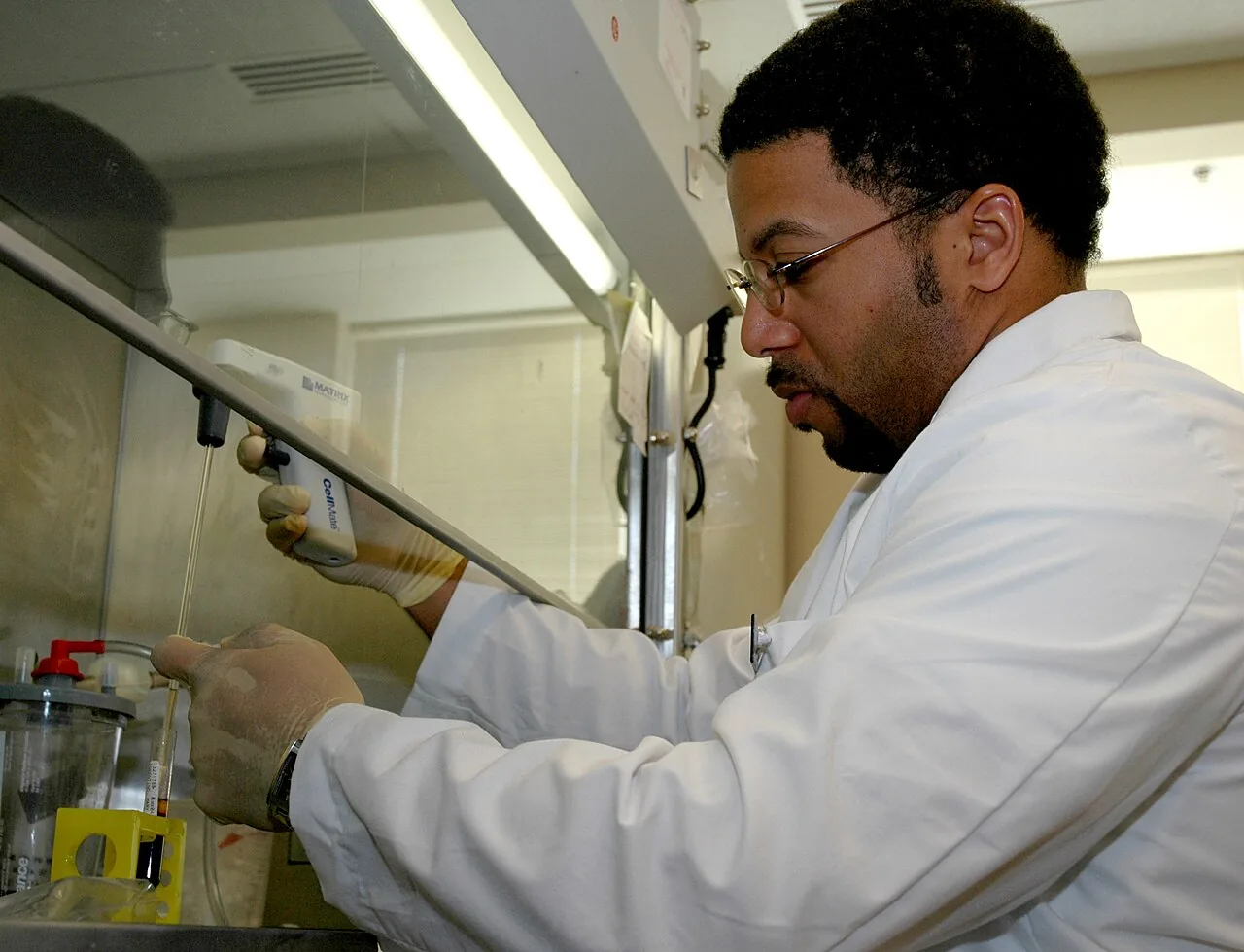
No category on a peptide lab equipment checklist gets used more often than liquid handling. Reconstitution, dilution, aliquoting, and assay setup all depend on moving exact volumes of liquid — and peptides punish sloppy pipetting because even small concentration errors compound across dilutions.
Micropipettes (single-channel)
The workhorse of the bench. A micropipette set covering the microliter range — typically 0.5–10 µL, 2–20 µL, 20–200 µL, and 100–1000 µL — handles virtually every peptide solution task. Look for models with smooth plunger action, clear volume displays, and autoclavable lower assemblies. Calibrate at least annually (many labs do it quarterly), and keep calibration certificates on file — reviewers and auditors increasingly ask for them.
Multichannel pipettes
Once assays move to 96-well plates, an 8- or 12-channel pipette saves hours and, more importantly, keeps timing consistent across wells. Timing consistency matters because peptide solutions can change behavior over the minutes a slow manual transfer takes. A multichannel pipette is optional for a minimal peptide lab equipment checklist but close to essential for any assay-scale work.
Pipette tips and consumables
Pipettes are only as good as their tips. Stock sterile, filter (aerosol-barrier) tips in every volume range your pipettes cover — filter tips prevent sample-to-pipette contamination, which is a real cross-contamination vector when several peptides share a bench. Low-retention tips are worth the premium for peptide work specifically, because peptides can adsorb onto ordinary polypropylene surfaces and quietly reduce the concentration of your working solutions.
Weighing and Measurement Gear
Before any solution exists, there is a powder — and powders must be weighed. This section of the peptide lab equipment checklist covers the instruments that turn “about this much” into a defensible number.
Analytical balance
An analytical balance reading to 0.1 mg (four decimal places in grams) is the minimum credible standard for peptide work. Place it on a vibration-free bench away from drafts, doors, and HVAC vents — a balance fighting air currents gives drifting readings that researchers then “average,” which is not a real measurement. Keep calibration weights and a logbook nearby, and let the balance warm up per the manufacturer’s guidance before critical weighings.
pH meter
Peptide stability and solubility are pH-dependent, so a calibrated pH meter with a properly stored electrode belongs on every peptide lab equipment checklist. Buffer preparation, solution adjustment, and stability studies all assume you know the actual pH rather than the intended one. Store the electrode in storage solution (never dry), calibrate with fresh buffers before important measurements, and replace aging electrodes that drift — a drifting electrode lies convincingly.
Vortex mixer and mini-centrifuge
Gentle mixing matters: a vortex mixer dissolves lyophilized peptide cakes quickly without the harshness of prolonged agitation, and a mini-centrifuge collects droplets from vial caps and tube walls so no material is lost to the container. Both are inexpensive, and both prevent the small losses that otherwise become unexplained variability.
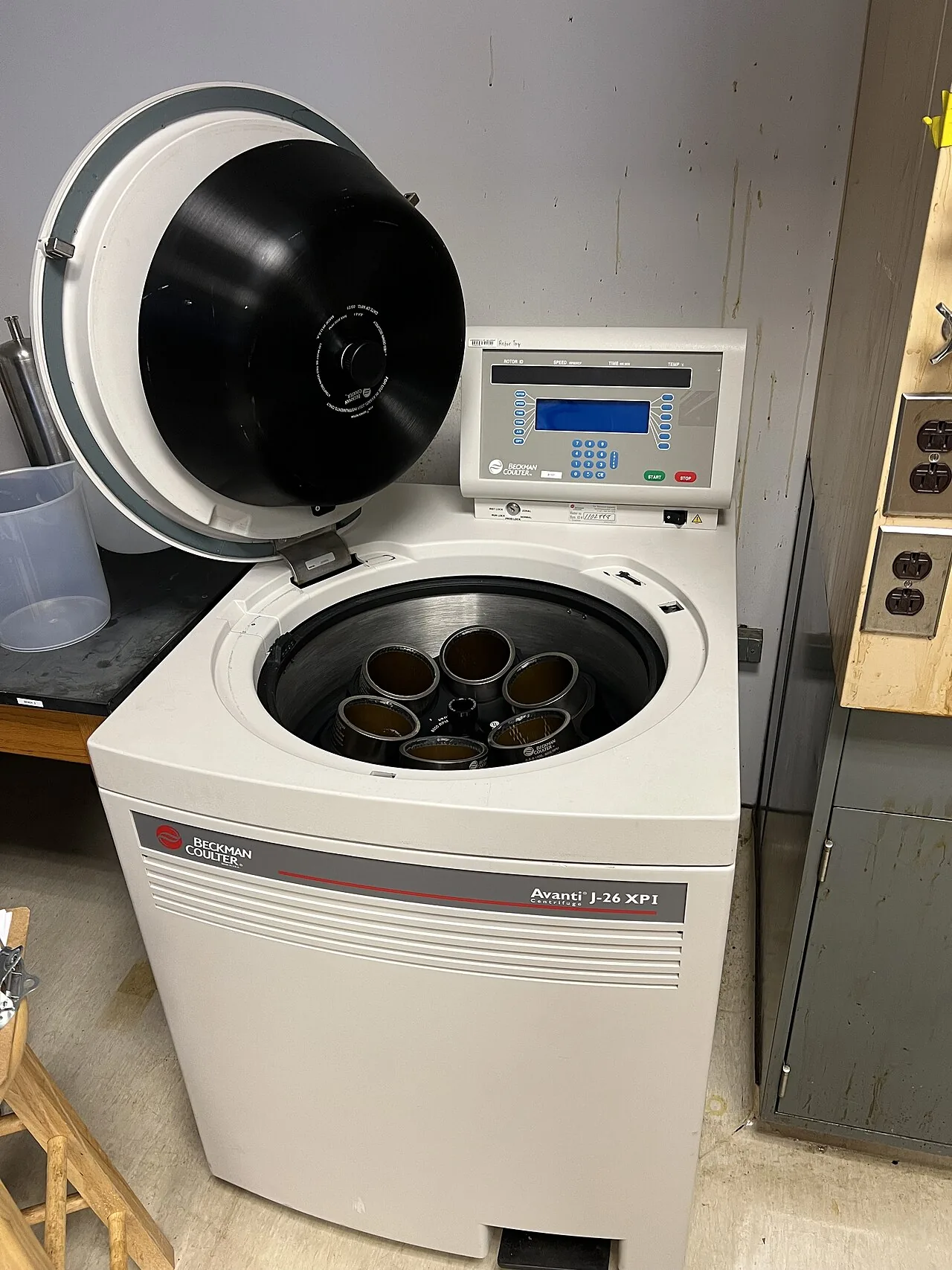
Calibration is equipment too. A peptide lab equipment checklist that lists instruments but not their calibration schedule is half a checklist. Pipettes, balances, pH meters, and freezers all drift. Put every measuring device on a written schedule, log every calibration, and keep the records where an auditor — or your future self — can find them.
Cold Chain and Storage: Protecting the Investment
Peptides degrade faster at room temperature than in the cold — hydrolysis, oxidation, and aggregation all accelerate with heat. Storage equipment is therefore not an accessory on a peptide lab equipment checklist; it is the infrastructure that protects every other investment the lab has made. For the full reasoning, see our guide to Selank vs Semax, which notes that both compounds are handled strictly as research materials — and research materials deserve research-grade storage.
Ultra-low temperature freezer (−80 °C)
The single most important storage item on a peptide lab equipment checklist. Long-term peptide stocks — lyophilized powders and frozen aliquots — belong at −80 °C, where degradation chemistry slows to a crawl. Choose a unit with a temperature alarm, a backup power plan, and enough rack space for organized boxes; a freezer stuffed with unlabeled bags is a freezer where samples go to be forgotten.
Laboratory refrigerator and standard freezer
A 2–8 °C refrigerator holds buffers, reagents, and short-term working solutions, while a −20 °C freezer serves as a staging area for materials in active use. Keep a clear policy: working stocks live here, long-term archives live at −80 °C, and nothing lives on the bench longer than the protocol allows.
Temperature monitoring
A freezer without monitoring is a hope, not a system. Continuous temperature loggers with remote alarms catch compressor failures at 2 a.m. — the exact moment an unmonitored freezer chooses to die. For high-value peptide inventories, monitoring is the cheapest insurance on this entire peptide lab equipment checklist.
Analytical and Quality-Control Instruments
Proof is the third pillar of the golden rule: a peptide lab equipment checklist for serious research includes the means to verify that a vial contains what its label claims, at the purity the experiment assumes. Identity and purity verification deserves its own deep dive — see our guide on Semax nasal spray research for an example of how analytical framing applies to specific compounds — but the equipment categories are worth listing here.
HPLC / UPLC system
High-performance liquid chromatography separates a peptide from its impurities and degradation products, giving a purity profile no visual inspection can match. Even labs that outsource routine QC benefit from understanding chromatograms, since a supplier’s certificate of analysis is only as useful as your ability to read it.
Mass spectrometer
Mass spectrometry confirms molecular identity — that the compound in the vial actually has the expected mass. For peptide research, MS is the definitive identity check, and it pairs naturally with HPLC (LC-MS) to confirm both what a substance is and how pure it is. Few small labs own one outright, but access through a core facility or contract lab still belongs on the peptide lab equipment checklist as a planned capability.
Microscope and visual inspection tools
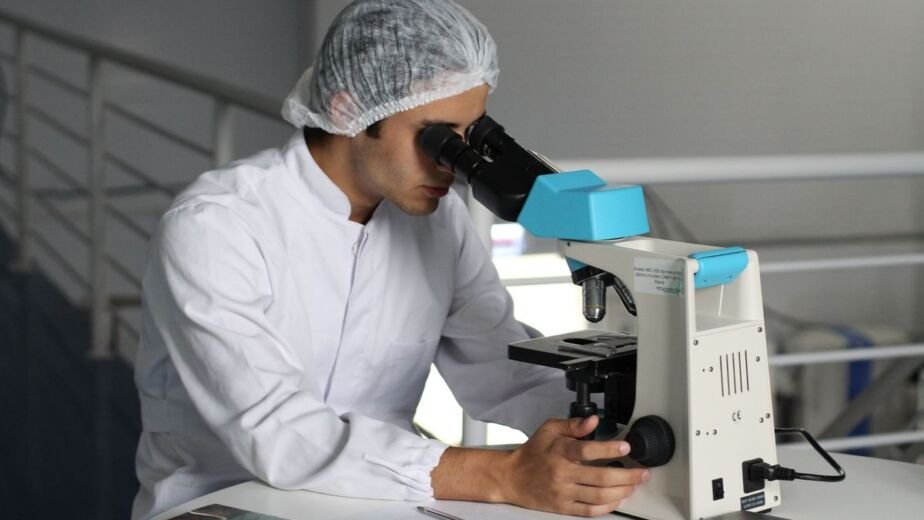
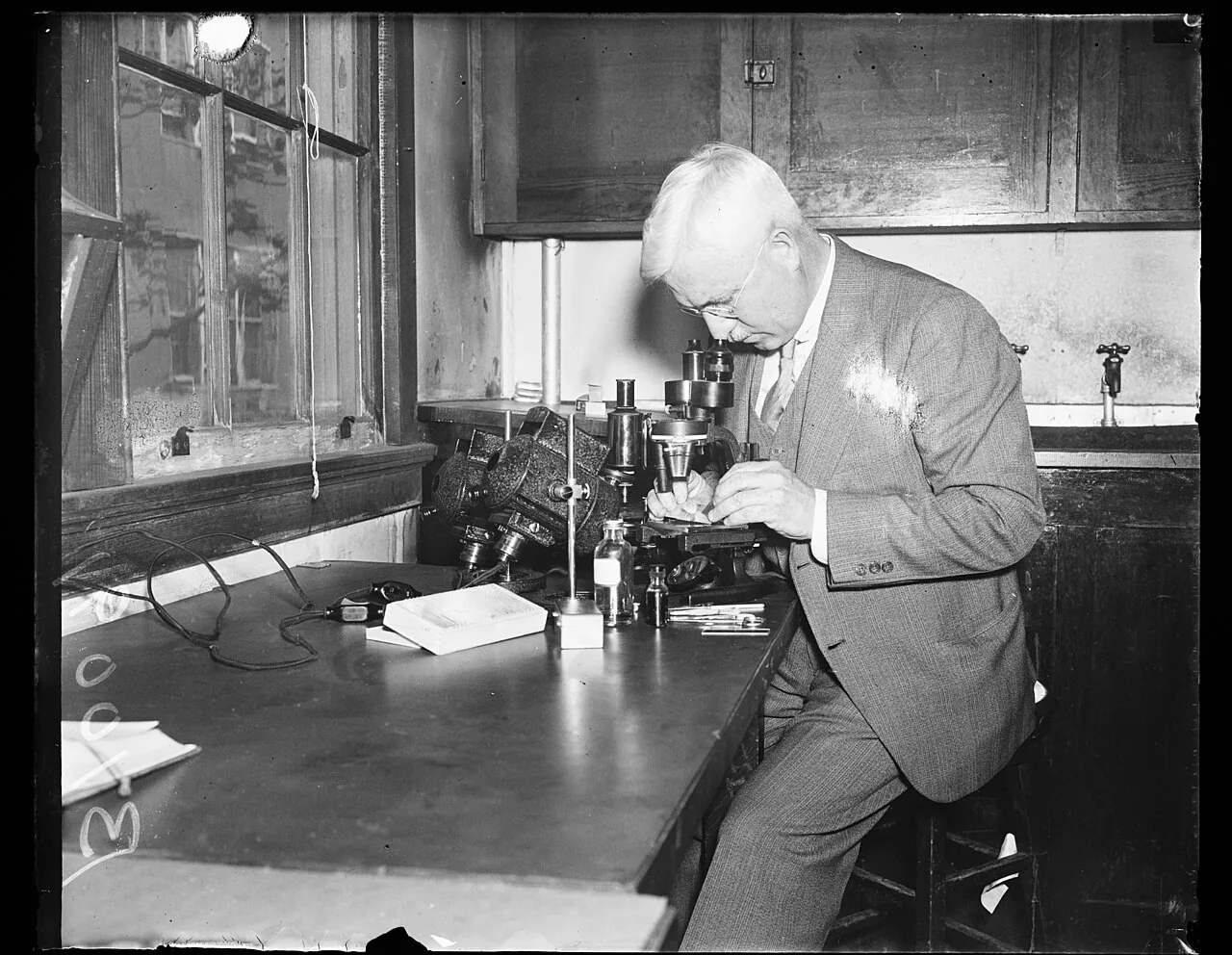
Not every check needs a six-figure instrument. A good stereo microscope lets researchers inspect lyophilized cakes for collapse, discoloration, or moisture — early warning signs that storage conditions failed. Visual inspection is the cheapest QC on this peptide lab equipment checklist, and the most frequently skipped.
Safety and Infrastructure
A peptide lab equipment checklist that ignores safety is a liability document. Peptides themselves are generally low-hazard research materials, but the solvents, acids, and cleaning agents around them are not.
- Fume hood or biosafety cabinet — for any work involving volatile solvents or fine powders that should not become airborne.
- Personal protective equipment — lab coats, nitrile gloves, and safety glasses as the non-negotiable baseline; respirators where powder handling warrants them.
- Eyewash station and safety shower — required wherever corrosive buffers or cleaning agents are used.
- Fire extinguisher and spill kit — matched to the actual chemicals on site, with everyone trained on both.
- First-aid kit and emergency contacts — posted visibly, checked on a schedule like everything else.
- Waste containers — segregated chemical, sharps, and general waste streams with proper labeling.
Do not forget the paperwork. Safety data sheets for every chemical, standard operating procedures for every routine task, and a training log for every person. On a mature peptide lab equipment checklist, documentation sits alongside hardware — because an instrument nobody is trained to use correctly is just an expensive decoration.
Consumables, Storage Accessories, and Documentation
The unglamorous tail of the peptide lab equipment checklist is where daily work actually happens:
- Microcentrifuge tubes and cryovials — sterile, low-binding where available; the vessels your aliquots will live in for months.
- Freezer boxes, racks, and dividers — organization that survives staff turnover.
- Labels and markers — cryo-rated labels that stay legible at −80 °C; a sample you cannot identify is a sample you must discard.
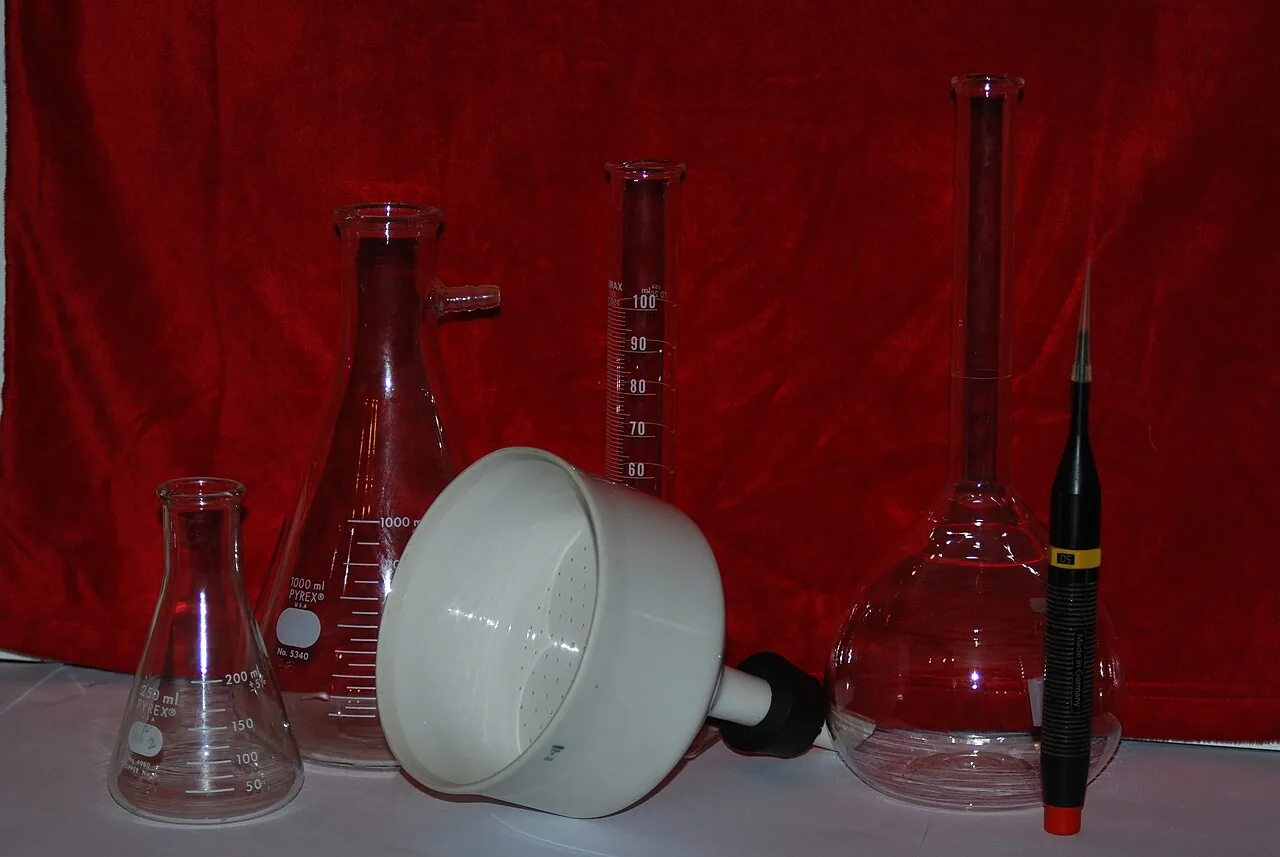
- Volumetric glassware — Class A flasks and graduated cylinders for buffer preparation.
- Reagents — high-purity water, buffers, and solvents from reputable sources, with lot numbers recorded.
- Lab notebooks or ELN — bound notebooks or an electronic lab notebook capturing what was done, when, by whom, and with which lot.
Our companion overviews of Selank nasal spray research touch on how formulation-focused research leans on exactly these basics — precision vessels, clear labeling, and traceable records — before any advanced question is even asked.
The Master Peptide Lab Equipment Checklist
Everything above, condensed into a single scannable table. Use it as a setup list for a new bench or an audit tool for an existing one — check off each row of this peptide lab equipment checklist and note the calibration or maintenance schedule alongside it.
| Category | Item | Purpose | Priority |
|---|---|---|---|
| Liquid handling | Micropipette set (0.5 µL–1000 µL) | Precise volume transfer | Essential |
| Liquid handling | Multichannel pipette | Plate-based assays, timing consistency | Recommended |
| Liquid handling | Filter tips, low-retention tips | Contamination control, recovery | Essential |
| Measurement | Analytical balance (0.1 mg) | Accurate weighing | Essential |
| Measurement | pH meter with maintained electrode | Solution pH verification | Essential |
| Measurement | Vortex mixer, mini-centrifuge | Mixing, droplet recovery | Essential |
| Storage | Ultra-low freezer (−80 °C) with alarm | Long-term peptide stability | Essential |
| Storage | Lab refrigerator (2–8 °C), −20 °C freezer | Working stocks, reagents | Essential |
| Storage | Temperature loggers with remote alarm | Cold-chain verification | Recommended |
| Analytical | HPLC/UPLC access | Purity profiling | Recommended |
| Analytical | Mass spectrometry access | Identity confirmation | Recommended |
| Analytical | Stereo microscope | Visual QC of lyophilized material | Recommended |
| Safety | Fume hood / biosafety cabinet | Airborne hazard control | Essential |
| Safety | PPE, eyewash, spill kit, waste streams | Personnel and environmental safety | Essential |
| Consumables | Cryovials, freezer boxes, cryo-labels | Sample organization and traceability | Essential |
| Consumables | Volumetric glassware, high-purity reagents | Buffer and solution preparation | Essential |
| Documentation | Lab notebook/ELN, SOPs, SDS library | Reproducibility and compliance | Essential |
Key Takeaways: Building From This Peptide Lab Equipment Checklist
Start with the essentials — calibrated pipettes, an analytical balance, a monitored −80 °C freezer, and proper safety gear — then add analytical access and assay-scale tools as the research program grows. The most expensive mistake is not buying too little; it is buying instruments nobody calibrates, maintains, or is trained to use. Treat this peptide lab equipment checklist as a living document: review it annually, retire what the program outgrew, and add what new questions demand. (Research framing only — this guide describes laboratory equipment, not any recommendation about compounds or their use.)
Peptide Lab Equipment Checklist: Frequently Asked Questions
Straight answers to the questions researchers ask when equipping a peptide bench.
What is the most important item on a peptide lab equipment checklist?
The monitored ultra-low (−80 °C) freezer. A peptide lab equipment checklist can survive a missing multichannel pipette, but without reliable cold storage, every peptide in the lab degrades faster and every downstream result becomes suspect. Precision instruments matter, but protection of the materials comes first.
Do I need a mass spectrometer in my own lab?
Not necessarily. On most versions of this peptide lab equipment checklist, mass spectrometry appears as planned access — a core facility or contract lab — rather than an owned instrument. What matters is that identity verification happens, not where the instrument sits. Small labs should budget for outsourced LC-MS rather than skipping the check entirely.
How often should pipettes and balances be calibrated?
At least annually for both, quarterly for pipettes in heavy use. Any peptide lab equipment checklist worth its name includes a calibration schedule with logged records — drifting instruments produce drifting data, and without records you cannot tell when the drift started.
Are filter pipette tips really necessary for peptide work?
Yes. Filter (aerosol-barrier) tips prevent cross-contamination between samples and protect the pipette barrel itself. Because peptide labs often handle several similar compounds on one bench, the contamination risk is higher than it looks — and contamination between two peptides is invisible until the data stops making sense.
What storage temperatures do research peptides need?
As a general laboratory principle, lyophilized peptides and long-term stocks are kept at −80 °C, working materials at −20 °C or 2–8 °C depending on the protocol, and nothing at room temperature longer than necessary. Exact conditions always follow the specific protocol and supplier guidance — this peptide lab equipment checklist covers the equipment that makes those conditions possible, not storage instructions for any particular compound.
Where can researchers source peptides for laboratory use?
Research-use peptides are supplied as laboratory vials — see our Semax 10mg and Selank 10mg research listings. Source only from suppliers explicit about research-use-only status, and store arrivals according to the cold-chain section of your peptide lab equipment checklist from day one.
Peptide Lab Equipment Checklist: Final Research Notes
A complete peptide lab equipment checklist is really three lists in one: the instruments that measure precisely, the infrastructure that protects fragile molecules, and the analytical tools that prove what is in each vial — all wrapped in safety gear and documentation. Build the essentials first, add capability as the research questions demand it, and never let calibration slide. Labs that treat this peptide lab equipment checklist as a living document produce data they can defend; labs that treat equipment as buy-and-forget produce data they have to explain.
Kept in that research frame, equipping a peptide lab is straightforward: precision, protection, and proof — in that order, maintained on schedule, documented throughout.