
Learning how to store reconstituted peptides matters because the moment a dry peptide meets liquid, its stability story changes completely. Lyophilized powder can sit for months in a freezer with little concern; a peptide in solution is a far more reactive system, and every hour it spends warm, lit, shaken, or repeatedly frozen and thawed is an hour its integrity is being spent. This guide covers how to store reconstituted peptides — the stability principles for peptide solutions drawn from the protein-chemistry literature: temperature discipline, freeze-thaw limits, light protection, aliquoting, and documentation. Two boundaries are set up front and held throughout: this article does not explain how to reconstitute anything (no reconstitution math, no preparation ratios), and it contains no dosing information whatsoever. Storage of solutions only, for laboratory research materials only — that is the full scope of this guide to how to store reconstituted peptides.
Research-use-only disclaimer: All products on this site are sold strictly for laboratory research use — not medicines, not for human or veterinary use. This article describes general stability principles for research materials. It contains no dosage information, no administration instructions, and no medical advice.
Why Storing Reconstituted Peptides Is Harder Than Storing Dry Powder
The short version of how to store reconstituted peptides is that water changes everything. In the dry state, the degradation pathways that threaten peptides — hydrolysis (water breaking bonds), deamidation, oxidation, aggregation — are starved of the mobility they need. Dissolve the peptide and those pathways wake up. The protein-stability literature describes a whole catalog of solution-phase concerns: chemical degradation accelerated by warmth and pH extremes, physical aggregation triggered by agitation or interfaces, adsorption of peptide onto container surfaces (a real loss mechanism at low concentrations), and, in non-sterile preparations, microbial growth.
None of this means solutions are unmanageable — laboratories handle peptide solutions routinely. It means the margin for inattention is much smaller than with dry powder. Where a lyophilized vial forgives a day on the bench, a solution may not. That asymmetry is the entire reason how to store reconstituted peptides deserves its own dedicated guide rather than a footnote in a dry-storage article: the rules are stricter, the failure modes are faster, and the documentation burden is higher.
The mindset shift. Think of dry storage as preservation and solution storage as a countdown. From the moment of reconstitution, the researcher is managing a defined, documented window — not an indefinite shelf life. Every decision below is about making that window as long and as reliable as the literature allows.
How to Store Reconstituted Peptides: The Core Principles
Six principles cover essentially everything the literature says about how to store reconstituted peptides. They are ordered by impact: the first two do most of the work.
1. Refrigerate promptly at 2–8 °C
For short-term storage, the refrigerator is the default home for peptide solutions. The 2–8 °C range slows chemical degradation substantially compared with room temperature while avoiding the freeze-thaw stress described below. Return solutions to the refrigerator immediately after each use — the cumulative time a solution spends at room temperature across many small handlings adds up faster than researchers expect, and managing that cumulative exposure is half of how to store reconstituted peptides successfully.
2. Freeze for longer storage — once, in aliquots
When a solution must be kept beyond the short term, freezing at −20 °C (or −80 °C for extended archival) is the standard approach. But the critical word is once: divide the solution into single-use aliquots before freezing, so each portion is thawed exactly one time. Repeated freeze-thaw cycles are among the most documented drivers of aggregation and activity loss in the protein literature, as ice crystal formation and concentration effects stress the molecules with every cycle.
3. Protect from light
Light — particularly UV — can drive photo-oxidation of sensitive amino acid residues. Store solutions in amber vials or in opaque secondary packaging, and keep them out of direct sunlight and away from strong lab lighting during storage. This is a cheap precaution that removes an entire degradation pathway.
4. Handle gently
Vigorous shaking, vortexing, and repeated pipetting create air-liquid interfaces and shear forces that promote aggregation. Mix by gentle swirling or inversion instead. The same gentleness applies to thawing: let frozen aliquots thaw slowly in the refrigerator or at room temperature rather than forcing them with heat.
5. Keep it clean and sealed
Use sterile technique when handling solutions, keep vials tightly sealed between uses, and never return unused portion to a stock vial. Microbial contamination is a stability threat in its own right, and every opening is an exposure. If a solution ever looks cloudy, discolored, or contains visible particles that were not there before, treat it as compromised.
6. Label with the date and define the window
Every solution vial should carry the preparation date, the compound and lot, the storage condition, and the initials of who prepared it. Just as important: define, document, and respect a storage window for that preparation. The literature does not hand down one universal number of days — the appropriate window depends on the compound, the solution composition, and the storage conditions — so the professional practice is to set the window deliberately, write it on the label, and discard the material when it expires rather than stretching it — that discipline is what separates proper handling from guesswork in how to store reconstituted peptides.

Storage States Compared: Where Solutions Sit on the Stability Ladder
It helps to see how to store reconstituted peptides in the context of the alternatives — including the dry format described in freeze-drying literature and the FDA’s lyophilization inspection guide. The table below ranks the common states of a research peptide by relative stability and notes the handling each one demands.
| State | Typical storage | Relative stability | Handling notes |
|---|---|---|---|
| Dry lyophilized powder | −20 °C or below | Highest | Keep sealed and dry; equilibrate before opening |
| Frozen solution (aliquoted) | −20 °C to −80 °C | High, if frozen once | Single-use aliquots; thaw gently; never refreeze |
| Refrigerated solution | 2–8 °C | Moderate | Default for working solutions; minimize room-temp time |
| Solution at room temperature | 15–25 °C | Lowest | Brief handling only; never a storage condition |
The practical reading of this ladder: keep the peptide dry as long as possible, and once it is in solution, keep it as cold as the workflow allows. Researchers sometimes ask whether a solution can simply live in the refrigerator indefinitely — the honest answer from the stability literature is that “indefinitely” is not a storage condition. Cold slows degradation; it does not stop it. That is why principle 6 — a defined, documented window — belongs alongside the temperature rules in any serious treatment of how to store reconstituted peptides.
What Protects vs. What Threatens Solution Stability
For quick reference, the factors that govern how to store reconstituted peptides split cleanly into two lists. Tape these to the refrigerator door if it helps.
Practices that protect stability
- Refrigerate at 2–8 °C immediately after preparation and after every use
- Divide into single-use aliquots before any freezing
- Freeze once; thaw once; never refreeze a thawed aliquot
- Store in amber or opaque containers away from direct light
- Mix by gentle swirling, not vigorous shaking
- Thaw slowly — refrigerator or room temperature, never applied heat
- Keep vials tightly sealed; use sterile handling technique
- Label every vial with preparation date, contents, and storage condition
- Define a documented storage window and honor it
- Treat every solution as having a defined window from the moment of preparation — the core mindset of how to store reconstituted peptides
Practices that threaten stability
- Leaving solutions at room temperature between uses
- Repeated freeze-thaw cycles of the same vial
- Vigorous shaking, vortexing, or foaming
- Storage in clear vials under strong light
- Forcing a thaw with warm water or a heat block
- Returning unused liquid to a stock vial
- Unlabeled vials with unknown preparation dates
- Stretching a solution past its documented window “because it looks fine”
- Storing solutions in a frost-free freezer door subject to temperature swings
Aliquoting and the Freeze-Thaw Problem
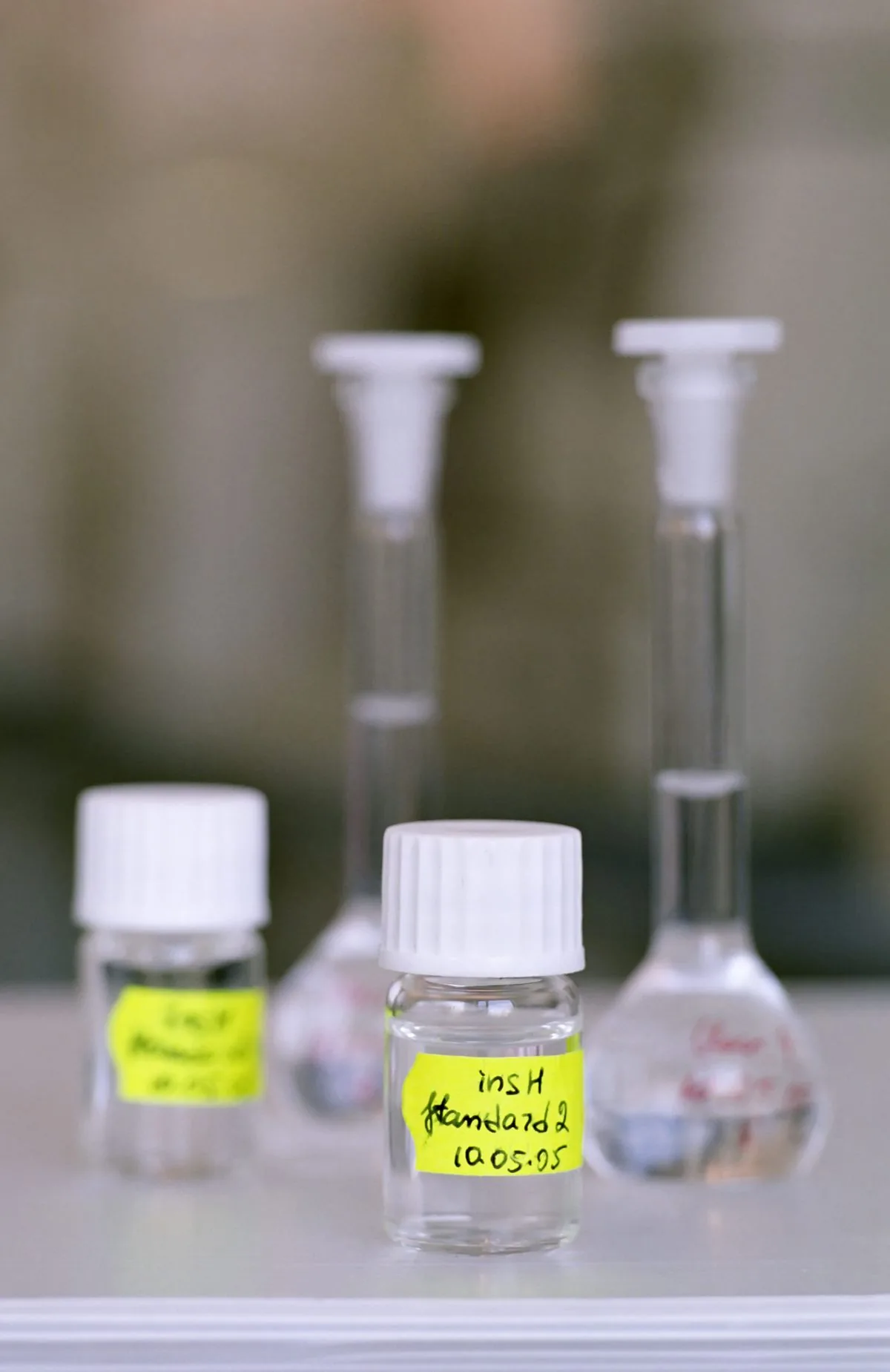
Aliquoting deserves its own section because it is the single highest-leverage habit in how to store reconstituted peptides. The logic is straightforward: every freeze-thaw cycle stresses dissolved peptides through ice crystal formation, pH shifts in the unfrozen fraction, and concentration of solutes at ice interfaces. The literature on protein aggregation treats repeated cycling as a well-established damage mechanism. Aliquoting — dividing a fresh solution into small, single-use portions before the first freeze — converts many future cycles into one. Each aliquot is thawed once, used, and discarded; the remaining stock never experiences a second freeze.
In practice, this means planning ahead at the moment of preparation: decide the working portion size the research actually uses, divide the solution accordingly into clean, labeled vials, and freeze them all at once. It takes a few extra minutes up front and saves the entire stock from cumulative cycling damage. Researchers working with liquid-format materials — including the intranasal research formats discussed in our Semax nasal spray and Selank nasal spray research overviews — face the same solution-stability physics regardless of the compound involved.
Why “never refreeze” is not just fussiness. Each thaw is not merely the reverse of freezing. During freezing, solutes concentrate in the shrinking unfrozen fraction, pH can shift, and ice interfaces provide surfaces where peptides adsorb and aggregate. A second cycle repeats all of that on molecules already stressed by the first. The damage is cumulative, invisible, and — critically — not something you can detect by looking at the vial.
Documentation: The Unseen Half of Storage
A complete answer to how to store reconstituted peptides includes paperwork, because a solution whose history is unknown is a solution that cannot be trusted. At minimum, the label on every vial should record the compound identity, source lot, preparation date, storage condition, the defined use window, and who prepared it. A matching log entry — in a bound notebook or a controlled digital system — records the same information plus any observations (appearance at preparation, any deviations).
This discipline pays for itself the first time a result looks odd. With full documentation, the researcher can rule storage out as a variable in minutes — the quiet payoff of learning how to store reconstituted peptides properly; without it, every anomalous result carries a permanent asterisk. It also underpins material traceability: compounds handled as research materials, such as those in our Semax 10mg and Selank 10mg research listings or compared in our selank vs semax guide, are only as reliable as the records that follow them from receipt through every storage step. General background on peptide science is available via Wikipedia’s peptide article and PubMed.
Key Takeaways
- How to store reconstituted peptides in one sentence: keep solutions cold, dark, still, sealed, aliquoted, and documented.
- 2–8 °C for short-term working solutions; −20 °C or below, in single-use aliquots, for longer storage.
- Freeze once, thaw once, never refreeze — repeated freeze-thaw cycling is a documented aggregation driver.
- Define a deliberate storage window for every preparation, label it, and discard expired material.
- This guide covers storage of solutions only — no reconstitution instructions and no dosing information, ever.
Conclusion: How to Store Reconstituted Peptides Reliably
Solutions demand more respect than powders, but the rules for how to store reconstituted peptides are not complicated — they are just non-negotiable. Refrigerate promptly, aliquot before freezing, thaw gently and only once, shield from light and agitation, and write everything down. Laboratories that treat these six principles as routine produce solution stocks whose integrity they can defend; laboratories that treat them as optional produce stocks whose integrity they can only hope for. In research, the difference between defended and hoped-for is the difference between data and anecdote. That is the real reason how to store reconstituted peptides is worth getting right.
How to Store Reconstituted Peptides: Frequently Asked Questions
What is the best temperature for storing reconstituted peptides?
For short-term storage, 2–8 °C (refrigerator) is the standard. For longer storage, freeze at −20 °C or below in single-use aliquots. Room temperature is never a storage condition for peptide solutions — it is only for brief handling. This temperature discipline is the foundation of how to store reconstituted peptides.
Why should peptide solutions be aliquoted before freezing?
Aliquoting means each portion is frozen once and thawed once. Repeated freeze-thaw cycles of a single vial are a documented driver of aggregation and degradation, so dividing a fresh solution into single-use portions before the first freeze protects the entire stock from cumulative cycling damage.
Can a thawed peptide solution be refrozen?
Best practice says no. Each freeze-thaw cycle stresses dissolved peptides through ice formation, solute concentration, and pH shifts in the unfrozen fraction. The professional standard in how to store reconstituted peptides is: freeze once, thaw once, use, and discard the remainder.
How long can a reconstituted peptide be kept?
There is no universal number — it depends on the compound, the solution, and the storage conditions. The correct practice is to define a deliberate, documented storage window for each preparation, label it on the vial, and discard the material when the window expires rather than extending it by guesswork — a key tenet of how to store reconstituted peptides.
Does light really matter for peptide solutions?
Yes. Light, particularly UV, can drive photo-oxidation of sensitive residues. Storing solutions in amber vials or opaque secondary packaging and keeping them out of direct light is a simple precaution that eliminates an entire degradation pathway.
What are signs a peptide solution has degraded?
Cloudiness, discoloration, or visible particles that were not present at preparation are warning signs, as is any break in the documented storage history (unknown time at room temperature, accidental freeze-thaw). When in doubt, quarantine the vial — a suspect solution should never generate data.