
Every peptide story in the literature eventually arrives at the same encounter: a small chain of amino acids meeting a protein built to recognize it. Getting peptides and receptors explained clearly is therefore foundational — receptors are where peptide chemistry becomes biology, the point at which binding turns into a cellular response. This guide covers what receptors are, the major families peptides engage, how binding is studied in the lab, and the vocabulary (affinity, efficacy, selectivity) that lets you read receptor papers accurately. Strictly research framing throughout; no human-use guidance of any kind.
Research-use-only disclaimer: This is an educational science explainer about receptor biology. It describes published research concepts. Nothing here is medical advice, and no compound discussed on this site is a medicine or approved drug — all products are sold strictly for laboratory research use.
Peptides and Receptors Explained: The Lock-and-Key Idea
The classic metaphor still works as a starting point: a receptor is a protein — usually embedded in a cell membrane, sometimes inside the cell — with a binding site shaped to recognize a particular molecular structure. A peptide that fits the site binds; binding changes the receptor’s shape or state; that change is converted into a cellular signal. With peptides and receptors explained at this level, the whole of receptor pharmacology is elaboration on that three-step logic: recognize, bind, respond.
Two refinements make the metaphor honest. First, the “lock” is flexible: receptors exist in ensembles of shapes, and binding stabilizes some shapes over others — which is how one receptor can produce different responses to different ligands. Second, fit is a matter of degree, not a yes-or-no: peptides bind with a spectrum of strengths, and the strength of binding (affinity) is a separate question from what binding accomplishes (efficacy). Those two words — affinity and efficacy — are the load-bearing vocabulary of peptides and receptors explained properly, and they get their own section below. The receptor article on Wikipedia develops the formal definitions this guide follows.
The binding checklist — what has to be true for a peptide–receptor encounter to matter:
- Complementarity: the peptide’s shape and chemistry must fit the receptor’s binding site — the lock-and-key requirement at the heart of peptides and receptors explained.
- Sufficient affinity: the interaction must be strong enough that meaningful binding occurs at the concentrations present in the experimental system.
- A responsive receptor: the receptor must be capable of converting binding into a signal — present on the cell, correctly folded, and coupled to its downstream machinery.
- The right context: the encounter must happen where both parties actually meet — same tissue, same compartment, same time window in the experimental system.
The Major Receptor Families Peptides Engage
With peptides and receptors explained at the general level, here are the four receptor families that dominate the peptide literature — each a different answer to the question “what happens after binding?”
Family 1 — G protein-coupled receptors (GPCRs). The largest receptor family in the genome and the most common peptide target class. A GPCR threads through the membrane seven times; peptide binding on the outside rearranges the receptor so that, on the inside, it activates a G protein — which then modulates enzymes or ion channels. Many classic peptide–receptor stories in the literature are GPCR stories. The GPCR article on Wikipedia covers the family’s scale and mechanism.
Family 2 — Receptor tyrosine kinases (RTKs). Single-pass membrane proteins whose intracellular portion is an enzyme: a tyrosine kinase. Peptide or protein binding brings two receptor chains together, the kinase domains activate each other, and the receptor phosphorylates itself and downstream proteins — launching cascades such as the PI3K-AKT and MAPK routes. Growth-factor signaling lives here, and it is central to peptides and receptors explained in metabolic and growth research contexts. See the receptor tyrosine kinase article on Wikipedia.
Family 3 — Ligand-gated ion channels. Receptors that are themselves pores: peptide or small-molecule binding opens the channel, ions flow, and the cell’s electrical state changes within milliseconds. This is the fastest receptor logic — recognition converted directly into ion movement, with no enzymatic middleman. Neuropeptide research meets this family wherever rapid neuronal signaling is studied.
Family 4 — Cytokine receptors and related enzyme-linked receptors. Receptors that, like the cytokine receptors in JAK-STAT signaling, lack their own enzymatic activity and borrow it from associated kinases. Peptide binding clusters the receptor chains, the associated enzymes activate, and the signal proceeds — the architecture behind a large share of immune and growth-factor peptide literature, and a recurring theme whenever peptides and receptors are explained in signaling contexts.
Affinity, Efficacy, Selectivity: The Three Words That Matter
If peptides and receptors explained had a vocabulary exam, these three terms would be the whole test. The table below separates them cleanly, because papers — and casual discussion — constantly blur them.
| Term | What it means | What it does NOT mean |
|---|---|---|
| Affinity | How tightly a peptide binds a receptor — the strength of the interaction, typically reported as a dissociation constant in binding studies | It does not say what happens after binding; a high-affinity binder can be an activator, a blocker, or neutral |
| Efficacy | What binding accomplishes — the degree to which the peptide activates the receptor’s signaling once bound | It does not follow from affinity; tight binding with zero efficacy is the definition of an antagonist |
| Selectivity | How preferentially a peptide binds its intended receptor over other receptors | It is always relative — selective compared with which other receptors, measured how |
The classic illustration: an agonist has both affinity and efficacy — it binds and activates. An antagonist has affinity without efficacy — it binds, occupies the site, and blocks activation. An inverse agonist goes further, stabilizing the receptor’s inactive state. Getting peptides and receptors explained right means never letting “binds tightly” stand in for “activates strongly” — the literature keeps those claims separate, and so should its readers.
Reading tip: When a paper says a peptide “showed high affinity” for a receptor, it is reporting a binding measurement. When it says the peptide “activated” or “inhibited” a response, it is reporting a functional measurement. Peptides and receptors explained well always keep the binding data and the functional data in separate columns — because a compound can excel in one and fail in the other.
How Receptor Binding Is Studied in the Lab
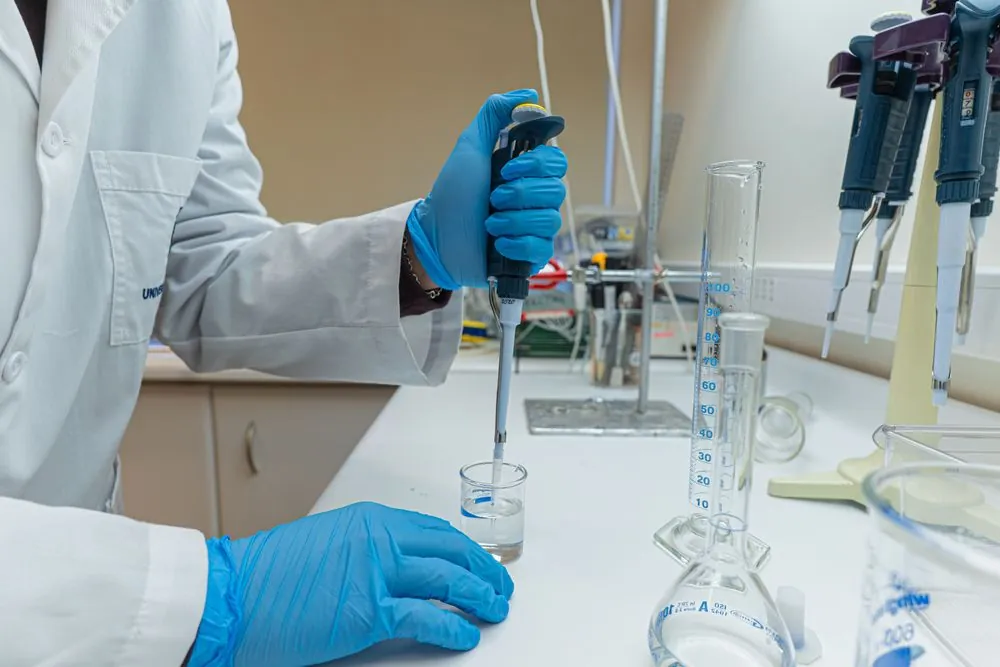
Understanding how the numbers are produced is part of getting peptides and receptors explained at a working level. Researchers do not watch molecules bind; they infer binding from signals, using a small set of standard approaches.
Radioligand binding assays are the classical method: a labeled version of a known ligand is incubated with receptor preparations, and an unlabeled test peptide’s ability to displace it reveals the test peptide’s affinity. Surface plasmon resonance (SPR) and related biophysical methods watch binding in real time as mass accumulates on a sensor surface, yielding on- and off-rates rather than a single equilibrium number. Functional assays — measuring a downstream response such as second-messenger production, reporter-gene activation, or phosphorylation of signaling proteins — address efficacy rather than affinity: they ask what the binding does, not just whether it happens.
Each method answers a different question, which is why thorough papers use more than one. A binding assay without a functional readout cannot distinguish agonist from antagonist; a functional assay without binding data cannot say whether an effect is direct. The peptides and receptors explained literature treats the combination — binding plus function — as the complete characterization, and indexed studies on PubMed show that pairing as standard practice.

Why Small Peptide Changes Can Transform Receptor Interaction
One of the most striking patterns in the literature — and a favorite illustration whenever peptides and receptors explained goes beyond the basics — is how dramatically a tiny structural change can alter a peptide’s receptor profile. Swapping a single amino acid, altering the peptide’s termini, or constraining its shape can shift affinity by orders of magnitude, convert an agonist into an antagonist, or redirect selectivity from one receptor subtype to another.
The reason is geometric: receptor binding sites read a peptide’s three-dimensional shape and charge distribution, not its name. A change that looks trivial on paper — one side chain among twenty — can reposition the whole molecule in the binding pocket. This sensitivity is what makes structure–activity relationship (SAR) studies possible: researchers systematically vary the peptide and map which positions the receptor “cares about.” It is also what makes peptides and receptors explained through SAR such a productive research program — each analogue is a probe of the receptor’s preferences, and the pattern across analogues sketches the binding site’s demands.
For readers who arrived at receptor biology through an interest in specific research compounds, this sensitivity is worth keeping in mind alongside our Selank vs Semax research comparison: two peptides can share an era, a format, and a research community while engaging entirely different receptor logic — which is exactly what their different structural templates would predict.
Key takeaways — peptides and receptors explained:
- Peptides and receptors explained in brief: a receptor is a protein built to recognize a molecular structure; peptide binding changes the receptor’s state, and that change becomes a cellular signal.
- The four major families in peptide literature are GPCRs, receptor tyrosine kinases, ligand-gated ion channels, and cytokine-type enzyme-linked receptors.
- Affinity (how tightly it binds), efficacy (what binding accomplishes), and selectivity (preference among receptors) are three separate properties — never blur them.
- Binding is studied with radioligand assays and biophysical methods; function is studied with downstream-response assays; complete characterization needs both.
- Small structural changes can transform a peptide’s receptor profile, which is the basis of structure–activity relationship research.
- Research framing only: receptor biology is studied mechanism, not human-use guidance.
Peptides and Receptors Explained: Final Notes
With peptides and receptors explained from lock-and-key through the four families, the affinity–efficacy–selectivity vocabulary, the assay toolkit, and the SAR perspective, the receptor side of peptide science should now read as a coherent discipline rather than a jargon field. The central insight is compact: binding is recognition, recognition is geometry, and geometry is what the entire experimental apparatus — from binding assays to analogue design — is built to interrogate.
The reading habits to carry forward are equally compact: separate binding claims from functional claims, ask which receptor family a paper is working in, and check whether selectivity was actually measured or merely assumed. Peptides and receptors explained at this level turns the receptor literature from intimidating to navigable — and it is the necessary background for every signaling-pathway explainer, from JAK-STAT to PI3K-AKT, that builds on it. For research-use compound context in the same framing, the Semax 10mg and Selank 10mg listings and our Semax nasal spray and Selank nasal spray research overviews keep the same research-only discipline. The NIH research resources offer further background on receptor biology for the curious.

Peptides and Receptors Explained: Frequently Asked Questions
Quick answers to the questions researchers ask most about peptide–receptor biology.
What is a receptor in simple terms?
A receptor is a protein — usually in the cell membrane, sometimes inside the cell — with a binding site shaped to recognize a particular molecule. Peptides and receptors explained simply: when a peptide fits the site and binds, the receptor changes state, and that change is converted into a cellular signal.
What are the main types of receptors that peptides bind?
The four families dominating the peptide literature are G protein-coupled receptors (GPCRs), receptor tyrosine kinases (RTKs), ligand-gated ion channels, and cytokine-type enzyme-linked receptors. Each converts binding into a signal differently — via G proteins, kinase activity, ion flow, or associated enzymes — as detailed in this peptides and receptors explained guide.
What is the difference between affinity and efficacy?
Affinity is how tightly a peptide binds a receptor; efficacy is what the binding accomplishes once bound. A compound can bind tightly (high affinity) while activating nothing (zero efficacy) — that is the definition of an antagonist. Peptides and receptors explained correctly never lets “binds tightly” stand in for “activates strongly.”
How do researchers measure receptor binding in the lab?
With binding assays (classically radioligand displacement, which yields affinity) and biophysical methods like surface plasmon resonance (which yields on- and off-rates), paired with functional assays that measure a downstream response (which address efficacy). Complete characterization in the peptides and receptors explained literature uses binding plus function together.
Can a small change to a peptide change which receptor it binds?
Yes — this is one of the most reported patterns in the literature. Swapping an amino acid or constraining the peptide’s shape can shift affinity dramatically, convert an agonist to an antagonist, or redirect selectivity between receptor subtypes, because binding sites read three-dimensional geometry. This sensitivity underlies structure–activity relationship (SAR) research.
Where can I read published research on peptide–receptor interactions?
Primary studies are indexed on PubMed, and the Wikipedia receptor overview links to key references. On this site, the Selank vs Semax research comparison shows how compounds are discussed strictly as research subjects. Nothing here is medical advice.