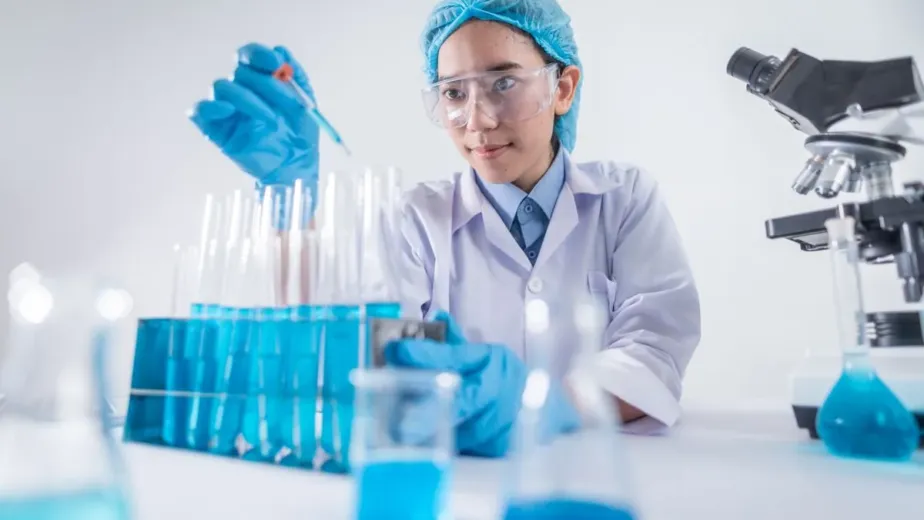
Every laboratory that handles research peptides eventually faces the same practical question: what do peptide freeze thaw cycles do to sample quality over time? A peptide vial arrives at the lab, it is stored frozen, and at some point it must be thawed so work can proceed. Each time that vial travels from freezer to bench and back again, the sample experiences physical and chemical stresses that the published formulation literature has studied for decades. Understanding peptide freeze thaw cycles is therefore not a niche concern — it is a core part of good peptide sample management. This guide explains what the literature reports about peptide freeze thaw cycles and peptide stability, why repeated cycling degrades samples, and how researchers minimize that damage. It covers lab handling principles only: no dosing, no administration, no human-use claims.
Research-use-only disclaimer: All products on this site are sold strictly for laboratory research use. Peptides are research compounds, not medicines, and nothing in this article is dosage guidance, administration instruction, or medical advice. Freeze-thaw handling discussed here applies to laboratory sample management only.
Peptide Freeze Thaw Cycles: What Happens During Each Cycle
A single freeze-thaw cycle has four phases, and each one stresses the sample in a different way. The formulation literature describes this sequence in detail for proteins and shorter peptides alike. Walking through the phases makes it easier to see why the count of cycles matters.
As temperature drops, water begins to crystallize. Dissolved salts, buffers, and the peptide itself are excluded from the growing ice lattice and concentrate in the remaining liquid — a phenomenon called freeze concentration. The sample environment becomes harsher before it becomes still.
In the frozen state, molecular motion slows dramatically and most chemical reactions crawl. But the sample is not perfectly inert: the concentrated pockets between ice crystals can host slow degradation, and pH shifts that occurred during freezing persist for the whole hold period.
As the sample warms, ice melts and the concentrated solutes redilute. The peptide passes through a temperature window where degradation chemistry runs fast while the sample is still not fully mixed — the most aggressive phase of the cycle.
Once thawed, the peptide is fully exposed to liquid-state chemistry: oxidation, hydrolysis, and aggregation can all proceed at normal rates until the sample is refrozen or used. Every extra minute in this phase adds exposure.
Read as a whole, one round of peptide freeze thaw cycles is not one stress event but four sequential ones. That is why the literature treats cycle count as a cumulative burden: each cycle replays the entire sequence.
Why Peptide Freeze Thaw Cycles Stress Samples
Peptides are short chains of amino acids, and that structure makes them chemically active in ways small molecules are not. Published research on peptide and protein stability identifies several degradation pathways that peptide freeze thaw cycles aggravate:
Freeze concentration
Because ice excludes solutes, the unfrozen fraction of a partially frozen sample becomes far more concentrated than the original solution. Buffers can shift in pH — sodium phosphate buffers are well documented to drift acidic during freezing — and the peptide sits in a much saltier, possibly pH-shifted environment than it was designed for. Repeated peptide freeze thaw cycles mean repeated exposure to this concentrated state.
Ice-water interfaces
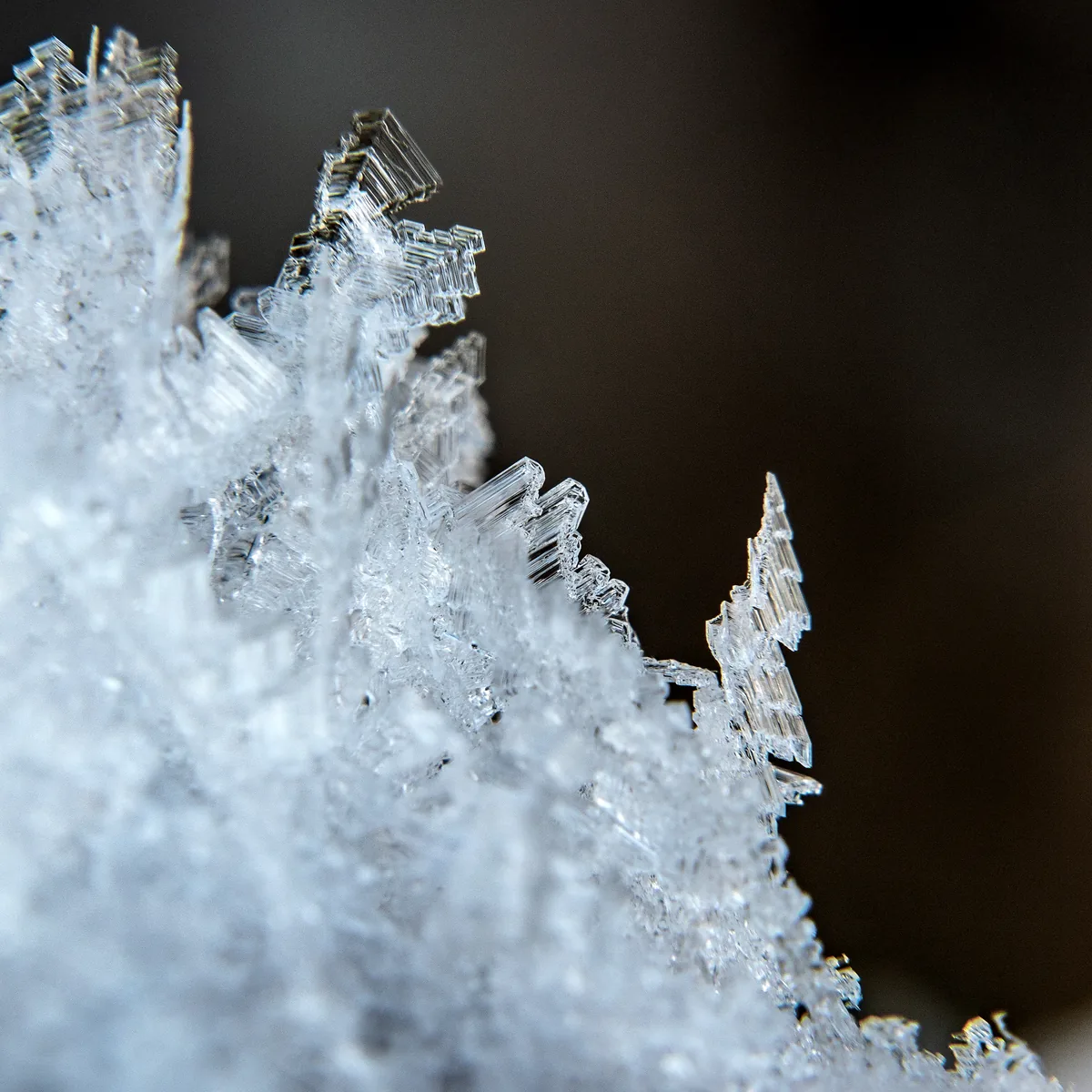
Growing ice creates an enormous new surface inside the sample. Peptides can adsorb to ice-water interfaces and partially unfold there, and when the ice melts they may not refold correctly. Aggregation — peptides sticking to each other into inactive clumps — often starts at these interfaces. The literature on protein formulation treats interface stress as one of the primary mechanisms of freeze-thaw damage.
Oxidation and chemical degradation
Certain amino acid residues — methionine, tryptophan, cysteine — are oxidation-prone, and asparagine and glutamine residues can deamidate. Freezing does not stop these reactions; it slows them, and the concentrated, pH-shifted unfrozen fraction can actually change their rates. Each freeze-thaw event a sample endures adds another window of chemical exposure during thaw and liquid handling.
Key principle from the literature: Freezing slows degradation but does not stop it, and the freezing and thawing transitions themselves add mechanical and chemical stresses that a continuously frozen sample never experiences. That is the core reason researchers track peptide freeze thaw cycles as a sample-quality variable.
Lyophilized vs Solution: Peptide Freeze Thaw Cycles Compared
Research peptides commonly arrive as lyophilized (freeze-dried) powder in sealed vials — this is the format research suppliers use for compounds such as the ones in our Semax 10mg and Selank 10mg research listings. Lyophilization removes almost all water, which changes the freeze-thaw picture substantially. The table below compares the two states that researchers actually handle.
| Factor | Lyophilized peptide (dry powder) | Peptide in solution |
|---|---|---|
| Freeze-thaw relevance | Minimal — with almost no water present, ice formation and freeze concentration barely occur | Direct — every freeze-thaw cycle runs the full stress sequence |
| Main stability risks | Moisture uptake, heat, light | Oxidation, hydrolysis, deamidation, aggregation at each cycle |
| Typical storage | Freezer storage is standard practice in research labs | Frozen in single-use aliquots; avoid repeated cycling |
| Handling priority | Keep the seal intact and the powder dry | Minimize the number of peptide freeze thaw cycles |
The practical upshot is straightforward: the dry powder is the stable state, and the freeze-thaw clock starts ticking once a peptide is in solution. That is why the standard laboratory practice is to keep the lyophilized stock frozen and sealed, and to prepare solution only in the amounts a given experiment needs.
How Many Peptide Freeze Thaw Cycles Are Too Many?
This is the question every lab asks, and the honest literature answer is that there is no universal number. The formulation literature reports that sensitivity to peptide freeze thaw cycles depends on the specific amino acid sequence, the buffer composition, the concentration, and the freezing and thawing rates. Some peptides tolerate many cycles with no measurable change; others show measurable degradation after only a few. Studies on proteins show activity loss accumulating with repeated cycling, and peptides follow the same general pattern with wide sequence-to-sequence variation.
No invented thresholds here: You will sometimes see specific cycle limits quoted online. Treat any such number as a rule of thumb, not a measured property of your compound. The only reliable way to know how a given peptide responds to peptide freeze thaw cycles is analytical testing of that peptide — for example, chromatography comparing a cycled sample against a never-thawed control.
What the literature does support is a directional rule: fewer cycles are better, and the difference between one cycle and five is more meaningful than the difference between five and six. Labs that plan their experiments around this — thawing once and discarding or using the remainder promptly rather than refreezing repeatedly — eliminate the uncertainty rather than trying to measure it.
Reducing Peptide Freeze Thaw Cycles: Lab Best Practices
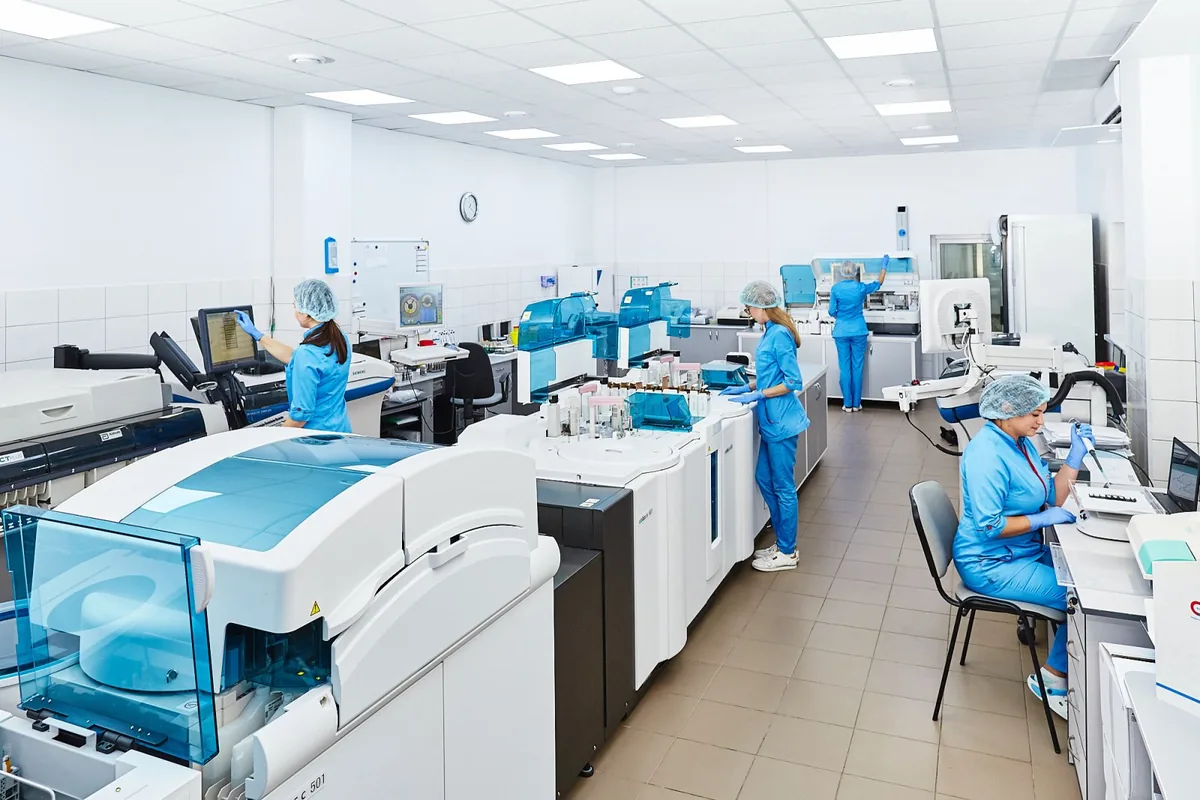
The standard laboratory answer to peptide freeze thaw cycles is not to study them — it is to avoid them. The practices below are the ones the published literature and standard lab protocols converge on:
- Aliquot on first thaw. Divide the solution into single-experiment portions the first time it is thawed, so each aliquot experiences only one cycle.
- Keep the lyophilized stock sealed and frozen. Do not open the dry vial until solution is needed; moisture is the lyophilized format’s main enemy.
- Thaw gently and completely. Allow full thawing and gentle mixing before sampling, so the first-drawn portion is not more concentrated than the rest.
- Work quickly once thawed. Minimize the time the peptide spends in the liquid state at room temperature before use or refreezing.
- Refreeze promptly. Return unused portions to the freezer without delay rather than leaving them on the bench.
- Log the cycles. Record each freeze-thaw event on the vial or in the lab notebook; a sample with an unknown cycle history is a sample with unknown quality.
- Protect from light and air. Oxidation-prone sequences benefit from minimal headspace and protection from light during handling.
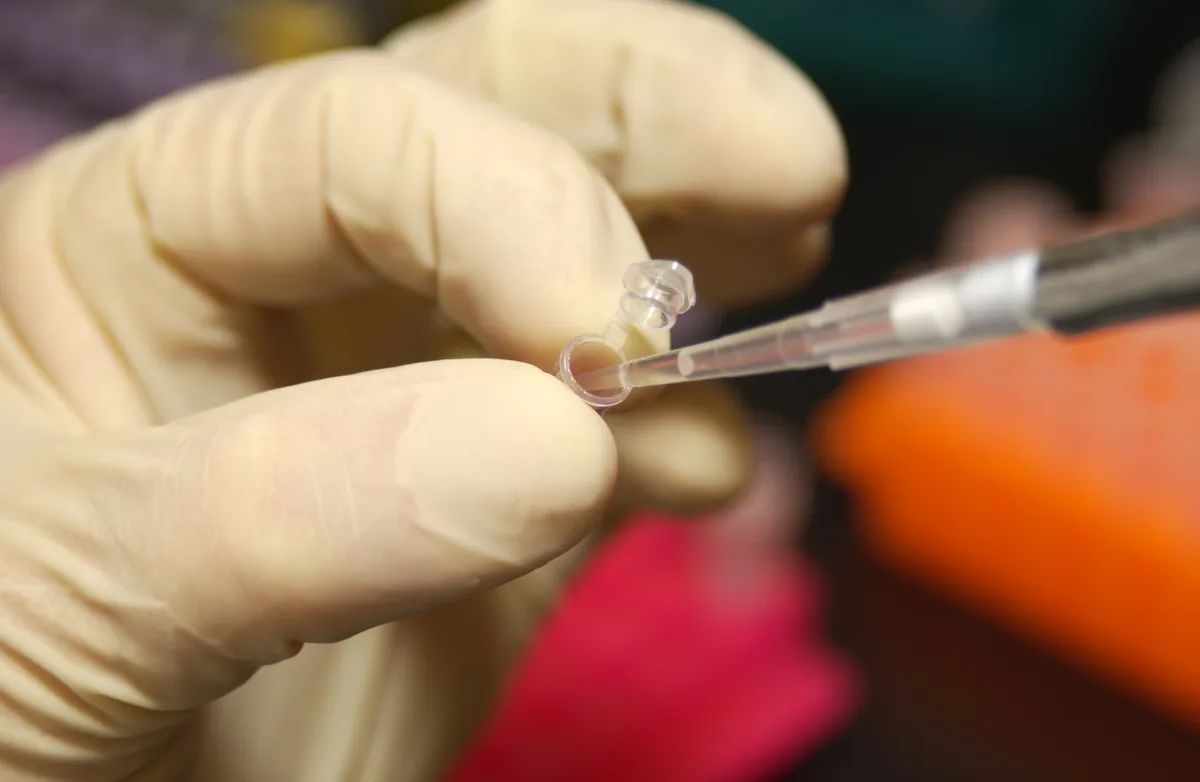
Aliquoting is the single highest-value habit. Of everything the literature suggests about freeze-thaw exposure, dividing solution into single-use portions on the first thaw does the most work: it converts an unknown number of future cycles into exactly one. If your lab adopts one practice from this guide, make it this one.
Key Takeaways for Researchers
- Each freeze-thaw cycle a sample endures replays four stress phases: freezing, frozen hold, thawing, and liquid handling.
- The main damage mechanisms reported in the literature are freeze concentration, ice-water interface stress, pH shifts, and ongoing chemical degradation during thaw.
- Lyophilized peptides are far less affected by peptide freeze thaw cycles than peptides in solution — the cycle count that matters starts when the peptide is dissolved.
- No universal “safe number” of cycles exists; sensitivity varies by sequence and formulation, so fewer cycles are always the better assumption.
- Aliquoting into single-use portions on first thaw is the standard laboratory method for keeping peptide freeze thaw cycles at one per portion.
Research framing only — these are laboratory sample-management principles, not guidance for human use.
Peptide Freeze Thaw Cycles: Frequently Asked Questions
Quick answers to the questions researchers ask most about freeze-thaw exposure — all in laboratory framing.
What are peptide freeze thaw cycles?
Peptide freeze thaw cycles are the repeated events of freezing a peptide sample and thawing it again. Each cycle exposes the sample to ice formation, solute concentration, possible pH shifts, and liquid-state chemistry during the thaw — a cumulative stress that the formulation literature tracks as a sample-quality variable.
Do peptide freeze thaw cycles damage lyophilized peptides?
Very little, according to the principles in the literature. Lyophilized (freeze-dried) peptides contain almost no water, so ice formation and freeze concentration barely occur. The dry powder’s main enemies are moisture, heat, and light. Peptide freeze thaw cycles become relevant once the peptide is in solution.
Why is aliquoting recommended for peptide solutions?
Aliquoting divides a solution into single-use portions on the first thaw, so each portion experiences only one of the peptide freeze thaw cycles instead of being frozen and thawed repeatedly. It is the standard laboratory method for eliminating cycle-count uncertainty.
Is there a safe number of peptide freeze thaw cycles?
No universal number exists. Sensitivity to peptide freeze thaw cycles varies with the amino acid sequence, buffer, concentration, and freezing/thawing rates. The literature supports a directional rule — fewer cycles are better — rather than a fixed threshold. Analytical testing of the specific peptide is the only way to measure its tolerance.
Should thawed peptide solution be refrozen or discarded?
That is a laboratory decision that depends on the experiment’s sensitivity to sample quality. If the solution will be used again, refreezing promptly is standard practice; if analytical precision is critical, many labs treat thawed solution as single-use. Either way, logging the peptide freeze thaw cycles each vial has experienced keeps the sample history transparent.
Where can researchers read more about peptide stability?
Start with the formulation literature: lyophilisation and cryopreservation on Wikipedia give the background, and PubMed indexes the published studies on freeze-thaw effects. For a concrete research-compound example, our Selank vs Semax research comparison discusses two peptides that are supplied and stored as research vials.
Peptide Freeze Thaw Cycles: Final Research Notes
The story of peptide freeze thaw cycles is ultimately simple: freezing preserves, but the transitions into and out of the frozen state are where damage happens. Each cycle replays freeze concentration, interface stress, and a thaw window of fast chemistry — which is why the literature treats cycle count as cumulative. The dry lyophilized vial is the stable state; once a peptide is in solution, aliquoting on first thaw is the standard way to keep peptide freeze thaw cycles at exactly one per portion. No invented thresholds, no guesswork — just fewer cycles, logged carefully, handled promptly.
For labs building their peptide-handling protocols, this guide pairs naturally with our broader research overviews: the Selank vs Semax comparison for two widely studied research peptides, and our guides to Semax nasal spray and Selank nasal spray research formats. All stay in the same research-use-only lane as this guide.