Oral peptides research sits at one of the most stubborn crossroads in pharmaceutical science. Peptides — short chains of amino acids — are powerful research compounds, yet the digestive system treats them the way it treats any dietary protein: as something to break down. That tension explains why oral peptides research has absorbed decades of laboratory effort, and why the field still describes oral delivery of peptides as an unsolved or only partly solved problem. This guide walks through the science strictly as a research topic: the barriers researchers study, the strategies the literature describes, and where the field currently stands. Everything here is descriptive research framing — no human-use claims, no dosing, no medical advice.

Research-use-only disclaimer: This article is an educational overview of published research on oral peptide delivery, written for researchers and readers interested in peptide science. All peptide products referenced on this site are sold strictly for laboratory research use only. Nothing here is medical advice, and nothing here describes how any compound should be used by humans.
To understand the motivation behind oral peptides research, start with the default route. Peptides are conventionally handled as compounds that must bypass the digestive system — because the gastrointestinal tract is, by design, a peptide-destroying environment. Stomach acid unfolds protein structures, digestive enzymes cut peptide bonds, and the intestinal wall is a selective barrier that admits nutrients while blocking larger molecules. A swallowed peptide faces all three obstacles in sequence.
That is the entire reason this field exists: oral administration is the most convenient route in medicine, so any strategy that could move a peptide through the digestive tract intact would be scientifically significant. The field does not study oral peptides because they are easy. It studies them because the gap between the convenience of a swallowed dose and the fragility of a peptide is so large — and so scientifically interesting to close.
Published work consistently describes the oral bioavailability of unprotected peptides — the fraction of a dose reaching circulation intact — as very low. The literature treats this as a property of the route itself, not a defect of any single compound: the gut is doing its job. Every strategy in oral peptides research is, at heart, an attempt to negotiate with a digestive system that evolved to dismantle exactly these molecules.

Oral Peptides Research: A Timeline of the Field
This area of study did not begin with research compounds — it began with a medicine the world already depended on. The timeline below traces the field’s major phases, each defined by a shift in how researchers framed the problem.
The insulin era: the problem is named
Early oral peptides research grew out of work around insulin, the first therapeutic peptide. Researchers documented how completely the digestive tract dismantles peptide hormones, establishing the baseline the field still works from: without protection, oral peptides are digested like food.
The formulation era: protecting the molecule
Attention turned to coatings, capsules, and carriers designed to shield peptides from stomach acid and enzymes. This phase treated the problem as a packaging question: get the peptide past the stomach intact and the job is half done.
The permeability era: crossing the wall
As protection strategies improved, the intestinal wall emerged as the deeper barrier. The field pivoted to permeation enhancers and transport mechanisms — ways to help intact peptides cross the intestinal epithelium into circulation.
The molecular-design era: building tougher peptides
Researchers then attacked the problem from the molecule side: modified, cyclized, or otherwise stabilized peptide structures that resist enzymatic attack. Here the field overlaps with peptide chemistry itself.
The approved-product era: proof of possibility
The arrival of an approved oral peptide medicine showed that the barriers are negotiable, not absolute. Modern oral peptides research now studies which combinations of strategies made that possible — and how far the approach generalizes.
The Two Barriers in Oral Peptides Research
Across all its phases, the literature keeps returning to two barriers. They are distinct problems requiring distinct strategies, and a formulation that solves one but not the other still fails. Understanding the pair is the fastest way to read any paper in this field.
Barrier one: enzymatic degradation
The stomach and small intestine are rich in proteases — enzymes whose function is cutting peptide bonds. In oral peptides research, this is the first barrier: a peptide chopped into fragments before reaching the intestinal wall has nothing left to absorb. Strategies aimed here include protective coatings that dissolve only at intestinal pH, co-formulated enzyme inhibitors, and structural modifications that make the peptide harder to cut.
Barrier two: intestinal permeability
Even an intact peptide must cross the intestinal epithelium — a tightly regulated barrier that keeps large molecules out. The literature describes peptides as generally poor candidates for this crossing: often too large and too water-soluble to slip through cell membranes, with the junctions between cells sealed against them. Strategies here include permeation enhancers that transiently loosen those junctions and carrier molecules that escort peptides across.
The researcher’s rule of thumb: degradation and permeability are multiplicative, not additive. A formulation that protects half the dose but absorbs a small fraction of what survives still yields very little in circulation. The literature’s hardest lesson is that both barriers must be addressed together — which is why single-strategy approaches have historically underperformed.
Strategies Described in Oral Peptides Research
The published literature describes a handful of recurring strategy families. The table below summarizes each in neutral, descriptive terms.
| Strategy family | What the research describes | Status in the literature |
|---|---|---|
| Enteric protection | Coatings or capsules that resist stomach acid and release contents in the intestine | Well-established concept; addresses degradation only, not permeability |
| Enzyme inhibitors | Compounds co-formulated to temporarily reduce local protease activity | Studied extensively; safety questions around broad enzyme inhibition |
| Permeation enhancers | Agents that transiently increase intestinal wall permeability to co-administered peptides | Among the most researched families; the mechanism behind an approved oral peptide product |
| Carrier conjugation | Attaching the peptide to a carrier that uses existing intestinal transport routes | Active research area; adds molecular complexity |
| Structural modification | Cyclization, non-natural amino acids, or other changes resisting enzymatic attack | Growing area; each modified analogue is a new research subject |
| Nanoparticle carriers | Encapsulating peptides in nano-scale particles designed to cross the intestinal wall | Heavily published preclinically; translational record still developing |
Two observations cut across the table. First, the strategies are combinable — and the literature increasingly studies combinations rather than single mechanisms. Second, every strategy trades something: protection against simplicity, permeability against safety margin, molecular redesign against the cost of characterizing a new compound. Oral peptides research is largely the study of those trades.
How to read “breakthrough” claims: when a paper reports improved oral delivery of a peptide, experienced readers check three things: was the peptide intact in circulation (not just fragments)? Was the model relevant to humans? And what was the safety cost of the enhancer or modification? Papers answering all three are rare — and worth more than headlines suggest.
Oral Peptides Research and the Approved-Product Milestone
No honest account of oral peptides research skips the milestone that changed the field’s mood: the approval of an oral peptide medicine. Oral semaglutide — a GLP-1 peptide formulated with the absorption enhancer SNAC — received FDA approval for type 2 diabetes, becoming the first widely recognized peptide medicine taken by mouth. The FDA’s drug information resources describe the approval landscape for such products.
The careful reading, and the one the literature supports, is narrower than the headlines. It proves the dual barriers are negotiable for at least one peptide with at least one enhancer — not that oral delivery works for peptides generally. The formulation is specific, absolute bioavailability remains low, and the research community treats the product as a proof of concept that sharpens the remaining questions rather than closing them.
That sharpening is visible in current work: more papers ask which peptide properties predict oral feasibility, which enhancers carry acceptable safety margins for chronic use, and how formulation strategies interact. The field moved from “is it possible?” to “when, and at what cost?” — a more mature set of questions. For background on the molecules themselves, D-amino acids in peptides covers the basic chemistry the field builds on.

How Oral Peptides Research Relates to Research Compounds
Readers of this site will notice that oral peptides research rarely centers on the specific compounds sold for laboratory use. Research peptides such as Semax and Selank — the subjects of our Selank vs Semax research comparison — have been studied in the literature primarily through non-oral routes. Intranasal administration has drawn research attention for both compounds, which is why we maintain dedicated overviews of Semax nasal spray research and Selank nasal spray research.
The connection is conceptual. Oral peptides research defines the general problem — peptides are hard to deliver through the digestive tract — and that problem is exactly why alternative routes like intranasal delivery became research topics in their own right. Each delivery route studied in the literature exists partly as an answer to the oral route’s difficulties.
For laboratories sourcing compounds, the takeaway is unglamorous but important: the delivery-route literature belongs to the research design, not the product page. Our Semax 10mg and Selank 10mg listings are research-use vials for laboratory investigation; route selection and study design are the researcher’s domain, informed by published literature such as the work indexed on PubMed.
A note on scope: this overview describes the field as a whole. It does not claim that any specific research compound is orally viable, orally studied, or suitable for any route. Route-specific questions should always be answered from the published literature on that specific compound — never extrapolated from general delivery science.
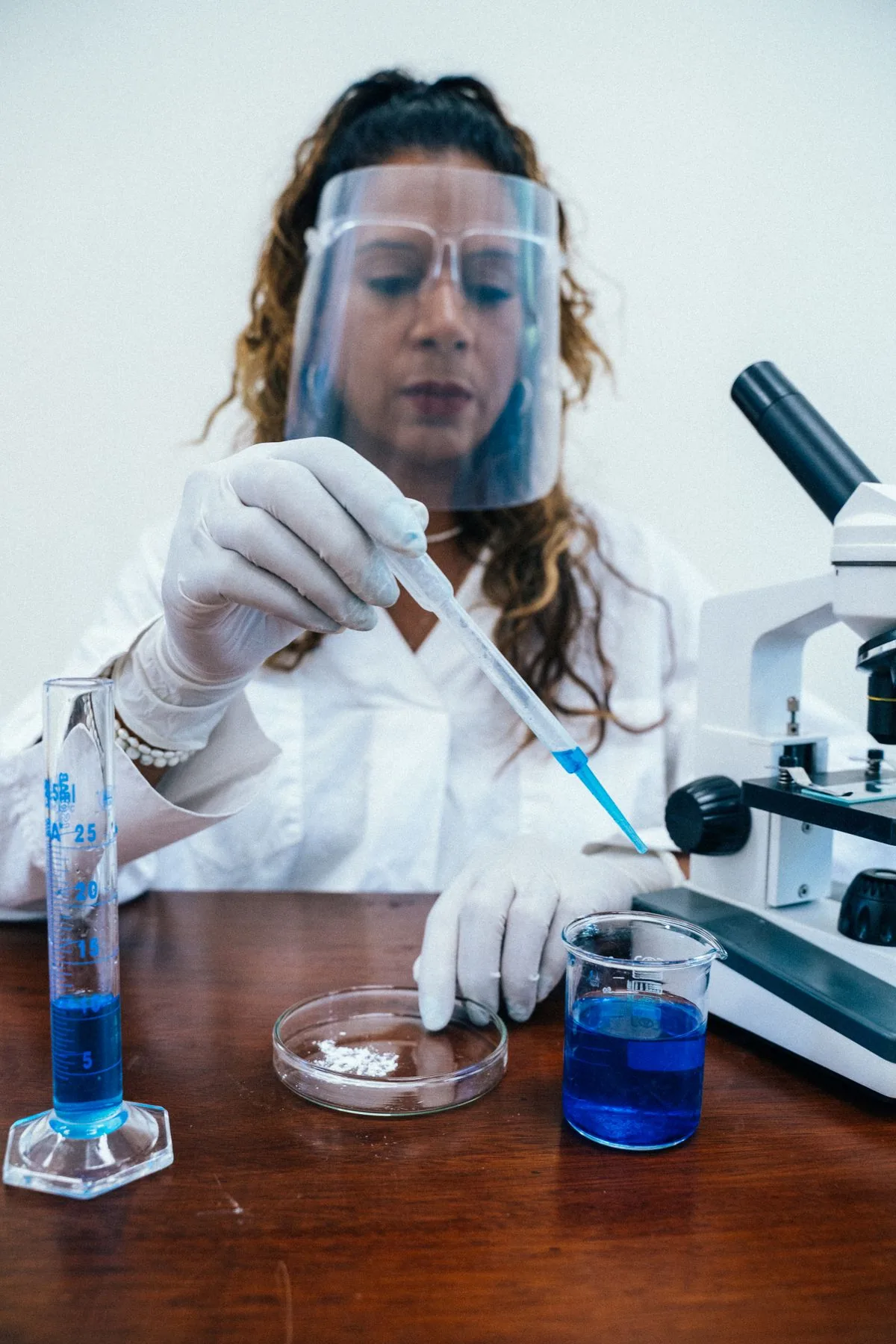
Oral Peptides Research: Key Takeaways
- The problem is the gut itself: the digestive system dismantles peptides by design — enzymatic degradation plus poor intestinal permeability.
- Both barriers must fall together: protection without permeability (or vice versa) yields negligible intact absorption; successful strategies address the pair.
- One approved product proves possibility, not generality: oral semaglutide shows the barriers are negotiable — for one peptide, with one enhancer.
- The field has matured: current work asks when oral delivery is feasible and at what cost, studying strategies in combination.
- Research framing only: nothing here describes human use of any compound; delivery-route decisions belong to researchers working from the published literature.
(Research framing only — not a usage recommendation.)
Oral Peptides Research: Conclusion
Oral peptides research is the story of a field negotiating with human biology at its most uncooperative. The digestive tract does what it evolved to do, and decades of formulation science and molecular design have produced one widely recognized oral peptide medicine — a genuine milestone the literature reads as proof of possibility rather than a solved problem. For researchers, the value of oral peptides research is a framework: name both barriers, study strategies in combination, and measure intact absorption honestly. Kept in that framing, oral peptides research remains one of the most instructive corners of peptide science — and a useful lens for understanding why alternative delivery routes became research subjects in their own right. The National Institutes of Health and intranasal peptide delivery guide offer further background for readers who want to go deeper.
Oral Peptides Research: Frequently Asked Questions
Straightforward answers to the questions researchers and readers ask most about this field.
What is oral peptides research?
Oral peptides research studies how peptide molecules — short chains of amino acids — might be delivered through the digestive tract intact. It investigates protective formulations, permeation enhancers, and molecular modifications aimed at the two core barriers: enzymatic degradation and poor intestinal permeability.
Why is oral delivery of peptides so difficult?
Two barriers dominate the literature. First, stomach acid and digestive proteases break peptide bonds, destroying the molecule before absorption. Second, the intestinal wall is a selective barrier that blocks most large, water-soluble molecules — a description fitting most peptides. Both must be overcome together for meaningful intact absorption.
Has any oral peptide medicine been approved?
Yes — oral semaglutide, a GLP-1 peptide formulated with the absorption enhancer SNAC, received FDA approval for type 2 diabetes. The literature treats this as proof of concept for one peptide with one enhancer, not as oral delivery working for peptides generally.
What are permeation enhancers?
Permeation enhancers are agents studied for transiently increasing intestinal wall permeability to co-administered peptides — for example, by temporarily loosening the junctions between intestinal cells. They are among the most researched strategy families, though the literature also scrutinizes their safety margins for chronic use.
Does this field apply to Semax or Selank?
Not directly. Oral peptides research describes the general field of oral peptide delivery; Semax and Selank have been studied primarily through non-oral routes, notably intranasal administration in research settings. Our research overviews cover the Selank vs Semax comparison and each compound’s nasal spray research separately.
Where can I read published research in this field?
Peer-reviewed work is indexed in databases such as PubMed. When reading papers, check whether intact peptide was measured in circulation (not just fragments), whether the model is relevant to humans, and what safety cost the delivery strategy carried.