CJC-1295 stability and storage is one of the first practical questions a researcher faces when this compound enters the lab. CJC-1295 is a synthetic analogue of growth hormone-releasing hormone (GHRH) that has been studied in published clinical research — most notably in a 2006 human trial — and like nearly every research peptide, it arrives at the laboratory as a lyophilized (freeze-dried) powder in a sealed vial. How that vial is kept, and how any prepared solutions are handled afterward, determines whether the material stays intact for analysis or quietly degrades before the experiment even begins. This guide covers CJC-1295 stability and storage strictly as a laboratory topic: what the published literature and general peptide-handling practice say about temperature, moisture, light, freeze-thaw cycles, and the degradation pathways that threaten peptide integrity. Nothing here addresses human use — only how a research compound is kept stable on the shelf and at the bench.
Research-use-only disclaimer: CJC-1295 is not an FDA-approved drug and is not a medicine. All products on this site are sold strictly for laboratory research use. This article is an educational overview of CJC-1295 stability and storage drawn from published literature and general peptide-handling practice. It contains no dosage information, no administration instructions, and no medical advice.
Why CJC-1295 Stability and Storage Matters for Research
Peptides are chains of amino acids, and amino acid chains are chemically busy. Even sitting quietly in a vial, a peptide can oxidize, lose water, gain water, clip at vulnerable bonds, or clump together with its neighbors — all without any visible change to the powder. That is the central challenge of CJC-1295 stability and storage: the material can look perfectly fine while its analytical integrity has already slipped. For a laboratory running HPLC purity checks, mass spectrometry, or receptor-binding assays, degraded starting material means unreliable data, wasted instrument time, and conclusions built on a compound that is no longer what the label says.
CJC-1295 itself is a 29-amino-acid synthetic peptide modeled on the GHRH(1–29) fragment, with several amino acid substitutions that distinguish it from the native hormone sequence. The version most discussed in the literature also incorporates a Drug Affinity Complex (DAC) — a chemical modification designed to let the molecule bind serum albumin — which was the basis of its long-acting profile in published human research (see the CJC-1295 overview on Wikipedia and the indexed literature on PubMed). From a storage standpoint, though, what matters most is the general fact: it is a synthetic peptide, supplied lyophilized, and handled like other synthetic peptides in the freezer. peptide storage and stability are therefore governed by the same general principles — temperature, moisture, light, handling, and time.
CJC-1295 Stability and Storage: The Lyophilized Vial
The most stable form of any research peptide is the one it ships in: lyophilized powder in a sealed, light-protected vial. Freeze-drying removes nearly all water, and water is the medium in which most degradation chemistry happens. Kept dry and cold, a lyophilized peptide is at its most forgiving. Good storage practice for the unopened vial follows the same checklist used across peptide laboratories:
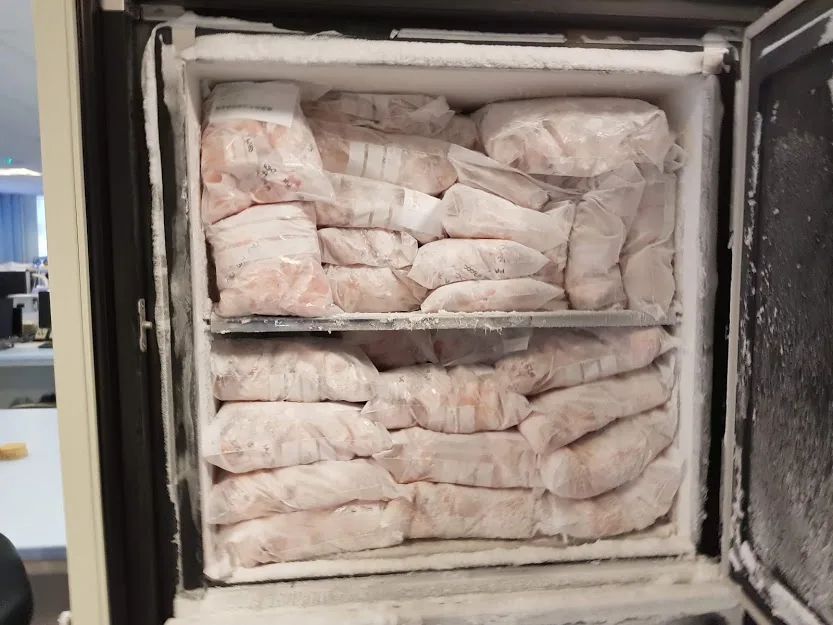
- Freeze it: store lyophilized vials at −20 °C or colder for routine storage; −80 °C is the standard for long-term archiving.
- Keep it dry: leave the vial sealed until use; many suppliers include desiccant, and the seal is the moisture barrier.
- Keep it dark: light — especially UV — drives oxidation and photodegradation in susceptible residues.
- Equilibrate before opening: let a frozen vial reach room temperature before breaking the seal, so ambient moisture does not condense onto the cold powder.
- Minimize handling at room temperature: every hour on the bench at ambient conditions is an hour of avoidable exposure.
The single biggest stability win costs nothing. Across peptide-handling literature, the most repeated recommendation is also the simplest: keep the lyophilized vial frozen, sealed, and dark until the day it is needed. Most peptide storage problems trace back to a vial that spent weeks at room temperature or was opened and resealed repeatedly — not to exotic chemistry.
Temperature: The Core Variable in CJC-1295 Stability and Storage
Temperature sets the pace of every degradation reaction a peptide can undergo. The table below maps the standard storage tiers used in research laboratories to the physical form of the material, so choosing where this compound lives becomes a simple lookup.
| Storage tier | Typical temperature | Best for | Practical notes |
|---|---|---|---|
| Room temperature | ~20–25 °C | Unopened lyophilized vials, short holding only | Acceptable for brief staging; not a storage strategy |
| Refrigerator | 2–8 °C | Prepared solutions, days to a few weeks | The standard tier for in-use working solutions |
| Freezer | −20 °C | Lyophilized vials, months | Routine long-term storage for sealed powder |
| Ultra-low freezer | −80 °C | Lyophilized vials or aliquots, extended archiving | Slows degradation chemistry the furthest |
Two cautions belong with this table. First, these tiers describe general laboratory practice for synthetic peptides, not a manufacturer specification for any single lot — always defer to the supplier’s certificate of analysis and storage guidance for the specific material in hand. Second, the freezer tier has one enemy: the freeze-thaw cycle. Repeatedly freezing and thawing the same solution concentrates solutes, stresses the peptide at the ice-water interface, and accelerates aggregation. The standard countermeasure is aliquoting — dividing a prepared solution into single-use portions so each portion is thawed exactly once. That single habit does more for the stability of prepared peptide solutions than almost any other step.
Degradation Pathways That Threaten CJC-1295 Stability
Understanding how peptides degrade makes every storage rule intuitive. Four pathways do most of the damage to stored research peptides:
Oxidation
Certain amino acid side chains — methionine, cysteine, tryptophan, and histidine among them — react with oxygen, a process accelerated by light and by trace metal ions. Oxidized residues change the molecule’s mass and often its behavior in assays. The defenses are the familiar ones: keep vials sealed and dark, minimize headspace exposure, and avoid unnecessary transfers. In solution, oxidation proceeds faster than in the dry powder, which is one more reason keeping the material dry as long as possible is where sound storage practice starts.
Deamidation and Hydrolysis
Asparagine and glutamine residues can deamidate — a slow, pH- and temperature-dependent reaction that converts them to aspartic or glutamic acid — while peptide bonds themselves can hydrolyze in the presence of water, especially at extremes of pH. Both reactions are dramatically slower in the lyophilized state, which is why the dry powder is the stable form. Once a peptide is in solution, the clock runs faster: cooler storage, near-neutral pH where the literature supports it, and shorter holding times are the standard mitigations. This is the chemistry behind the rule that prepared solutions are a days-to-weeks proposition, not a months proposition.
Aggregation
Peptides can associate into dimers, oligomers, and larger aggregates, particularly at high concentration, after freeze-thaw stress, or with vigorous agitation. Aggregated material may precipitate visibly — or it may not, remaining as soluble oligomers that still distort analytical results. Gentle handling (swirling rather than vortexing, in general lab practice), sensible concentrations, and single-thaw aliquots are the standard guards. Any solution that turns cloudy or throws a precipitate has announced that its storage history has failed, and it should not be used for quantitative work.

How labs verify stability in practice. Storage guidance keeps material intact; analytical chemistry confirms it. Laboratories verifying stored peptide material typically rely on HPLC for purity and mass spectrometry for identity — the same pair of techniques behind a credible certificate of analysis. If a stored lot is ever in doubt, re-analysis beats guessing.
CJC-1295 Stability and Storage: A Practical Lab Checklist
Pulling the guidance together, here is the bench-ready checklist for CJC-1295 stability and storage in a research setting:
- On arrival: confirm the vial is sealed, the powder is dry and intact, and the label matches the order; log the lot number.
- Immediate storage: place unopened lyophilized vials at −20 °C (or −80 °C for archiving) in the dark.
- Before opening: equilibrate the sealed vial to room temperature to prevent condensation on the powder.
- Solution prep: prepare solutions only as needed; divide into single-use aliquots immediately.
- Working storage: keep in-use solutions at 2–8 °C; keep reserve aliquots frozen, each thawed once.
- Handling: gentle mixing, minimal light exposure, minimal time at room temperature.
- Documentation: record preparation dates, storage conditions, and freeze-thaw counts in the lab notebook.
- Disposal rule: cloudy, precipitated, or long-expired solutions are analytical liabilities — discard and prepare fresh.
A note on the DAC modification. Published literature describes CJC-1295’s Drug Affinity Complex as a design feature that extends the molecule’s behavior in biological systems via albumin binding. That is a pharmacokinetic property studied in vivo — it does not change the bench rules above. For CJC-1295 stability and storage on the shelf, the DAC and no-DAC forms are handled under the same lyophilized-peptide principles.
These are the same research-use standards applied across peptide research libraries generally. For context on how other research compounds in this space are framed, our research overviews cover Semax 10mg and Selank 10mg research listings, our Selank vs Semax research comparison walks through the same research-compound discipline for a different pair of peptides, and our guides to Semax nasal spray and Selank nasal spray research cover their studied delivery formats. Consistent handling standards are what make results comparable across compounds.
Key Takeaways: CJC-1295 Stability and Storage
Lyophilized, sealed, frozen, and dark is the stable state — that single sentence covers most of CJC-1295 stability and storage. Prepare solutions only as needed, aliquot them for single thaw, keep working solutions refrigerated, and treat any cloudy or long-stored solution as suspect. Verify questionable material with HPLC and mass spectrometry rather than trusting appearance. (Research framing only — storage guidance for laboratory material, not a use recommendation.)
CJC-1295 Stability and Storage: Frequently Asked Questions
Direct answers to the questions researchers ask most about keeping this compound intact.
What is the best way to store lyophilized CJC-1295?
Sealed, in the dark, at −20 °C or colder (−80 °C for long-term archiving). CJC-1295 stability and storage is best in the lyophilized state because removing water shuts down most degradation chemistry. Keep the vial sealed until use and let it equilibrate to room temperature before opening to avoid condensation on the powder.
How long do prepared peptide solutions remain usable?
In general laboratory practice, prepared peptide solutions are a days-to-weeks proposition at 2–8 °C, not months. Freeze aliquots for longer holding and thaw each aliquot only once. Any solution that turns cloudy or forms a precipitate should be discarded rather than used for quantitative work.
Why are freeze-thaw cycles bad for CJC-1295 stability and storage?
Each freeze-thaw cycle concentrates solutes and stresses the peptide at the ice-water interface, accelerating aggregation and other degradation. The standard fix is aliquoting: divide a fresh solution into single-use portions immediately after preparation so no portion is ever frozen twice.
Does light really affect peptide stability?
Yes. Light — particularly UV — promotes oxidation of susceptible residues such as methionine, cysteine, tryptophan, and histidine. Storing vials in the dark (or in light-protective packaging) is a standard part of CJC-1295 stability and storage practice.
How can a lab tell if stored CJC-1295 has degraded?
Appearance is unreliable — degraded peptide often looks unchanged. Laboratories verify CJC-1295 stability and storage with HPLC for purity and mass spectrometry for identity, the same techniques behind a certificate of analysis. If a lot’s history is uncertain, re-analysis is the honest answer.
Is CJC-1295 an FDA-approved drug?
No. CJC-1295 is not an FDA-approved drug; it is handled as a research compound for laboratory investigation only. The FDA’s drug information pages explain what approval status means, and the published human research (such as the 2006 trial indexed on PubMed) describes investigational findings, not an approved medicine.
Final Notes on CJC-1295 Stability and Storage
Good CJC-1295 stability and storage is unglamorous work: freezers, sealed vials, aliquots, notebooks, and the discipline to discard what is suspect. But it is the foundation everything else rests on. An experiment is only as good as its starting material, and for a synthetic research peptide, the starting material is only as good as its storage history. Keep it lyophilized until needed, keep it cold and dark, aliquot what you prepare, and verify rather than assume. That is the whole of CJC-1295 stability and storage — and it is enough.