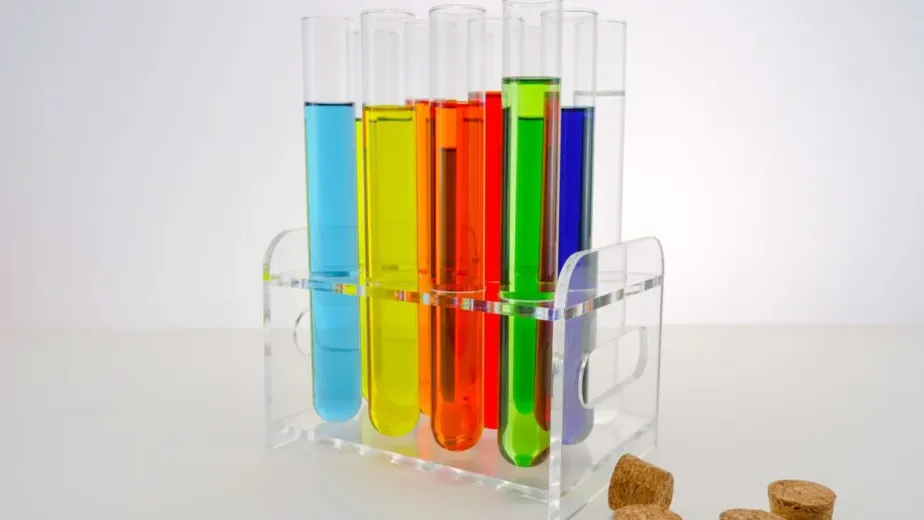
Avoiding peptide degradation is the central discipline of peptide sample management. Peptides are inherently fragile molecules: the same amide bonds that link their amino acids can be broken by water, their side chains oxidized by air, and their structures clumped into aggregates by heat and agitation. Every degraded molecule in a vial is a molecule that will not behave as expected in the experiment — and worse, degradation products can actively confound results. This guide to avoiding peptide degradation describes the chemical pathways by which peptides break down, the environmental factors that accelerate each pathway, and the practical mitigations research labs use to slow them. It is descriptive laboratory science for research use only: what happens, why it happens, and how labs respond.
Research-use-only disclaimer: All peptides discussed on yourfitnesspeptides.com, including Semax and Selank, are sold strictly for laboratory research use only. They are not medicines, not dietary supplements, and are not approved by the FDA. This article is educational. It contains no dosage information, no administration instructions, and no medical advice — and nothing about avoiding peptide degradation constitutes guidance for human use.
Why Avoiding Peptide Degradation Matters to Every Experiment
A degraded peptide sample is not merely a weaker version of the original — it is a different chemical mixture. Hydrolysis cleaves the backbone into fragments; deamidation converts asparagine residues into aspartic acid; oxidation alters methionine and other sensitive side chains. Each transformation changes the molecule’s mass, charge, shape, and behavior. An assay run on a partially degraded stock measures the mixture, not the compound — and the researcher, unaware, attributes the results to the intact peptide.
This is why avoiding peptide degradation is a data-quality issue before it is a materials issue. The cost is not the price of a replacement vial (research vials like our Semax 10mg and Selank 10mg listings are handled as laboratory materials precisely so they can be stored and verified properly) — it is the weeks of experiments whose conclusions quietly rest on compromised material. Degradation is also insidious because it is usually invisible: a degraded solution looks exactly like a pristine one. Only analytical checks or careful stability practice reveal the difference, which is why the mitigations below emphasize prevention over detection.
Degradation is chemistry, not bad luck. The first principle of avoiding peptide degradation: every breakdown pathway follows known chemical rules, which means every pathway has known countermeasures. Labs do not fight degradation with hope; they fight it with temperature, dryness, darkness, and clean technique — each targeting a specific mechanism.
The Main Peptide Degradation Pathways
Avoiding peptide degradation starts with knowing the enemy. Six pathways account for nearly all peptide breakdown in research settings:
Hydrolysis
Water attacks the amide bonds of the peptide backbone, cleaving the chain into fragments. The reaction is slow in the frozen or dry state and accelerates dramatically in warm solution — which is why avoiding peptide degradation always begins with keeping peptides dry or frozen. Acidic and alkaline conditions both catalyze it, making pH control part of the defense.
Oxidation
Atmospheric oxygen attacks susceptible side chains — methionine is the classic victim, followed by cysteine, histidine, and tryptophan. Oxidized residues change the peptide’s properties and can seed further breakdown. Mitigations include minimizing air exposure, storing under inert gas where practical, and including antioxidants in formulations when the protocol calls for them.
Aggregation
Peptide molecules clump into dimers, oligomers, and visible particulates, driven by hydrophobic interactions and sometimes by covalent cross-links. Aggregation is promoted by high concentration, agitation, freeze–thaw cycling, and warm storage. Once aggregated, material rarely returns to monomeric form — prevention is essentially the only cure.
Deamidation
Asparagine (and more slowly, glutamine) residues convert to aspartic acid, altering charge and often biological behavior in assay systems. Deamidation is pH- and temperature-dependent, accelerating in neutral-to-alkaline conditions. It is one of the most common degradation routes for stored peptide solutions and a key reason stability-minded labs watch both pH and temperature.
Photodegradation
Light — especially UV — breaks bonds and generates reactive species in solution. Tryptophan and tyrosine residues are particularly photosensitive. The mitigation is almost embarrassingly simple: amber vials, dark storage, and keeping working solutions out of direct light. Simple does not mean optional.
Adsorption and surface loss
Peptides stick to container walls — glass and plastic alike — removing material from solution without any chemical change at all. The sample tests “degraded” by concentration while the molecules themselves are intact, just immobilized on plastic. Low-binding vessels and appropriate container choices are the standard defense.
Degradation Factors and Lab Mitigations at a Glance
The table below maps each accelerating factor to the pathway it drives and the standard laboratory response — the operational core of avoiding peptide degradation.
| Factor | Pathways accelerated | Lab mitigation |
|---|---|---|
| Elevated temperature | Hydrolysis, deamidation, aggregation | −80 °C archival storage; minimize bench time |
| Moisture (in lyophilized material) | Hydrolysis | Desiccated storage; sealed vials; low humidity handling |
| Oxygen / air exposure | Oxidation | Minimize headspace; inert-gas backfill where practical |
| Light, especially UV | Photodegradation | Amber vials; dark storage; shade working solutions |
| Freeze–thaw cycling | Aggregation, hydrolysis | Single-use aliquots; never refreeze thawed portions |
| Extreme pH | Hydrolysis, deamidation | Buffer at the stability optimum; verify with calibrated pH meter |
| Agitation / shaking | Aggregation | Gentle handling; avoid vortexing stored solutions |
| Wrong container surfaces | Adsorption loss | Low-binding tubes and vials for storage |
| Contamination | Microbial and enzymatic breakdown | Aseptic technique; sterile vessels and tips |
Temperature dominates. As a rule of thumb in avoiding peptide degradation, reaction rates roughly double to triple with each 10 °C rise — which is why the gap between room temperature and −80 °C storage represents orders of magnitude of stability difference, not a marginal improvement.
Temperature: The Master Variable
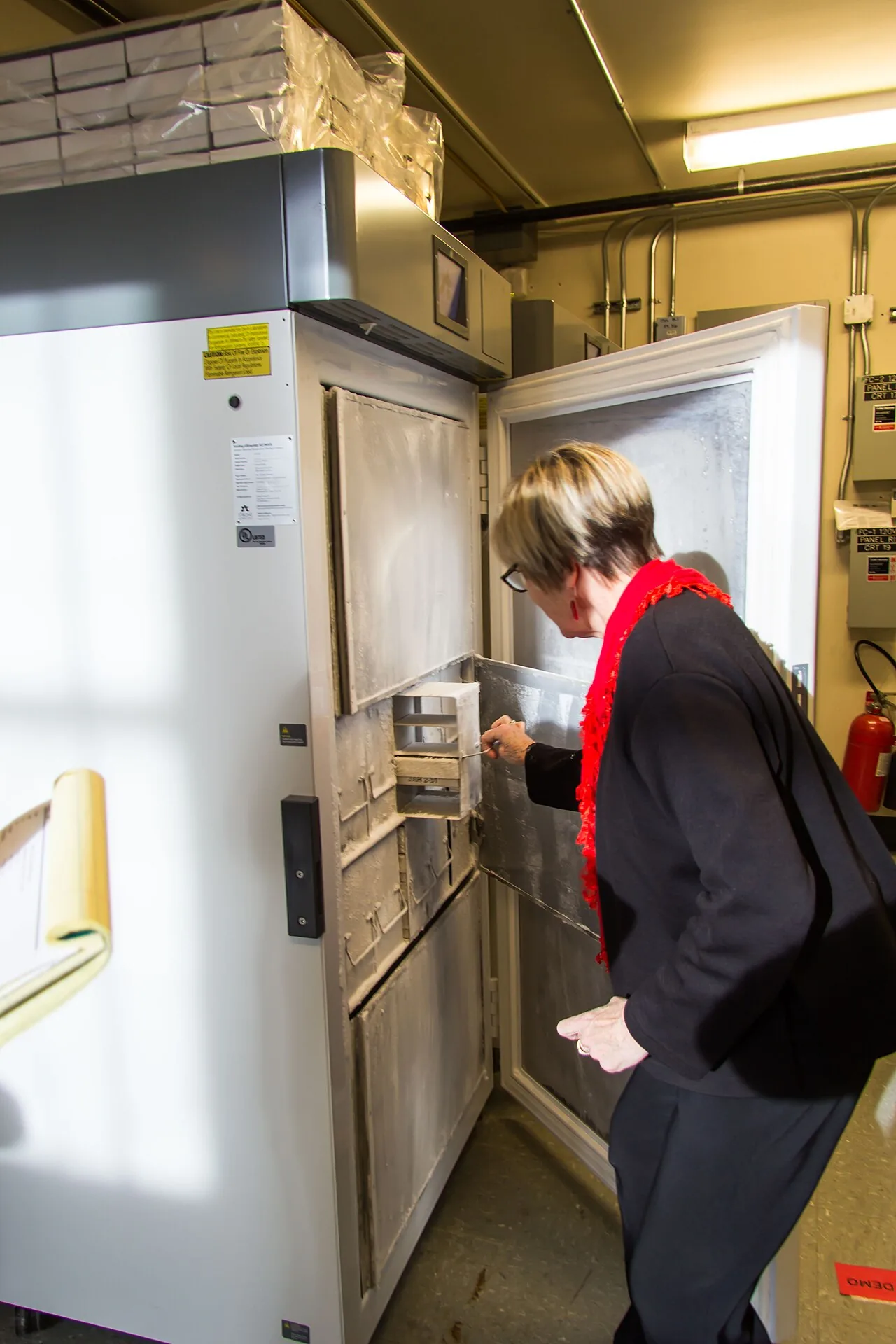
If avoiding peptide degradation had to be reduced to one instruction, it would be: keep it cold. Chemical reaction rates follow temperature exponentially, so cold storage is the highest-leverage mitigation available — more powerful than any additive or container choice. The standard tiering is simple: lyophilized powders and archival stocks at −80 °C, working materials at −20 °C or refrigerated depending on protocol, and room-temperature exposure limited to the minimum the workflow requires.
But cold storage only works as a system. A −80 °C freezer with a failing seal, frequent door openings, or no temperature alarm is cold in name only. Labs serious about avoiding peptide degradation treat the freezer as an instrument: mapped boxes so any vial is found in seconds, continuous temperature logging with remote alarms, and a backup plan for power failures. Frost-free −20 °C units deserve special caution — their auto-defrost cycles repeatedly warm the contents, making them a poor home for anything stored longer than a few weeks.
pH, Moisture, and Light: The Quiet Accelerants
Temperature gets the attention, but three quieter factors cause their share of degradation losses. Moisture is the enemy of lyophilized peptides: a freeze-dried cake that absorbs atmospheric water begins hydrolyzing in the solid state, slowly but measurably. Avoiding peptide degradation in powders means desiccated storage, tightly sealed vials, and handling in low humidity — opening a cold vial in a humid room invites condensation directly onto the material.
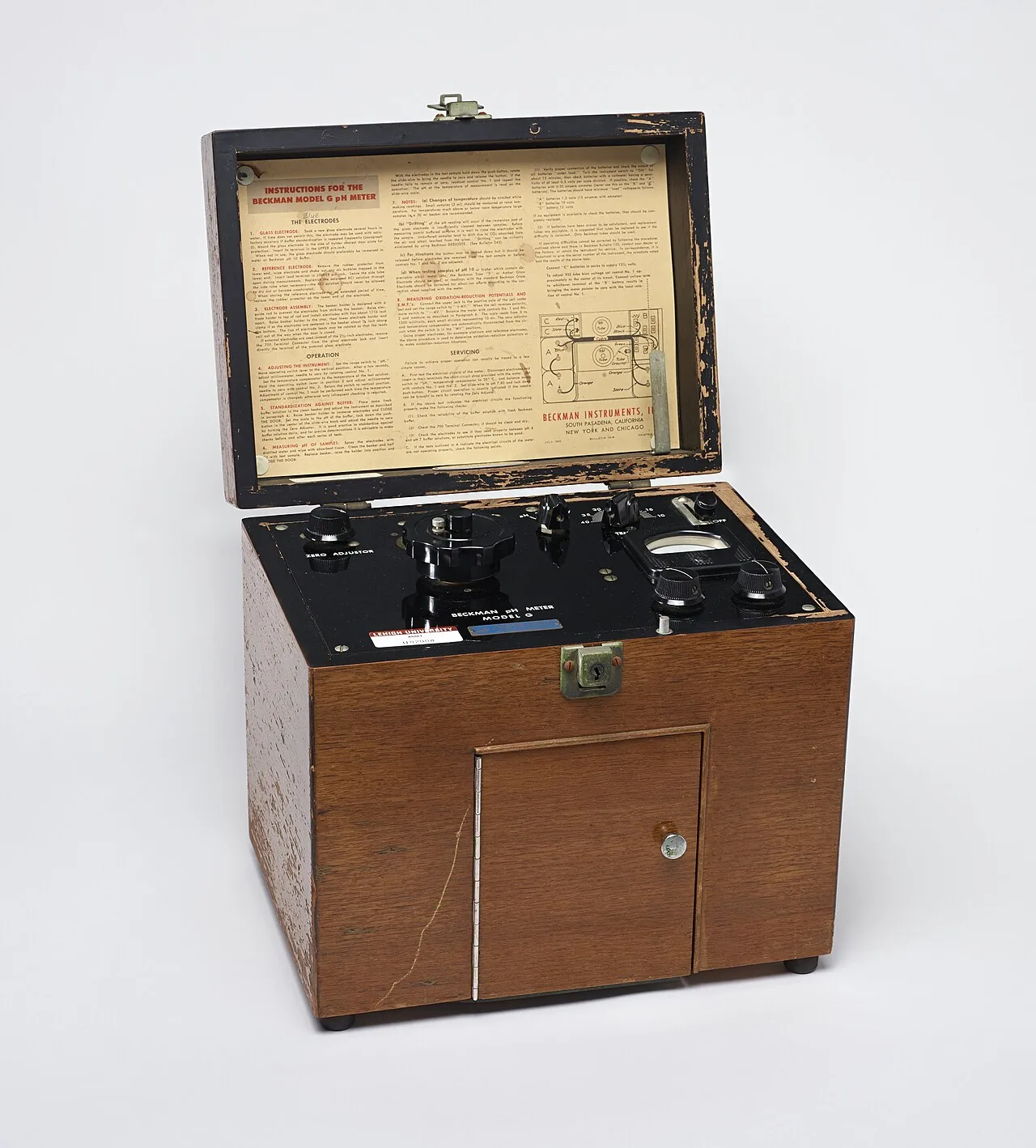
pH shapes which pathways dominate. Both strongly acidic and strongly alkaline conditions accelerate hydrolysis; neutral-to-alkaline conditions favor deamidation. The practical response is buffering near the compound’s stability optimum and verifying with a calibrated pH meter rather than assuming the buffer preparation went as planned. Researchers comparing compounds across studies — as in our Semax vs Selank research comparison — rely on each compound having been stored under conditions that preserved it, not merely conditions that were intended.
Light is the simplest factor and the most commonly neglected. Amber vials, closed cabinets, and shaded benches cost almost nothing and eliminate photodegradation as a concern. If a lab’s peptide stocks sit in clear vials on an open shelf near a window, avoiding peptide degradation has already failed at the easiest hurdle.
Lyophilization is protection, not immortality. Freeze-dried peptides are far more stable than solutions — lyophilization removes the water that drives hydrolysis — but “more stable” is not “inert.” Warm, moist, or brightly lit storage still degrades lyophilized material, just more slowly. Treat dried peptides as stabilized, not invulnerable.
Monitoring: Catching Degradation Early
Prevention handles most of avoiding peptide degradation, but monitoring catches what prevention misses. Sensible labs build these checks into routine:
- Visual inspection — lyophilized cakes should be intact and uniform; collapse, discoloration, or visible moisture suggest storage failure. Solutions should be clear; cloudiness or precipitate means something changed.
- Periodic analytical checks — an HPLC purity profile compared against the original certificate of analysis reveals degradation products long before they are visible. Our guide to intranasal peptide delivery research discusses analytical framing in a compound-specific context.
- Temperature log review — freezers do not fail loudly. A weekly glance at logger data catches the slow compressor decline before it becomes a warm freezer full of compromised stocks.
- Inventory aging — track how long each lot has been stored. Even well-stored peptides have practical horizons; first-in, first-out rotation keeps nothing lingering past its sensible lifetime.
When in doubt, re-verify — do not rationalize. A questionable stock tempts researchers to use it anyway “since the experiment is set up.” The disciplined version of avoiding peptide degradation says the opposite: a suspect vial gets an analytical check or gets discarded. One compromised experiment costs more than any vial, and our intranasal peptide delivery research overview follows the same principle — describe the research carefully, verify the materials, claim nothing beyond the data. The PubMed literature on peptide stability is full of cautionary examples of what happens when verification is skipped.
Key Takeaways: Avoiding Peptide Degradation
Degradation follows known chemistry — hydrolysis, oxidation, aggregation, deamidation, photolysis, and surface loss — and each pathway has a known countermeasure: deep-freeze storage, dryness, darkness, correct pH, gentle handling, low-binding vessels, and single-use aliquots. Monitor with visual checks, temperature logs, and periodic analytical profiling, and never rationalize using a suspect stock. Avoiding peptide degradation is not a single technique but a standing discipline, and it pays for itself in data that can be trusted. (Research framing only — laboratory stability science, not human-use guidance.)
Avoiding Peptide Degradation: Frequently Asked Questions
Direct answers to the questions researchers ask about keeping peptide materials intact.
What causes peptide degradation most often in research labs?
Warm storage and repeated freeze–thaw cycles. Temperature accelerates every major pathway — hydrolysis, deamidation, aggregation — and each thaw stresses dissolved peptides further. In practice, avoiding peptide degradation fails most often not from exotic chemistry but from stocks left warm too long or cycled through the freezer door too many times.
Does freezing stop peptide degradation completely?
No — it slows it dramatically but does not stop it. Reaction rates drop exponentially with temperature, so −80 °C storage extends stability by orders of magnitude versus room temperature, but slow degradation continues. That is why avoiding peptide degradation also involves dryness, darkness, correct pH, and inventory rotation rather than relying on cold alone.
How can you tell if a peptide sample has degraded?
Often you cannot tell by looking — degraded solutions usually appear identical to pristine ones. Visual clues (discolored or collapsed lyophilized cakes, cloudy solutions, precipitate) are late warnings. Reliable detection means analytical checks: an HPLC purity profile compared against the original certificate of analysis reveals degradation products well before they become visible.
Are lyophilized peptides immune to degradation?
No. Lyophilization removes the water that drives hydrolysis, making dried peptides far more stable than solutions — but warm, moist, or brightly lit storage still degrades them. Avoiding peptide degradation applies to powders too: desiccated, sealed, cold, and dark.
What is the single most effective degradation precaution?
Reliable −80 °C storage with temperature monitoring. Of all the mitigations in this guide, deep-freeze cold chain has the largest effect per unit of effort, because temperature governs the rate of nearly every degradation pathway simultaneously.
Where can researchers source peptides handled for laboratory stability?
Research-use peptides are supplied as laboratory vials intended for proper cold-chain handling from arrival — see our Semax 10mg and Selank 10mg research listings. Source only from suppliers explicit about research-use-only status, and apply the stability practices in this guide from day one of avoiding peptide degradation in your own lab.
Avoiding Peptide Degradation: Final Research Notes
Avoiding peptide degradation is ultimately a mindset as much as a method: treat every peptide as a molecule actively trying to fall apart, and arrange temperature, moisture, light, pH, handling, and containers so that it cannot. The pathways are known, the mitigations are known, and the monitoring tools exist — the only variable is whether the lab applies them consistently. Labs that do produce data built on intact materials; labs that do not produce data built on mixtures they never characterized.
Kept in that research frame, the message is simple and worth repeating: cold, dry, dark, gentle, and verified — the five words that summarize avoiding peptide degradation better than any instrument catalog.